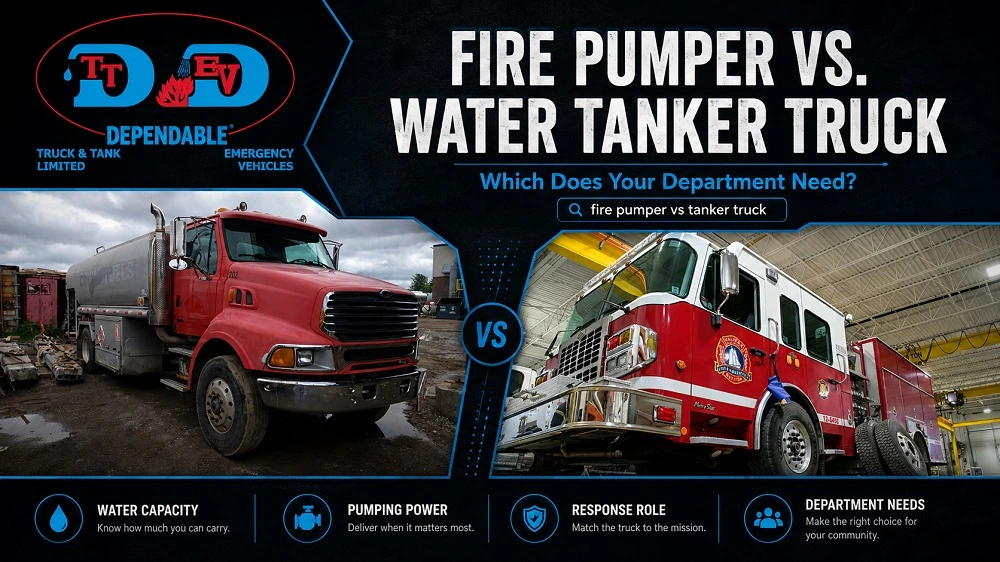
Purchasing a fire truck is a long-term investment that can impact a community for decades. Whether you’re replacing an aging apparatus or expanding an emergency fleet, choosing between a fire pumper vs tanker truck requires a clear understanding of your department’s operational needs. Factors like water supply access, response areas, service demands, and maintenance requirements all play an important role in selecting the right vehicle for the job.
According to emergency vehicle service evaluations, more than 40% of aging municipal fire apparatus are retired due to structural deterioration rather than major mechanical failure. Corrosion, body damage, and long-term exposure to harsh operating conditions can gradually compromise a vehicle’s safety, reliability, and service life. For municipalities, this highlights the importance of considering durability, construction quality, and long-term maintenance requirements when investing in new firefighting equipment.
This guide is designed to help fire chiefs, municipal leaders, and procurement teams make informed equipment decisions with confidence. We’ll break down the key differences between these essential apparatus types, covering not only their operational capabilities but also the structural, maintenance, and lifecycle considerations that can significantly impact long-term ownership costs.
The Fire Pumper Truck: Structural Fire Suppression Asset
The modern fire pumper truck is the backbone of most firefighting operations. Designed for rapid response and effective fire suppression, its primary role is to deliver high-volume water streams, support attack hose lines, and provide firefighters with the equipment they need during the critical early stages of an emergency. For departments that regularly respond to structure fires, pumpers are often the first apparatus on scene and one of the most essential assets in the fleet.
Pumper Truck Specifications and Pump Architecture
At the heart of every fire pumper is a high-capacity pumping system designed to deliver water quickly and efficiently during emergency responses. While NFPA standards require a minimum pump capacity of 750 gallons per minute (GPM), most modern municipal pumpers are equipped with systems ranging from 1,250 to 2,000 GPM. This allows crews to supply multiple hose lines at once and maintain a reliable water flow during structure fires and other emergency situations.
Fire Pumper Tank Size Constraints
Unlike tanker trucks, pumpers carry a relatively modest onboard water supply. Most have a tank capacity ranging from 500 to 1,000 gallons, which provides enough water for an immediate attack while crews establish a continuous supply from a hydrant or another responding apparatus. This tank is strategically positioned to help maintain a lower center of gravity, improving vehicle stability and handling during emergency responses.
The Water Tanker Truck: Mobile Water Supply Infrastructure
In areas without access to a municipal water system, a water tanker truck, often called a water tender, plays a critical role in fire suppression operations. Rather than pumping large volumes of water directly onto a fire, its main job is to transport water from a refill location to the incident scene, ensuring firefighters have a steady supply when hydrants aren’t available.
Tanker Plumbing and Rapid Dumping Mechanics
A water tanker truck is built for one primary purpose: transporting large volumes of water to locations where hydrants aren’t available. Most units carry between 1,500 and 4,000 gallons or more, making them an essential resource for rural and remote fire departments. To keep water flowing during an emergency, these vehicles are designed for fast filling and quick unloading, allowing crews to rapidly transfer water to portable tanks or other apparatus at the scene.
Auxiliary Pump Configurations
While some tanker trucks are equipped with auxiliary pumps rated between 250 and 500 GPM, these systems are typically intended for limited operations such as grass fires or water transfer. Unlike pumpers, tankers are not designed to support multiple high-pressure attack lines. Because they carry such large volumes of water, they rely on heavy-duty chassis and specialized designs to safely manage the vehicle’s weight and maintain stability during transport.
Tactical Deployment and Strategic Response Realities
Understanding how these two vehicles work together helps illustrate the importance of choosing the right apparatus. Pumpers focus on fire suppression, while tankers provide the water supply needed to support operations when hydrants aren’t available.
Initial Structural Attack Execution
When a fire breaks out, a pumper is usually the first apparatus to arrive, allowing firefighters to take immediate action with pre-connected hose lines and the onboard water tank instead of wasting valuable time setting up equipment. To keep operations running efficiently and avoid interruptions in water flow, the crew will connect to a nearby hydrant whenever available, establishing a continuous water supply that supports faster, safer, and more effective fire suppression.
Water Shuttle Logistics in Unhydrated Areas
In rural or unhydrated areas, the pumper’s 1,000-gallon tank will empty within a few minutes of continuous operation. In these settings, a water tanker truck must deploy a portable drop tank next to the pumper. The tanker dumps its water into the drop tank and leaves to refill, while the pumper uses a hard suction hose to draft from the drop tank and maintain continuous fire streams.
Apparatus Allocation Checklist for Smaller Departments
For organizations with limited staffing and tight capital budgets, selecting the right apparatus is often a balancing act between capability and cost. The goal is to invest in a vehicle that can handle a wide range of emergency scenarios without stretching resources too thin, ensuring crews have the equipment they need while maximizing long-term value and operational efficiency.
Selecting the Best Fire Pumper Truck for Small Departments
The best fire pumper truck for small departments is often a combination unit, such as a rescue-pumper. These apparatuses provide the fire suppression capabilities crews rely on while also offering dedicated space for extrication tools, medical equipment, and rescue gear. For departments operating with limited personnel and smaller fleets, this multi-purpose approach helps reduce equipment gaps, improve response flexibility, and get more value from a single apparatus.
Multi-Role Interface Vehicles
Some smaller departments also consider four-wheel-drive urban interface pumpers to expand their operational capabilities. Designed to navigate narrow rural roads, rough terrain, and off-road environments, these vehicles offer added versatility without sacrificing the pumping performance needed for structural firefighting. For communities that face a mix of urban, rural, and wildland risks, they provide a practical way to handle diverse emergency situations with fewer specialized vehicles.
How to Choose Fire Pumper Truck or Water Tanker Configurations
Departments should evaluate their district’s unique demands rather than relying on one-size-fits-all fleet recommendations. A careful assessment of infrastructure, response patterns, and staffing levels will help ensure every apparatus purchase delivers the greatest operational value.
Mapping Fire Hydrant Availability
Start by analyzing hydrant coverage throughout your response area. If more than 75% of residential and commercial properties are located within 500 feet of a reliable municipal hydrant system, investing in a higher-capacity fire pumper truck may be the most practical choice. However, departments that serve large rural or unhydrated areas should plan for additional water supply resources, such as a dedicated tanker, to ensure continuous firefighting operations when hydrants are unavailable.
Assessing Staffing Realities
Staffing is another critical factor that often gets overlooked during fleet planning. A pumper typically requires a crew of three to four trained firefighters to effectively manage attack lines, ladder operations, and pump controls. By comparison, a water tanker can often be operated by a single driver responsible for the water shuttle process. For volunteer departments or agencies that struggle with daytime personnel shortages, this added efficiency can make a significant difference in maintaining reliable emergency response capabilities.
Technical Specifications and Apparatus Tooling Reference
This reference table highlights the operational and mechanical differences between these two primary vehicle categories:
Tooling Matrix
|
Tool / System Component |
Fire Pumper Truck Layout |
Water Tanker Truck Layout |
| Pre-connected Attack Lines | Multiple midship or front-mount crosslays | Single utility line for self-defense |
| Master Stream Appliances | Integrated deck guns and monitor mounts | Seldom installed |
| Discharge Valves | Multi-size side and rear gated options | Large 10-inch rear and side dump valves |
| Suction Equipment | Hard and soft sleeve intake wraps | Large-diameter low-level strainers |
Direct Performance and Operational Comparison
|
Factor |
Fire Pumper Truck |
Water Tanker Truck |
| Primary Function | Structural suppression & rescue | Mobile water supply/shuttle |
| Average Water Capacity | 500 to 1,000 gallons | 1,500 to 4,000+ gallons |
| Pump Capacity (GPM) | 1,250 to 2,000+ GPM | 250 to 1,000 GPM (or PTO pump) |
| Staffing Requirements | Full attack crew (3–4 firefighters) | Single operator/shuttle driver |
Common Mistakes to Avoid in Apparatus Selection
Even with careful planning, a few common mistakes can lead to higher maintenance costs, reduced performance, and operational challenges down the road. Keeping these issues in mind can help departments make smarter apparatus investments and avoid costly surprises.
- Over-Specifying Tank Capacity on Single Axles: Bigger is not always better. An oversized water tank mounted on a single-rear-axle chassis can overload the vehicle, increasing wear on tires and suspension components while negatively affecting handling and road safety.
- Ignoring Frame Rail Under-Coating During Build Specs: It’s easy to focus on pumps, compartments, and emergency equipment, but protecting the chassis is just as important. Without proper under-coating, frame rails can deteriorate much faster, especially in regions where road salt and winter chemicals are heavily used.
- Neglecting Mutual Aid Coupling Standards: During large incidents, seamless coordination with neighboring departments is critical. Choosing non-standard intake sizes or dump valves can create compatibility issues that slow down water transfer operations when every second counts.
- Omitting Durable Compartment Coatings: Equipment compartments take a daily beating from nozzles, hand tools, and rescue gear. Durable interior coatings help prevent chipped paint, hidden corrosion, and premature wear, extending the life of the apparatus.
- Skipping a Professional Appraisal Before Refurbishing: Refurbishment can be a cost-effective option, but only if the vehicle has a solid foundation. Investing in new components without first identifying structural issues such as frame corrosion or body deterioration can turn a budget-friendly project into an expensive mistake.
Apparatus Lifecycle and Surface Armour Protection
Emergency vehicles operate in some of the toughest conditions imaginable, from constant exposure to moisture and road salt to contact with corrosive foam concentrates during firefighting operations. Without the right protective measures, corrosion can shorten an apparatus’s lifespan, increase maintenance costs, and lead to costly repairs long before the vehicle reaches the end of its service life.
Mitigating Corrosion at Material Connections
Modern fire apparatus are built using a combination of materials, including aluminum compartments, stainless steel plumbing, and high-strength carbon steel frames. While each material offers unique advantages, combining them can create conditions for galvanic corrosion when dissimilar metals come into contact. Over time, moisture acts as an electrolyte that accelerates corrosion at these connection points, causing paint failure, weakened panels, and structural deterioration. Proper isolation techniques and protective coatings are essential to help prevent damage and preserve the long-term integrity of the vehicle.
The Role of Industrial Primers and Finishes
Applying durable industrial primers and high-performance polyurethane topcoats helps protect emergency vehicles from moisture, road salt, and corrosive foam agents. By sealing exposed metal surfaces, these coatings slow oxidation and help prevent corrosion before it can impact the apparatus’s structure.
For departments working with limited budgets, refurbishing a mechanically sound apparatus can be a cost-effective alternative to purchasing a new unit. At Dependable NS, we bring over 25 years of experience in emergency vehicle refinishing. Our Nova Scotia facility is equipped to handle full-size pumpers, tankers, and aerial units, delivering durable finishes that help extend service life and protect your investment.
Cold Climate Factors and Emergency Fleet Preservation
Apparatus operating in cold northern climates face unique corrosion challenges. Road salt, calcium chloride, and coastal moisture can quickly accumulate in frame rails, tank mounts, and other hard-to-reach areas, accelerating rust and reducing the lifespan of critical components.
To minimize damage and avoid costly downtime, departments should take a proactive approach to corrosion prevention. Regular undercarriage sealing, sandblasting to remove scale buildup, and multi-stage polyurethane coating systems can help protect apparatus from harsh environmental conditions and keep fleets in service longer.
Conclusion
Choosing between a fire pumper vs tanker truck comes down to your department’s water supply, staffing, and response needs. A fire pumper truck delivers the water flow, pumping power, and equipment storage needed for most urban and suburban incidents, while a water tanker truck provides the mobile water supply that rural departments rely on when hydrants aren’t available.
No matter which apparatus you operate, protecting it from corrosion and environmental wear is essential to getting the most from your investment. If your pumpers or tankers are showing faded paint, worn safety markings, or signs of rust, Dependable NS can help. Contact our team for a free estimate on fleet painting, apparatus refinishing, and protective industrial coatings that keep your emergency vehicles looking professional and ready for service.
Frequently Asked Questions
Can a water tanker truck function as a fire pumper truck in an emergency?
A water tanker cannot effectively replace a dedicated fire pumper truck during a major structural fire. While tankers excel at transporting large volumes of water to areas without hydrants, they typically lack the advanced pumps, intake systems, and discharge controls needed to manage multiple high-pressure attack lines. Their primary role is to keep water moving to the scene while the pumper handles fire suppression operations and tactical fire stream management.
What structural frame issues should a department look for when refurbishing an older pumper?
When evaluating an apparatus, pay close attention to signs of structural corrosion, including rust jacking between laminated frame sections, deep pitting along frame rail flanges, and cracks around suspension mounting points. These issues can weaken the vehicle over time and lead to expensive repairs if left unaddressed.
If heavy scale rust is present, professional sandblasting is often the best way to expose the underlying steel and accurately assess its condition. This process helps determine whether the frame remains structurally sound or if reinforcement and repairs are needed before the apparatus can continue operating safely.
What is the typical fire pumper tank size for suburban departments?
Most suburban pumpers carry an onboard booster tank with a capacity between 750 and 1,000 gallons, striking a practical balance between water supply and vehicle maneuverability. This capacity gives crews enough water to begin fire suppression immediately while keeping the apparatus compact enough to navigate residential streets, cul-de-sacs, and other tight access points with ease.
How does a vacuum tanker differ from a standard water tanker truck?
A standard tanker typically relies on gravity dump valves or an auxiliary pump to unload water and must refill from an external water source. A vacuum tanker, on the other hand, uses an onboard vacuum system to draw water directly from ponds, lakes, streams, or other static sources without requiring a traditional fire pump. This allows for faster refilling and more efficient water shuttle operations, making vacuum tankers a popular choice for rural departments where hydrants are unavailable.
Why do standard vehicle guides fail when helping a town choose fire pumper truck options?
If you’re researching emergency vehicles, you’ll quickly notice that generic automotive buying guides only tell part of the story. Fire apparatus have unique operational demands that go far beyond horsepower, towing capacity, or standard vehicle features. Factors such as NFPA-certified GPM pumping performance, plumbing system design, body construction materials, and the weight of large onboard water tanks all play a major role in how an apparatus performs in the field. Understanding these details is essential when evaluating equipment that’s expected to operate safely and reliably under emergency conditions.
How often should fire apparatus undergo undercarriage corrosion assessments?
A good rule of thumb is to inspect your apparatus undercarriage at least twice a year. One inspection should take place before winter road treatments begin, and another after the spring thaw. This helps maintenance crews remove salt buildup, identify early signs of corrosion, and repair any damaged protective coatings before small issues turn into costly repairs.
What type of paint finish is recommended for emergency vehicle bodies?
For emergency vehicles, the best results usually come from high-solids polyurethane topcoats applied over corrosion-resistant epoxy primers. This coating system is designed to stand up to harsh conditions, helping protect against chips, chemical exposure, corrosion, and UV fading while keeping the apparatus looking professional and highly visible for years.