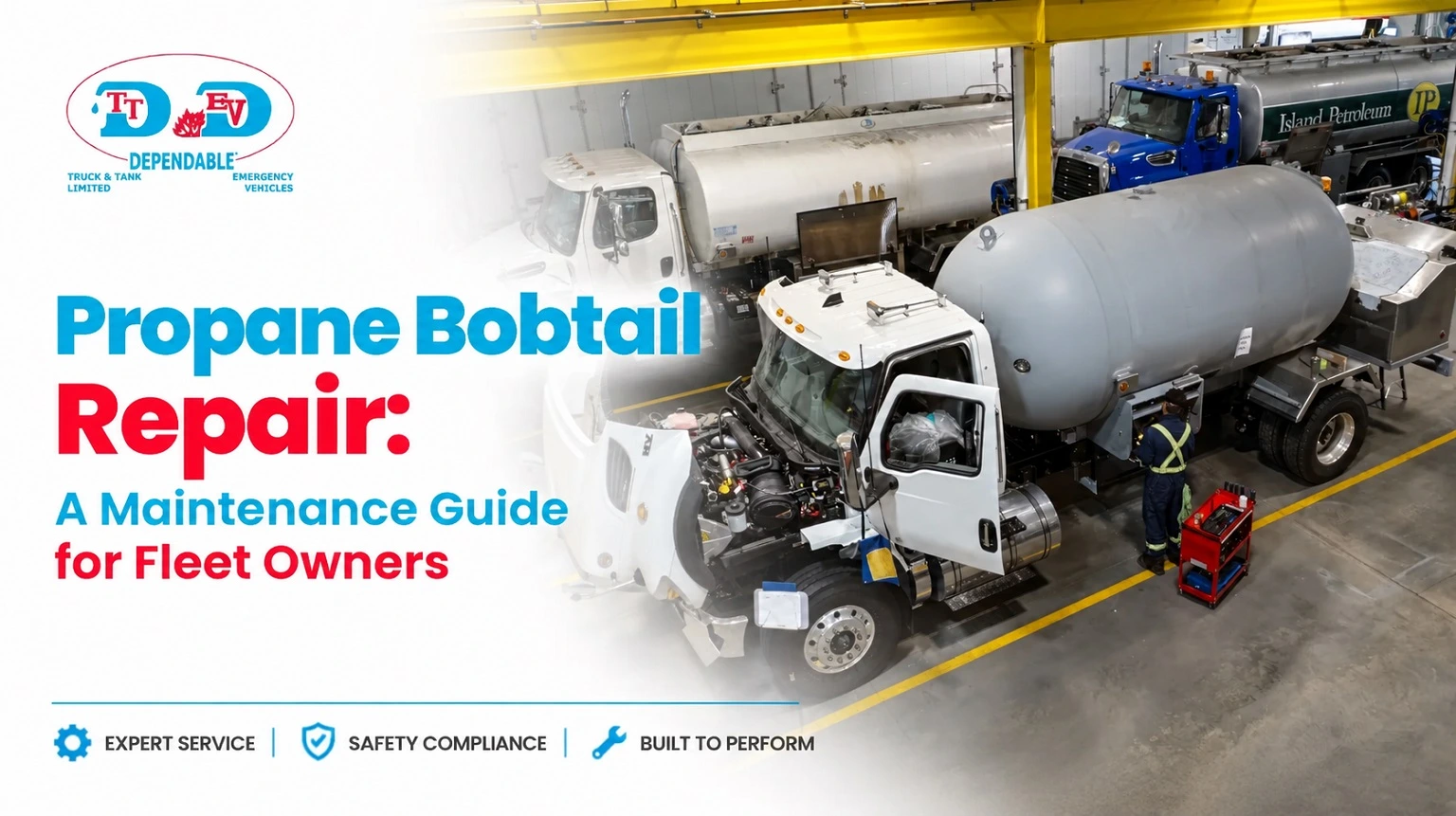
A propane bobtail requires specialized mechanical and liquid-handling expertise to remain safe, compliant, and profitable. Unlike standard freight vehicles, a bobtail propane truck combines a heavy-duty chassis with a high-pressure bulk delivery system. Preventing unscheduled downtime requires a proactive approach to regular propane truck maintenance, proactive component inspections, and qualified system overhauls.
This Propane Truck Maintenance Guide breaks down essential LPG truck repair procedures, critical inspection schedules, and the specific diagnostic steps needed to keep your delivery fleet moving smoothly. From routine servicing to advanced system checks, proper maintenance practices help improve safety, reliability, and long-term fleet performance.
What Is Included in Propane Bobtail Repair and Maintenance?
Propane bobtail repair encompasses the service, troubleshooting, and compliance certification of both the truck chassis and the mounted propane delivery system.
A complete propane truck service program addresses engine diagnostics, brake systems, high-pressure cargo tanks, power take-off (PTO) units, liquid pumps, meters, hoses, and emergency shutoff valves.
PROPANE BOBTAIL MAINTENANCE SPECTRUM |
| CHASSIS & ENGINE SYSTEM | LPG CARGO & DELIVERY SYSTEM |
| Diesel Diagnostics & Tuning | Liquid Pump Overhauls & Seals |
| Air Brake & Suspension Service | Hydraulic Drive Motor & Line Repairs |
| DPF & Exhaust Aftertreatment | Hose Reel & Electronic Meter Calibration |
| Frame & Axle Alignment | Emergency Shutoff System (ESV) Testing |
Because propane is stored and transferred under high pressure, maintaining these systems requires specialized technical knowledge that strictly aligns with federal regulations (such as DOT/CSA B620 requirements).
5 Critical Components That Require Regular Propane Truck Service
Proactive fleet maintenance centers on five key liquid-handling and drive systems. Identifying wear in these parts prevents costly roadside leaks and delivery disruptions.
1. Hydraulic Drives and Pumps
Propane truck hydraulic repair is often required when you notice slow discharge rates, fluid leaks, or unusual whining during pump engagement. The hydraulic motor drives the propane pump that transfers liquid fuel from the vessel to the customer’s tank.
- Common Issue: Worn shaft seals, degraded hydraulic fluid, or valve blow-by.
- Maintenance Action: Inspect hydraulic lines monthly for abrasion or leaks. Replace hydraulic fluid and filters at least once per year or according to pump operating hours.
2. Emergency Shutoff Valves (ESV) and Remote Controls
The Emergency Shutoff Valve system is designed to stop liquid flow instantly during a line failure or emergency.
- Common Issue: Sticky mechanical linkages, low cable tension, pneumatic line leaks, or failing thermal elements.
- Maintenance Action: Perform functional daily checks on both cable-pull and wireless remote shutoff systems before dispatching the vehicle.
3. Liquid Transfer Hose and Hose Reel Assemblies
Delivery hoses endure constant dragging, flexing, and pressure cycling during daily operation.
- Common Issue: Outer cover kinking, exposed braiding, or worn swivel joints on the hose reel.
- Maintenance Action: Inspect the full hose length daily for soft spots, blisters, or cracking. Replace damaged delivery hoses immediately to prevent structural blowouts.
4. Liquid Meters and Register Systems
Accurate meter function ensures precise customer billing and regulatory compliance.
- Common Issue: Air vapor eliminator failures, worn meter chambers, or calibration drift over time.
- Maintenance Action: Schedule annual meter proving and calibration along with regular strainer mesh cleaning to clear debris.
5. PTO (Power Take-Off) Shafts and Joints
The PTO transfers engine horsepower to drive the hydraulic pump or direct-drive propane pump.
- Common Issue: U-joint wear, excessive shaft vibration, or engagement clutch failure.
- Maintenance Action: Grease all universal joints every month and verify secure mounting bolts on the transmission housing.
Propane Truck Inspection Schedule: Daily to 5-Year Protocols
Compliance requires adhering to structured inspection timelines. Combining routine driver inspections with certified technician evaluations ensures safety and regulatory adherence.
| Inspection Type | Frequency | Key Focus Areas | Performed By |
| Pre-Trip Inspection |
Daily |
Hose condition, ESV function, tire pressure, brake stroke, leak checks. | Fleet Driver |
| Monthly Service Check |
Every 30 Days |
Hydraulic system pressure, PTO greasing, meter strainer inspection, pipe mounts. | Maintenance Technician |
| Annual Vehicle & Tank Check |
Annually |
VK (Visual & External Leak) inspection, brake system overhaul, chassis diagnostic. | Certified Inspector |
| 5-Year Hydrostatic/Internal |
Every 5 Years |
K & P (Hydrostatic pressure and internal inspection) vessel testing, safety relief replacement. | Certified Tank Specialist |
Troubleshooting Common Bobtail Delivery Issues
When delivery systems stall on a route, use this direct diagnostic troubleshooting breakdown to identify the root cause fast.
Issue: The Propane Pump Is Operating Slowly or Cavitating
- Cause: Low liquid level in the tank, restricted suction piping, a clogged strainer, or a worn pump impeller/vanes.
- Solution: Clean the liquid line strainer, verify internal valve opening travel, and check hydraulic pump pressure output.
Issue: The Hose Reel Fails to Wind or Retract Smoothly
- Cause: Low hydraulic motor pressure, worn electric reel motor brushes, loose drive chains, or a dry swivel joint.
- Solution: Lubricate the drive chain and swivel, check the hydraulic circuit relief valve, and test reel electrical connections.
Issue: The Emergency Valve Will Not Stay Open
- Cause: Insufficient pneumatic pressure (on air-operated valves), broken latch cables, or failing internal pressure seals.
- Solution: Inspect air lines for cold-weather moisture or leaks, adjust cable tension, and rebuild the valve actuation cylinder if internal air seals are leaking.
Book Professional Propane Bobtail Repair With Dependable NS
Preventative care is the key to keeping your fuel delivery fleet safe, compliant, and profitable. Whether you require routine propane truck maintenance, emergency propane delivery truck repair, or complete propane bobtail service, the certified heavy-duty mechanics and tank specialists at Dependable NS deliver expert care designed to minimize route downtime.
From comprehensive engine and chassis diagnostics to complete hydraulic overhauls, pump repairs, and vessel inspection compliance, our Dartmouth shop supports fleets across Nova Scotia, New Brunswick, Prince Edward Island, and Newfoundland and Labrador.
Call or request service online today to book your propane bobtail service or inspection!
Frequently Asked Questions
What causes hydraulic pump failure on a propane bobtail truck?
Hydraulic pump failure is primarily caused by fluid contamination, excessive heat build-up from low fluid levels, and worn shaft seals. Regular fluid testing and filter changes prevent major hydraulic drive breakdowns.
How often does a propane delivery truck need a pressure test?
A bulk propane tanker repair and inspection routine requires an annual external visual and leakage check (VK test), along with a comprehensive internal hydrostatic pressure test (P test) every five years by a qualified vessel inspector.
Can standard heavy-duty repair shops perform propane tanker repair?
No. Standard chassis repairs can be performed by certified heavy-duty diesel mechanics, but high-pressure vessel repairs, piping modifications, and safety relief valve servicing require specialized tank compliance certifications (such as CSA B620 or DOT registration).
Why is my propane meter under-registering or over-registering during delivery?
Meter drift occurs due to mechanical chamber wear, stuck vapor eliminators, or debris bypassing a damaged strainer. Routine proving and annual recalibration restore accurate liquid measurement.