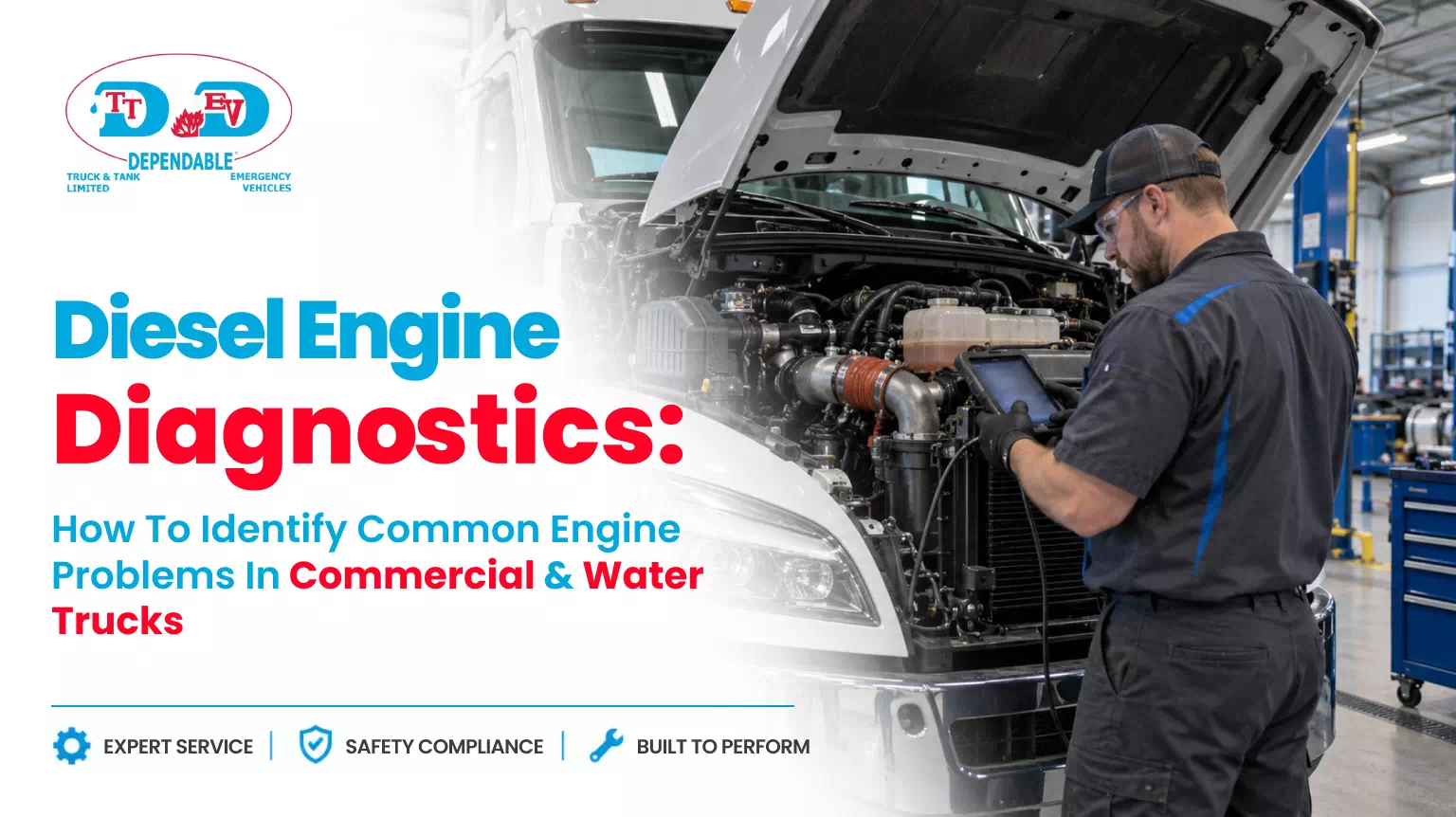
Diesel engine diagnostics is the process of reading fault codes from the engine control module (ECM) and testing the fuel, air, cooling, and exhaust systems to find the exact cause of a performance problem.
Whether you need general heavy-duty water truck repair or standard fleet service, the most common issues diagnostics uncover in commercial trucks are hard starting, excessive exhaust smoke, loss of power, overheating, and fuel contamination. Catching these problems early during a routine water truck inspection is the difference between a scheduled water truck repair and a costly breakdown that takes your water delivery vehicle out of service for days.
This guide explains how diesel diagnostics work, the seven most common engine problems and how to identify each one, and what to expect from a professional diagnostic inspection.
What Is Diesel Engine Diagnostics?
Diesel engine diagnostics combines electronic fault code analysis with hands-on mechanical testing. Modern heavy-duty vehicles, from standard freight hauling units to specialized rigs requiring commercial truck repair, utilize engines from Cummins, Caterpillar, and other manufacturers that store fault data directly in the ECM.
A technician connects a diagnostic scan tool through the truck’s SAE J1939 data link to read active and stored codes, each identified by an SPN (suspect parameter number) and FMI (failure mode identifier).
Fault codes point to a system, not always a root cause. A low boost pressure code could mean a failing turbocharger, a cracked charge air cooler, or a simple leaking hose clamp. That is why proper water truck maintenance and diagnostics also include live sensor data review, fuel pressure testing, compression checks, and physical inspections before any parts are replaced.
7 Common Diesel Engine Problems and How to Identify Them
Here are the seven problems heavy-duty diesel mechanics see most often during water tanker truck maintenance and engine checks, along with the symptoms and likely causes for each.
1. Hard Starting or No Start
A diesel engine that cranks but will not start usually has a fuel delivery, compression, or cold weather problem. Common causes include air in the fuel lines, a clogged fuel filter, a weak lift pump, worn injectors, or low cylinder compression.
In Nova Scotia winters, fuel gelling is a frequent culprit. Untreated diesel fuel begins to thicken in severe cold, starving the engine of fuel. A failed intake air heater or block heater makes cold starts even harder. If a truck starts fine when warm but struggles below freezing, look at cold weather systems first.
2. White Smoke From the Exhaust
White smoke from a diesel engine means fuel is passing through the cylinders without burning, or coolant is entering the combustion chamber. A short puff of white smoke on a cold start is normal. Continuous white smoke points to faulty injectors, low compression, incorrect injection timing, or a leaking head gasket.
The quickest field check is the coolant level. If the coolant reservoir keeps dropping with no visible external leak, and the white smoke smells sweet, coolant is likely burning in the cylinders. That vehicle should be diagnosed before further driving, as coolant in a cylinder can hydrolock and destroy an engine.
3. Black Smoke From the Exhaust
Black smoke from a diesel exhaust means the engine is burning more fuel than the available air can support. Common causes include a clogged air filter, a failing turbocharger that is not building boost, worn or dripping fuel injectors, and a stuck EGR valve recirculating too much exhaust gas.
Light black smoke under hard acceleration is common in older mechanical engines. Heavy black smoke at cruise or idle in a modern emissions-equipped truck is not normal and usually triggers aftertreatment problems downstream, since excess soot loads the diesel particulate filter (DPF) faster.
4. Blue Smoke From the Exhaust
Blue smoke means the engine is burning oil. The oil is getting into the combustion chamber through worn piston rings, worn valve stem seals, or a failed turbocharger shaft seal that lets oil into the intake or exhaust side.
Blue smoke usually comes with rising oil consumption and excessive crankcase blowby. A simple blowby check, watching the vapour flow from the crankcase breather at operating temperature, gives a good early read on internal engine wear before committing to a teardown.
5. Loss of Power or Engine Derate
A sudden loss of power in a modern diesel truck is often the ECM protecting the engine, not a mechanical failure. When the ECM detects a serious fault, such as an aftertreatment problem, low oil pressure, or high coolant temperature, it triggers derate mode and limits engine power or road speed.
Gradual power loss has different causes. Clogged fuel filters, a restricted air intake, a blocked DPF, low boost pressure from a tired turbo, or worn injectors all rob power slowly. Reading the fault codes tells you quickly whether you are dealing with a forced derate or a mechanical restriction.
6. Engine Overheating
Diesel engine overheating is most often caused by low coolant, a stuck thermostat, a plugged radiator, a failing water pump, or a worn fan clutch. Heavy loads and long grades expose a marginal cooling system fast.
Never keep driving an overheating diesel to finish a run. Sustained overheating warps cylinder heads, crushes head gaskets, and can crack blocks. A cooling system pressure test is an inexpensive diagnostic step compared to an in-frame rebuild.
7. Fuel Contamination and Fuel System Problems
Water and microbial growth are the two most common diesel fuel contaminants. Water enters through condensation in tanks and poor-quality fuel, then bacteria and algae grow at the fuel and water boundary, plugging filters with dark sludge. Water that reaches modern high-pressure common rail injectors causes rapid, expensive injector failure.
Warning signs include repeated fuel filter plugging, rough idle, misfires, and a water-in-fuel warning light. Draining the water separator regularly and treating fuel in winter are the cheapest preventative maintenance habits a fleet can build.
What Happens During a Professional Diesel Diagnostic Inspection?
A proper diagnostic inspection at a qualified truck repair shop follows a consistent process:
- Symptom review: The technician documents when the problem occurs, under what load, in what weather, and what has already been replaced.
- ECM scan: A diagnostic tool reads active and stored fault codes over the J1939 data link and captures freeze-frame data from the moment each fault was set.
- Live data and visual inspection: The technician reviews sensor readings in real time, then inspects the engine for leaks, damaged wiring, boost leaks, and exhaust restrictions.
- Component testing: Targeted tests confirm the root cause, including fuel pressure tests, compression or cylinder cutout tests, boost leak tests, and cooling system pressure tests.
- Repair plan and verification: The shop provides a diagnosis, quote, and timeline, then verifies the repair with a road test and a follow-up scan to confirm no codes return.
This process matters because guessing at parts is expensive. One confirmed diagnosis is almost always cheaper than two replaced components that did not fix the problem.
Book Expert Diesel Diagnostics With Dependable NS
If your fleet is showing any of the warning signs above, do not wait for a roadside breakdown to make the decision for you. Whether you need targeted water delivery truck repair, specialized water tanker repair, complete water truck service, or ongoing water truck fleet maintenance, the certified heavy-duty mechanics at Dependable NS provide complete diesel diagnostics and repair from our Dartmouth shop. We use advanced diagnostic equipment to pinpoint problems fast and keep your downtime to a minimum.
As a family-owned shop serving fleets since 1975, we handle everything under one roof, from fleet mechanical services and engine repairs to MVI inspections and CSA B620 tank compliance. Fleets across Nova Scotia, New Brunswick, Prince Edward Island, and Newfoundland and Labrador trust us because we diagnose it right the first time, and our team is available 24/7 when an emergency will not wait for business hours.
Request service online to book your diesel diagnostic inspection today for reliable water system and engine performance!
Frequently Asked Questions
Why is my diesel engine blowing white smoke?
Continuous white smoke means unburned fuel or coolant is passing through the cylinders. The most common causes are faulty injectors, low compression, incorrect injection timing, or a leaking head gasket. Brief white smoke on a cold start is normal.
Is it safe to drive a truck in moderate mode?
Derate mode exists to protect the engine, so short, careful driving to a repair shop is usually possible. It is not safe to ignore. Many derates escalate to a 5 mph limit or an engine shutdown if the underlying fault is not repaired.
Can I diagnose diesel engine problems myself?
Drivers and fleet operators can check fluid levels, filters, smoke colour, and the water separator. Reading heavy-duty fault codes, testing injectors, and diagnosing aftertreatment systems requires OEM-level software and shop equipment, so persistent problems belong with a certified heavy-duty diesel mechanic.
How often should a heavy-duty diesel engine be inspected?
Follow the manufacturer’s preventative maintenance schedule, typically based on kilometres, engine hours, or fuel burned. Most fleets pair oil service intervals with a basic inspection and book a full diagnostic check whenever a fault code, smoke, or performance change appears.
What do heavy-duty diesel fault codes mean?
Trucks on the J1939 network report faults as an SPN, which identifies the component or system, and an FMI, which describes the failure type, such as a signal too high or too low. A technician interprets the combination alongside live data to find the root cause.