A tanker can look solid from the outside and still be thinning from the inside. Corrosion, road vibration, and years of loading and unloading wear metal down in places you will never spot on a walkaround. By the time a problem shows itself as a leak, the repair bill and the downtime are already much bigger than they needed to be.
That is where NDE testing methods help fleet owners identify hidden damage before it leads to costly repairs. These non-destructive inspection techniques allow technicians to assess the condition of tank shells, heads, and welds without cutting, drilling, or taking anything apart. Your tank goes on the shop floor, gets inspected, and returns to service once it meets the required standards.
If you run fuel tankers, propane bobtails, water tankers, or vacuum trucks, understanding how these testing methods work helps you plan maintenance instead of reacting to unexpected failures.
So What Is Non-Destructive Testing?
“What is non-destructive testing?” is one of the most common questions fleet owners ask when they first see the term on a quote. The short answer is that it is a family of inspection methods that check a material for flaws while leaving it fully usable afterward.
Think of it like an X-ray at the doctor’s office. The goal is to see inside without opening anything up. Instead of cutting a sample out of your tank wall to see how thick it still is, a technician uses sound waves, magnetic fields, or special dyes to find cracks, corrosion, and weld defects while the tank stays whole.
You will see the work called both NDE (non-destructive examination) and NDT (non-destructive testing). In practice, they mean the same thing, so do not let the two sets of letters confuse you when you are comparing quotes. Our NDE testing covers the full range of methods.
Why This Matters for Your Fleet
A tank that hauls dangerous goods is a pressure-bearing, regulated piece of equipment. When it fails, the consequences are not limited to a repair invoice. You are looking at product loss, environmental cleanup, a truck sitting idle, and possible enforcement action.
Regular testing gives you three things:
- Early warning. Wall thinning and small weld cracks get caught while they are still cheap to fix.
- Proof of compliance. Your test records and tank markings show inspectors that the unit is legal to operate.
- Planned downtime. You choose when the truck comes off the road instead of finding out on a Friday afternoon.
Fleets that book tank inspection and testing on a schedule spend far less over the life of a unit than fleets that wait for something to go wrong.
The Main NDE Methods Used on Tanks
Different flaws need different tools. A good shop selects the method based on what your tank is made of and what it is likely to suffer from.
Ultrasonic Testing
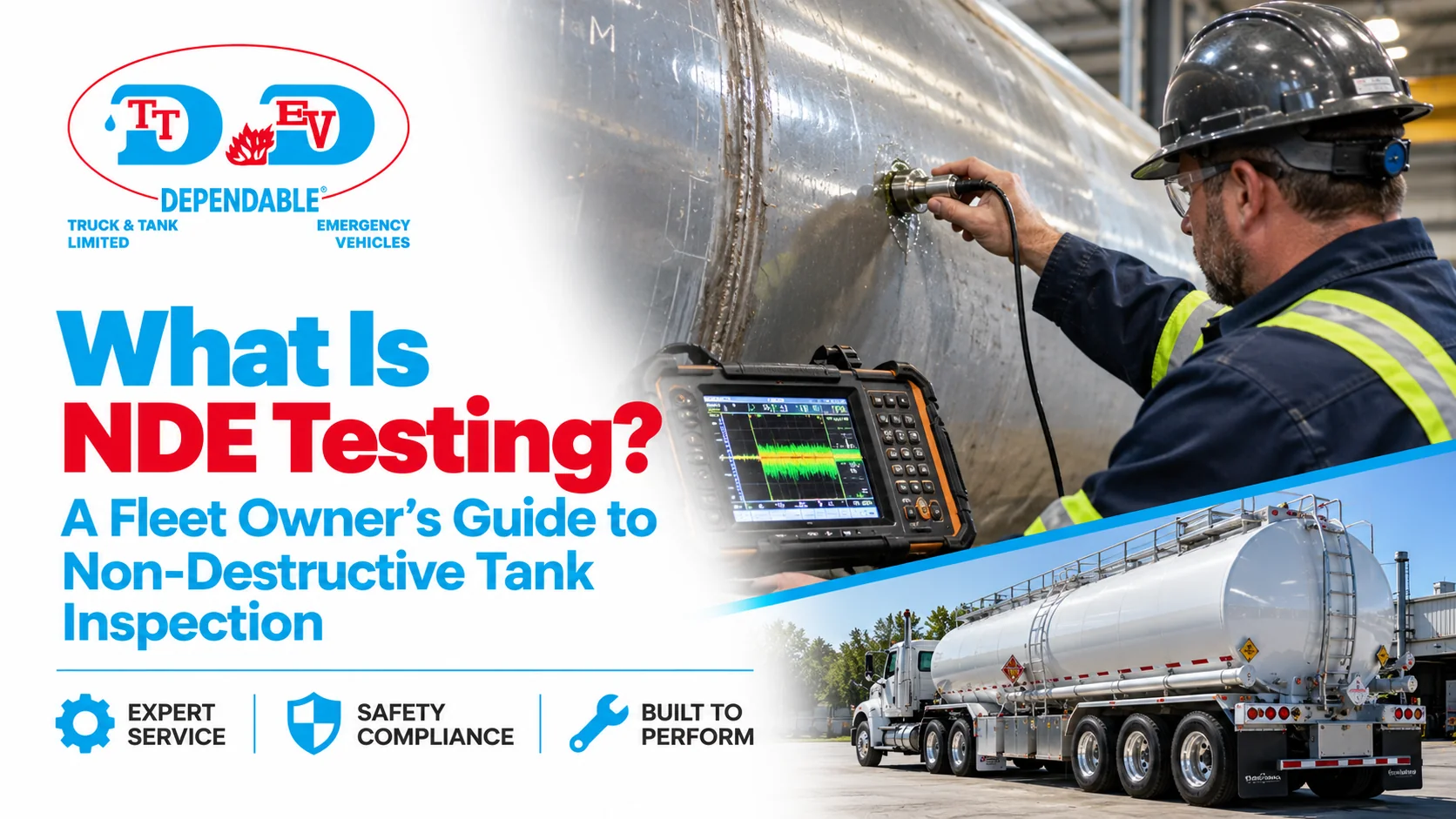
Ultrasonic testing sends high-frequency sound into the metal and measures how long it takes to bounce back. A thinner wall returns the signal faster. This is the standard way to measure remaining wall thickness across a tank shell and to find internal corrosion and pitting that no visual check would reveal. For most fleet owners, this is the method that answers the big question: how much metal is actually left?
Magnetic Particle Testing
Magnetic particle testing works on steel and other magnetic materials. The technician magnetizes the area and applies fine iron particles. Where there is a crack at or just under the surface, the magnetic field leaks and the particles gather along the flaw, making it visible. It is fast, reliable, and widely used on steel weld seams and attachment points.
Dye Penetrant Testing
Dye penetrant testing is the usual choice when the material is not magnetic. A coloured dye is applied to a cleaned surface, drawn into any crack that breaks the surface, and then pulled back out by a developer so the flaw shows as a clear line. Since a large share of highway tankers are built from aluminum, which magnetic methods cannot check, this method sees heavy use in tanker shops.
Visual and Radiographic Testing
A trained visual examination is still part of the process and catches a surprising amount, from dents and gouges to failing attachment welds. Radiographic testing, which uses radiation to produce an image of the inside of a weld, is used when a joint needs to be assessed all the way through rather than just at the surface.
How NDE Fits Into CSA B620
If your tank carries dangerous goods, the rules that govern it in Canada trace back to CSA B620. This is the national standard covering the design, construction, repair, testing, inspection, and periodic retesting of highway tanks and TC portable tanks. It is referenced directly by the Transportation of Dangerous Goods Regulations, which is what gives it legal force rather than leaving it as guidance.
Two points matter most to you as an owner. First, only facilities holding a B620 facility registration are permitted to manufacture, assemble, modify, repair, or test tanks in dangerous goods service. A shop that is not registered cannot legally do the work, no matter how good its welders are. Second, your required test schedule is not a single number. It depends on your tank specification and what you haul, and it is set out in the periodic inspection and testing tables in the standard.
After periodic tests are done, the results are marked on the tank near the identification plate using a set of letters. V is a visual external inspection, I is an internal inspection, P is a pressure test, T is a thickness test, L is a lining inspection, K is a leak test, and UC is an upper coupler area inspection. The date and the last four digits of the facility registration number go alongside them. That marking is the quickest way for you or a roadside inspector to see where a unit stands.
Booking CSA B620 tank inspection services through a registered facility is what turns all of this from paperwork into a unit you can dispatch with confidence. Our CSA B620 inspections cover the testing, the documentation, and the marking.
When Testing Turns Into Repair Work
Testing on its own does not fix anything. What it does is tell you exactly where to spend your repair budget, and that is where the value shows up.
If ultrasonic readings show wall thickness below the minimum for your tank spec, the affected section needs attention before the unit returns to service. If a weld inspection turns up a crack in a seam or around a baffle, that joint gets cut out and rewelded by a certified welder rather than patched over. The same applies to pressure vessel inspection on propane and other pressure tanks, where code requirements around welding and repair are strict.
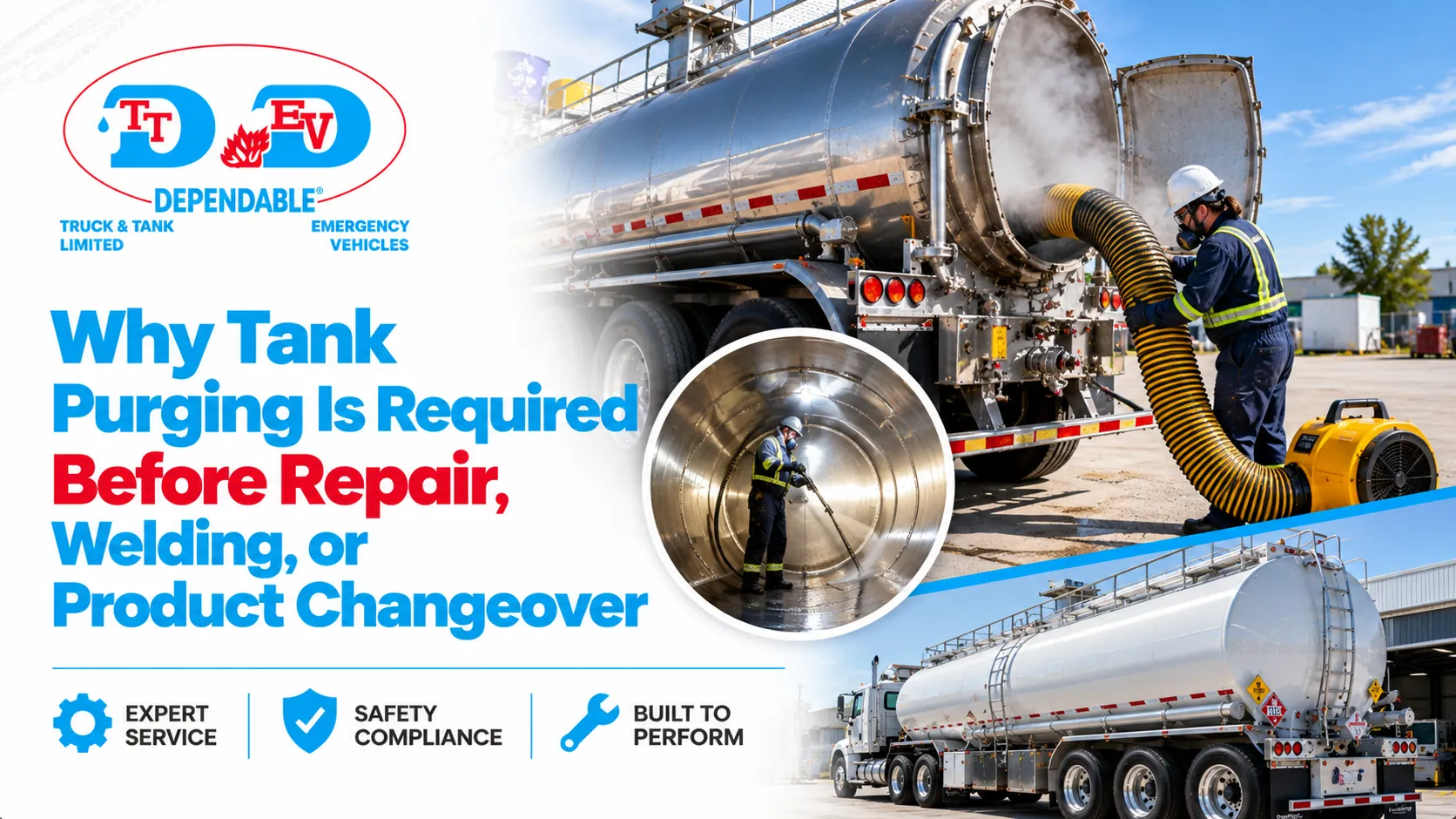
This is why testing and repair usually sit under one roof. When a flaw is found, the tank is already in the shop, already cleaned and purged, and already open. Our weld repair and pressure vessel work and our tank repair services are set up to pick up exactly where the testing leaves off. Combining weld repair and pressure vessel services with the inspection that found the problem saves you a second trip and a second round of purging.
Most of the repairs we handle begin with a test result rather than a breakdown, which is the cheaper end to be on. It is also the reason to choose tank repair services in Nova Scotia from a shop that tests as well as welds.
What a Certified Technician Brings to the Job
The equipment used in NDE is only as good as the person reading it. An ultrasonic meter gives you a number. Knowing whether that number is a real thin spot, a coating artifact, or a bad couplant contact is judgment built through training and hours on the shop floor.
In Canada, NDT personnel are certified to the CAN/CGSB-48.9712 standard through the National Non-Destructive Testing Certification Body run by Natural Resources Canada. Certification runs in three levels. Level 1 technicians set up equipment and record results under supervision. Level 2 technicians choose the technique, interpret what they find, and sign off. Level 3 holds responsibility for procedures and the overall program.
This matters to you for a practical reason. CSA B620 recognizes these certifications for tank inspectors, so the person reading your results needs real qualifications behind them. Certified tanker compliance inspections are only as strong as the technician signing them off. When you are comparing quotes, ask what level of certification is doing the interpretation and in which methods. It is a fair question, and any shop should answer it without hesitating.
Common Mistakes Fleet Owners Make
- Waiting until the marking expires. Booking in the last week gives you no room if the test finds something. Start looking four to six weeks out.
- Treating a driver walkaround as a tank inspection. A daily circle check is valuable, but it cannot see wall thickness or a crack under a weld cap.
- Sending the unit in dirty. Internal work needs a cleaned and purged tank. Arriving without that done adds a day or more to the job.
- Letting records go missing. Test reports are your evidence. Losing them can mean repeating work you already paid for.
- Assuming a repair closes the file. Work done on a tank in dangerous goods service generally needs testing and inspection afterward before the unit goes back out.
- Using whichever shop is closest for a quick weld. On a regulated tank, an unregistered repair can put the whole unit out of compliance.
Your Pre-Inspection Checklist
Run through this before your tank goes in, and the visit will go faster:
- Pull the last test reports and check the markings on the tank so you know which tests are due.
- Note the tank specification from the identification plate, along with the build date and the product you haul.
- Have the tank cleaned and purged if internal work is on the list.
- Write down any known issues, including soft spots, past repairs, weeping fittings, and areas that take a beating on your routes.
- Confirm the shop holds valid federal registration for the work you need.
- Book while you still have margin before the due date.
- Ask for the updated documentation and confirm the new markings are applied before you take the unit home.
Conclusion: Keep Your Tanks Safe, Reliable, and Compliant
Regular tank inspections and NDE testing methods help fleet owners identify hidden damage, prevent costly repairs, and maintain compliance with industry standards. Understanding your tank specifications, following inspection schedules, and keeping accurate maintenance records can reduce unexpected downtime and extend the working life of your equipment.
At Dependable NS, our B620-registered tank facility in Dartmouth provides professional tank inspection and testing services for commercial fleets across Nova Scotia and Atlantic Canada. Whether your tanker is due for an inspection or you need help addressing potential issues, our experienced team is here to help.
Keep your fleet safe and road-ready. Contact us today to discuss your tank inspection and testing needs.
Frequently Asked Questions
What does NDE actually stand for?
Non-destructive examination. You will also see non-destructive testing, or NDT, on quotes and reports. They describe the same family of methods.
Will the testing damage my tank?
No. Leaving the tank fully serviceable afterward is the whole point. Nothing is cut, drilled, or removed, and the unit can go straight back to work once testing and any needed repairs are complete.
How often does my tank need to be tested?
It depends on your tank specification and the product you carry. The periodic inspection and testing tables in CSA B620 set the intervals for each test type. A registered facility can confirm your exact schedule from your spec plate and your current markings.
Can any repair shop test my tanker?
No. A B620 facility registration is required to manufacture, assemble, modify, repair, or test tanks used to carry dangerous goods. Ask for the registration number before booking.
Does magnetic particle testing work on an aluminum tank?
It does not. Aluminum is not magnetic, so the method has nothing to work with. Dye penetrant is the usual choice for surface flaws on aluminum, and ultrasonic methods handle thickness.
What do the letters stamped on the side of my tank mean?
They record which periodic tests were completed. V is visual external, I is internal, P is pressure, T is thickness, L is lining, K is leak, and UC is the upper coupler area. The date and the facility registration digits appear with them.
What happens if a test finds a problem?
You get a report showing what was found and where. The repair is carried out by a registered facility, and the affected area is generally retested and inspected before the tank returns to service.