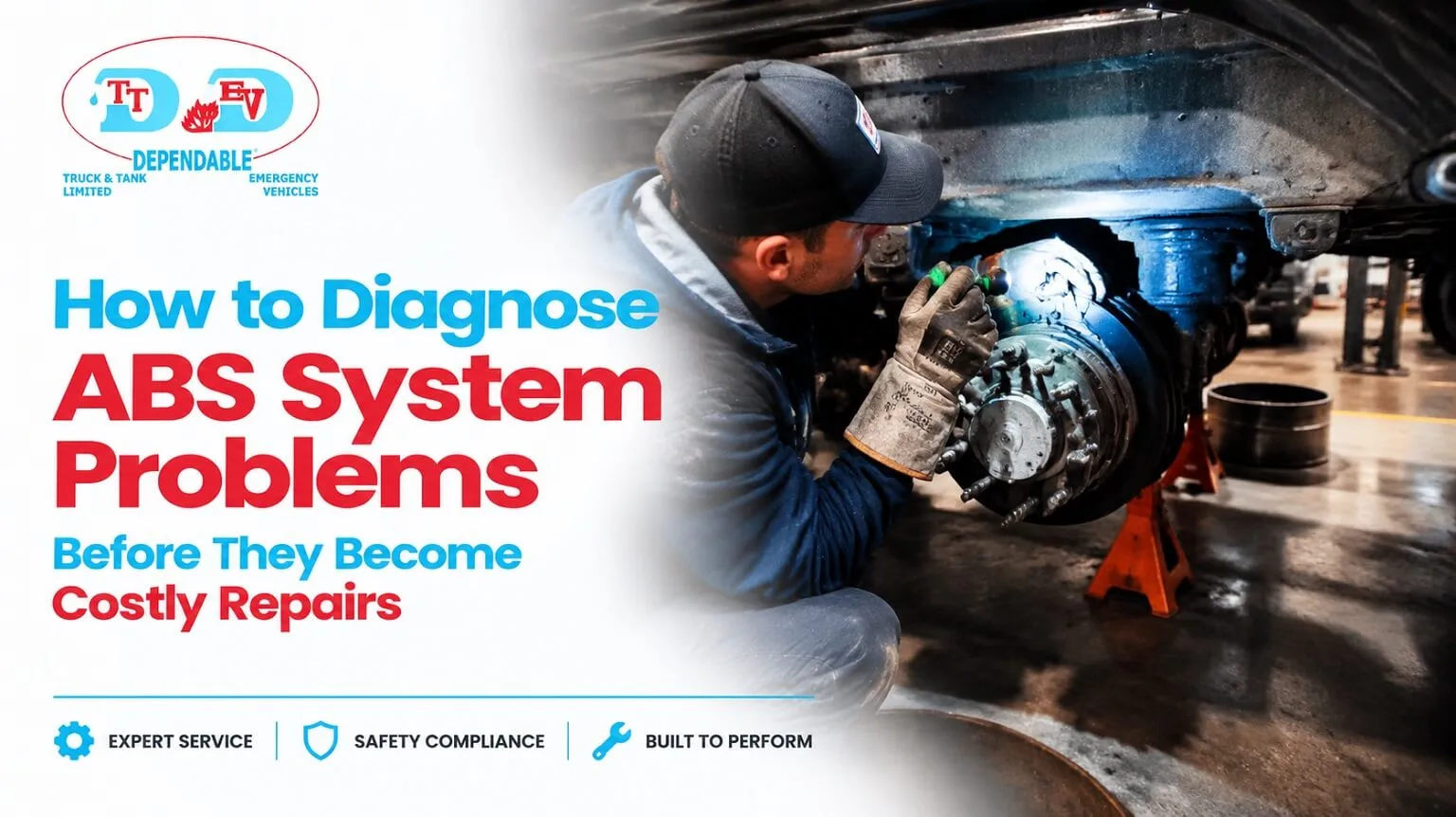
Most ABS system repair jobs start small: a flickering dashboard light, a slight pull under braking, a sensor reading that’s just a bit off. Catch those early signs and ABS repair is quick and inexpensive. Ignore them, and you’re looking at module failure, brake imbalance, or a failed inspection. Here’s how to tell the difference before it costs you.
This ABS brake system repair guide explains how to identify warning signs, diagnose common component failures, and understand the repair steps required to keep commercial vehicles operating safely. From sensor issues to control module problems, proper inspection and timely repairs can help prevent costly downtime and maintain reliable braking performance.
What Does the ABS Warning Light Actually Mean?
The ABS warning light means your truck’s anti-lock braking system has detected a fault and disabled itself, not your regular brakes. Your standard braking still works, but you lose the anti-lock function that prevents wheel lock-up on wet roads, gravel, or ice.
On a heavy-duty truck hauling a loaded trailer, that’s a real safety gap, and it’s exactly the kind of issue that leads fleets to call us for ABS diagnostics before a routine trip turns into a roadside problem.
A steady ABS warning light usually points to a stored fault code somewhere in the system. A flashing ABS warning light, or one paired with other dash warnings, often means an active fault that needs ABS system repair right away rather than at the next scheduled service.
Common Signs You Need ABS System Repair
Most drivers notice something’s off long before the ABS warning light comes on. In our bay, these are the symptoms that consistently show up ahead of a confirmed ABS fault:
- ABS warning light stays on after startup instead of clearing within a few seconds
- Wheels lock up under hard braking, especially on wet or gravel roads
- Brake pedal feels spongy, pulses unexpectedly, or has inconsistent resistance
- Truck pulls to one side when braking
- Grinding, clicking, or humming noise from a wheel hub during braking
- Speedometer or cruise control acting erratically (wheel speed sensors often double as inputs for both systems)
- Trailer ABS light staying illuminated on connected trailers
Any one of these on its own is worth a look. Two or more together usually means it’s time to book ABS brake system repair before the fault spreads to other components.
How ABS Diagnostics Work on Heavy-Duty Trucks
ABS diagnostics on a commercial truck follow a fairly consistent process, and understanding it helps fleet managers know what they’re paying for:
- Code scan. We pull stored and active fault codes from the ABS control module using a heavy-duty diagnostic scanner, which narrows down which wheel, sensor, or circuit is involved.
- Wheel speed sensor inspection. Sensors and tone rings get checked for physical damage, corrosion, or debris buildup, which is the most common root cause we see.
- Wiring and connector check. Chafed wiring, corroded connectors, and loose grounds cause a large share of intermittent ABS faults, especially on trucks running rural and gravel routes.
- Module testing. If sensors and wiring check out, we test the ABS control module itself for internal faults before recommending ABS module repair or replacement.
- Road test and re-scan. Once repairs are made, we road test and re-scan to confirm the fault is fully cleared and doesn’t return under load.
This is the same sequence whether the job ends up being a simple sensor swap or full ABS control module repair. Skipping steps to save time is how faults get misdiagnosed and come back.
ABS Module Repair vs. Full Control Module Replacement
Not every ABS control module repair means installing a new module. In many cases, the fault traces back to a damaged connector, corroded pin, or a sensor feeding bad data into an otherwise healthy module. Once we confirm the module itself is faulty through diagnostics, ABS module repair options depend on the specific system and how the internal fault presents.
Full replacement becomes necessary when the module has internal electronic failure that can’t be reliably repaired, or when a truck is older and repair parts for that specific control module are no longer readily available.
Either way, this decision should come after diagnostics, not before. Replacing a module without confirming it’s actually the fault is one of the most common ways fleets end up paying for ABS system repair twice.
What Happens If You Ignore ABS Problems?
Driving with an unresolved ABS fault doesn’t just mean losing anti-lock protection. Left long enough, corrosion and wiring damage that caused the original fault can spread to related brake system components, turning a sensor-level fix into full Heavy-duty truck brake repair. Wheel speed sensor faults can also affect stability control systems that share the same inputs, depending on the truck’s setup.
There’s also the compliance side. An active ABS fault is the kind of thing that shows up during a roadside or annual inspection, and vehicles can be flagged or held out of service until it’s resolved. For fleets running tight schedules across Nova Scotia and Atlantic Canada, an inspection delay on the road is a far more expensive problem than a scheduled shop visit.
The Cost of Delaying ABS Repair vs. Catching It Early
Early ABS repair, caught at the warning-light or minor-symptom stage, is typically a sensor, connector, or wiring fix. Left unresolved, the same fault can progress to module-level failure, which means a longer repair, more parts, and more downtime.
There’s also the indirect cost. A truck pulled out of service for an unexpected ABS fault mid-route costs more in missed deliveries and rescheduling than the same repair done during planned fleet brake maintenance. Commercial truck brake repair is almost always cheaper as a scheduled job than an emergency one, and ABS issues are one of the more preventable causes of an unplanned breakdown.
Keep Your Fleet Safe With Timely ABS Repairs
ABS issues rarely appear without warning. A dashboard light, unusual braking behaviour, or a faulty sensor reading can be the first indication of a larger problem developing within your truck’s braking system. Identifying these signs early and scheduling proper diagnostics can help prevent expensive repairs, unexpected downtime, and compliance issues.
At Dependable NS, we help commercial fleets diagnose and repair ABS problems with thorough inspections, advanced diagnostic testing, and reliable brake system solutions. Whether you need sensor replacement, wiring repairs, ABS module diagnostics, or complete ABS system repair, our team ensures your vehicle stays safe, compliant, and ready for the road.
Need professional ABS diagnostics or repair for your commercial truck? Contact Dependable NS today to schedule your service and keep your fleet moving safely.
Frequently Asked Questions
What does a flashing ABS light mean on a commercial truck?
A flashing ABS light usually indicates an active fault currently being detected, rather than a fault stored from an earlier trip. It’s a stronger signal that ABS diagnostics and ABS system repair are needed soon rather than at the next scheduled service.
Can you still drive with the ABS light on?
Your regular brakes will still function, so the truck is drivable, but you lose anti-lock protection, which increases wheel lock-up risk on wet or icy roads common across Atlantic Canada winters. We recommend booking ABS repair as soon as the light appears rather than waiting.
How much does ABS control module repair cost?
Cost depends on whether the fault is a sensor, wiring issue, or the module itself, since a full ABS control module repair costs more than a sensor-level fix.
How long does Truck ABS repair take?
Most sensor- or wiring-related ABS repair can be completed the same day. Jobs requiring ABS module repair or a full control module replacement may take longer depending on parts availability.
Is ABS repair covered under fleet maintenance contracts?
That depends on the terms of your specific fleet maintenance contract. If you have a service agreement with Dependable NS, our team can confirm what’s included and help build ABS diagnostics into your regular fleet brake maintenance schedule.
Do wheel speed sensors need to be replaced or can they be repaired?
Wheel speed sensors are typically replaced rather than repaired once confirmed faulty, since internal sensor damage isn’t field-serviceable. The connector, wiring, or mounting around the sensor, however, is often repairable.