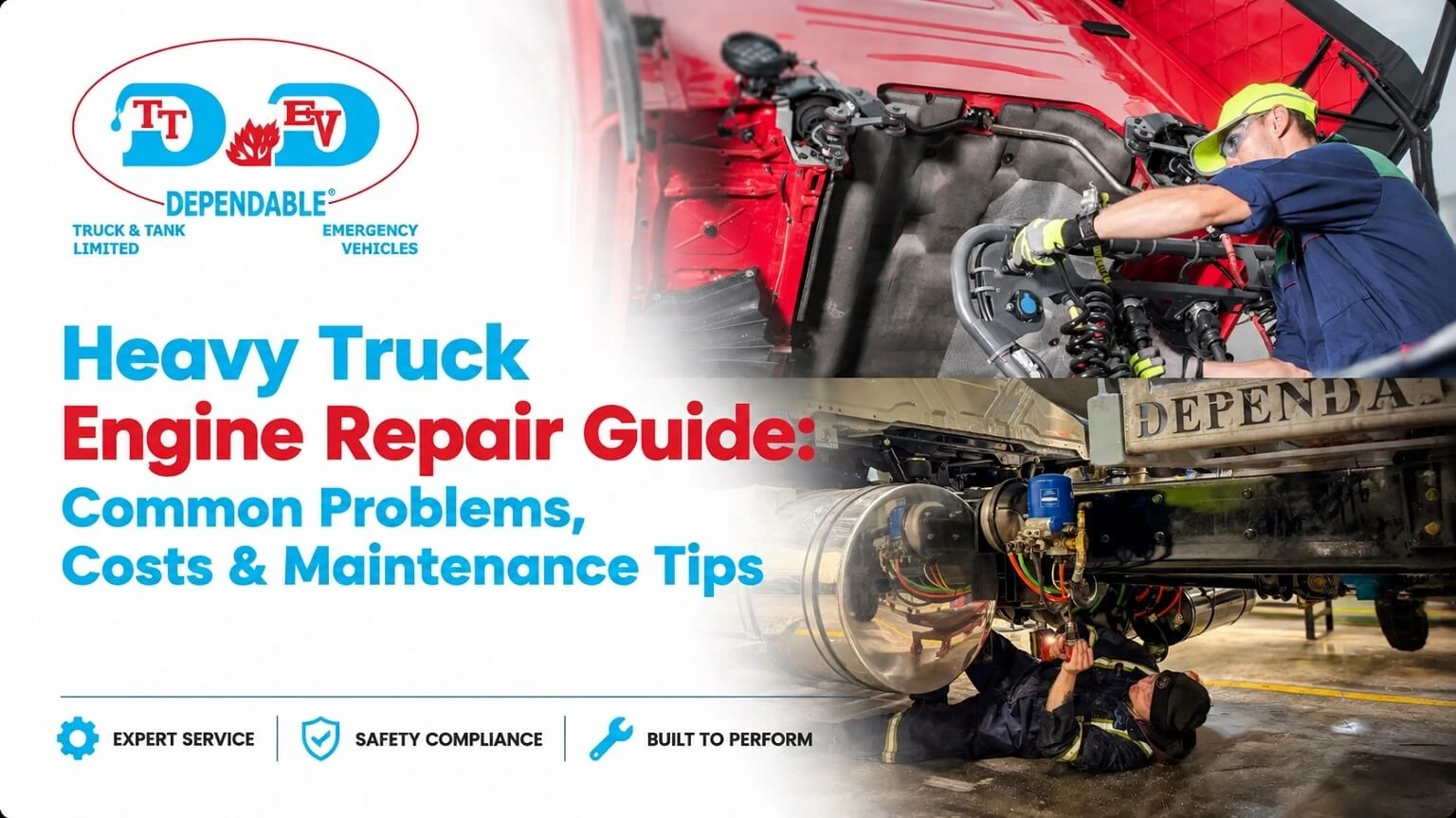
Most heavy truck engine repair calls start as something small. A sensor fault, a coolant leak, a worn belt. Caught early, these are quick, affordable fixes. Ignored, they turn into the kind of engine damage that keeps a truck off the road for weeks.
Why Minor Engine Issues Deserve Fleet-Level Attention
A single warning light on one truck rarely feels urgent when a whole fleet is running routes. But this heavy truck engine repair guide exists because the habits set at the fleet level are what separate operations with predictable maintenance costs from ones that get surprised by a breakdown on a Friday afternoon.
Every engine in a fleet ages differently depending on route type, idle time, and load. A truck running short local deliveries in Dartmouth wears differently than one doing long highway hauls across the Maritimes. Tracking issues by truck, not just by fleet average, makes it easier to catch a pattern before it becomes a repair bill.
What Counts as a Minor Engine Repair on a Heavy-Duty Truck?
This category covers the small, contained fixes that keep an engine running well without pulling it apart. Think sensor replacements, belt and hose swaps, gasket leaks, filter changes, and glow plug service.
This is different from a major overhaul, like a rebuild after a bearing failure or a cracked block. Most heavy truck engine repair visits fall into the minor category, and staying in that category is the whole point of good maintenance.
What Are the Most Common Problems Behind Engine Repair Calls?
These are the issues we see most often on trucks running Nova Scotia routes:
- Fuel injector problems causing rough idle, poor fuel economy, or hard starts
- Turbo boost leaks from cracked hoses or loose clamps
- Coolant leaks at hoses, the water pump, or gaskets
- EGR and DPF clogging from short trips or extended idling
- Sensor faults, including MAP, EGT, and coolant temperature sensors
- Worn belts and hoses, especially after a hard winter
- Glow plug failure making cold starts difficult or impossible
Left unaddressed, any of these can turn a routine visit into a major diesel engine repair.
How Nova Scotia Winters Affect Heavy Truck Engines
Cold weather adds its own layer of wear on top of normal engine use. Below-freezing temperatures thicken fluids, stress rubber components, and make weak parts fail faster than they would in milder conditions.
Glow plugs that were marginal in October often fail outright by January. Belts that had a small crack tend to snap once the rubber stiffens in the cold. Coolant systems with a slow leak lose more fluid per trip when the truck is working harder to reach operating temperature.
Pre-Winter Inspections Reduce Cold-Weather Breakdowns
Fleets that schedule a pre-winter inspection, checking belts, hoses, glow plugs, and coolant strength before the first hard freeze, consistently see fewer cold-weather breakdowns than fleets that wait for a truck to fail on the road.
What Are the Warning Signs You Need Diesel Engine Repair?
Watch for these signs on every truck in the fleet:
- A check engine or service engine light
- Noticeable power loss or hesitation under load
- Rough or uneven idle
- Excessive black, white, or blue exhaust smoke
- A fuel or coolant smell in the cab or engine bay
- Coolant level dropping between checks
- Hard or delayed starting, especially in cold weather
A driver who flags any of these during a pre-trip inspection has just saved the fleet from a much bigger repair bill.
How Much Does This Kind of Engine Work Typically Cost?
Exact pricing depends on the make, model, and how far a problem has progressed, but the pattern holds across almost every heavy truck engine repair we see.
| Repair Type | Typical Scope | Relative Cost |
|---|---|---|
| Sensor replacement | Single part, quick diagnostic and swap | Low |
| Belt or hose replacement | Preventive or reactive, short job | Low |
| Fuel injector service | Cleaning or single injector replacement | Moderate |
| Turbo or EGR component repair | More labour, sometimes multiple parts | Moderate to high |
| Full engine rebuild | Complete teardown after major failure | Highest by a wide margin |
Commercial truck engine repair costs climb fastest once contamination or heat damage spreads beyond the original part. Catching a problem at the sensor or hose stage keeps the bill in the low tier.
Why Delaying an Engine Repair Almost Always Costs More
Every repair shop has seen the same pattern. A driver mentions a minor rough idle three weeks before a truck actually breaks down. By the time it reaches the shop, a fifteen-minute sensor swap has turned into a full diagnostic teardown because the fault had time to affect other components.
Delaying repair does more than risk a bigger bill. A truck running on a partially failed sensor or a leaking hose is also burning more fuel, producing more emissions, and putting extra strain on parts that were otherwise healthy. The math rarely favours waiting.
Same-Week Repairs Cost Less Than Wait-and-See Repairs
Fleets that treat a driver-reported issue as a same-week appointment, rather than something to monitor, spend less overall on engine repair than fleets that wait for a light to turn red.
How Do Minor Repairs Prevent Major Engine Repair Bills?
A cracked hose is a cheap fix on its own. Left alone, it can lead to overheating, which can warp a head or damage a gasket in ways that turn a small job into a major one.
Diesel engine diagnostics catch most of these problems at the sensor and fault-code stage, long before they show up as a driver complaint. Reading those codes at every service visit is the single biggest factor in keeping repairs minor.
What Does a Preventive Engine Maintenance Schedule Look Like?
| Component | Recommended Check | What We Look For |
|---|---|---|
| Belts and hoses | Every oil change | Cracking, fraying, soft spots |
| Coolant system | Every oil change | Level, leaks, contamination |
| Fuel filters | Per OEM interval | Water content, clogging |
| Sensors and fault codes | Every service visit | Active and stored codes |
| EGR and DPF system | Annually, or sooner on short-trip trucks | Buildup, restriction |
Fleet engine maintenance built around this kind of schedule catches small issues before a driver ever notices anything wrong.
Building a Maintenance Routine Around Route Type
Not every truck in a fleet needs the same maintenance rhythm. A truck doing short urban deliveries with frequent idling puts more stress on the EGR and DPF systems than a highway truck running steady RPMs for hours at a time. A highway truck, on the other hand, racks up belt and hose wear faster simply from higher total mileage.
Grouping trucks by route type, rather than applying one blanket schedule across the whole fleet, makes preventive maintenance more effective. Short-haul and local delivery trucks benefit from more frequent EGR and DPF checks. Long-haul trucks benefit from tighter belt, hose, and fluid inspection intervals.
A Simple Log Flag Is Enough to Start
This kind of route-aware scheduling does not need to be complicated. Even a simple flag in a maintenance log noting route type is enough to adjust inspection frequency where it matters most.
How Dependable NS Approaches Heavy Truck Engine Repair
Our shop handles heavy truck engine repair for local fleets and long-haul trucks running through Dartmouth and the wider HRM every day. If you are searching for “engine repair near me“ because a warning light just came on, same-day diagnostics is usually where we start.
Engine issues rarely stay isolated. A rough idle can trace back to fuel delivery, a sensor fault, or even drivetrain repair if vibration is throwing off readings. That is why we handle diesel diagnostics and repair, transmission service, suspension and steering, and wheel alignment alongside engine work, all through the same fleet mechanical services team.
Conclusion
Most heavy truck engine problems start small, and they stay small when they’re caught early. A worn belt, a sensor fault, a slow coolant leak: none of these have to turn into a full rebuild if a fleet has the right inspection habits and a shop that reads the warning signs before they become a roadside call. That’s the difference between routine maintenance costs and an unplanned truck off the road for weeks.
If a warning light just came on, or your fleet is due for a pre-winter inspection, don’t wait for it to get worse. Contact Dependable NS today for same-day diagnostics and heavy truck engine repair you can count on across Dartmouth, the HRM, and the wider Nova Scotia region.
Frequently Asked Questions
What counts as a minor engine repair on a heavy truck?
Sensor replacements, belt and hose swaps, gasket fixes, and filter changes all fall into this category. These jobs are quick, contained, and far cheaper than a full rebuild.
How much does engine repair cost on a heavy truck?
Cost depends on which part failed and how early it was caught. A sensor or hose replacement is inexpensive. Turbo, EGR, or injector work costs more, and a full rebuild costs the most by a wide margin.
How do I know if I need a full engine rebuild instead of a repair?
A diagnostic scan and inspection will usually answer this. Most problems caught early stay in the minor repair category. Waiting on a warning light is what pushes a truck toward a rebuild.
Where can I find heavy truck engine repair near me?
Dependable NS handles heavy truck engine repair for fleets and independent operators across Dartmouth and the Halifax region, with same-day diagnostics for most warning light calls.
Does fleet engine maintenance actually reduce downtime?
Yes. Fleets on a fixed inspection schedule catch far more problems at the sensor and fluid stage, which means fewer trucks pulled off routes for unplanned repairs.