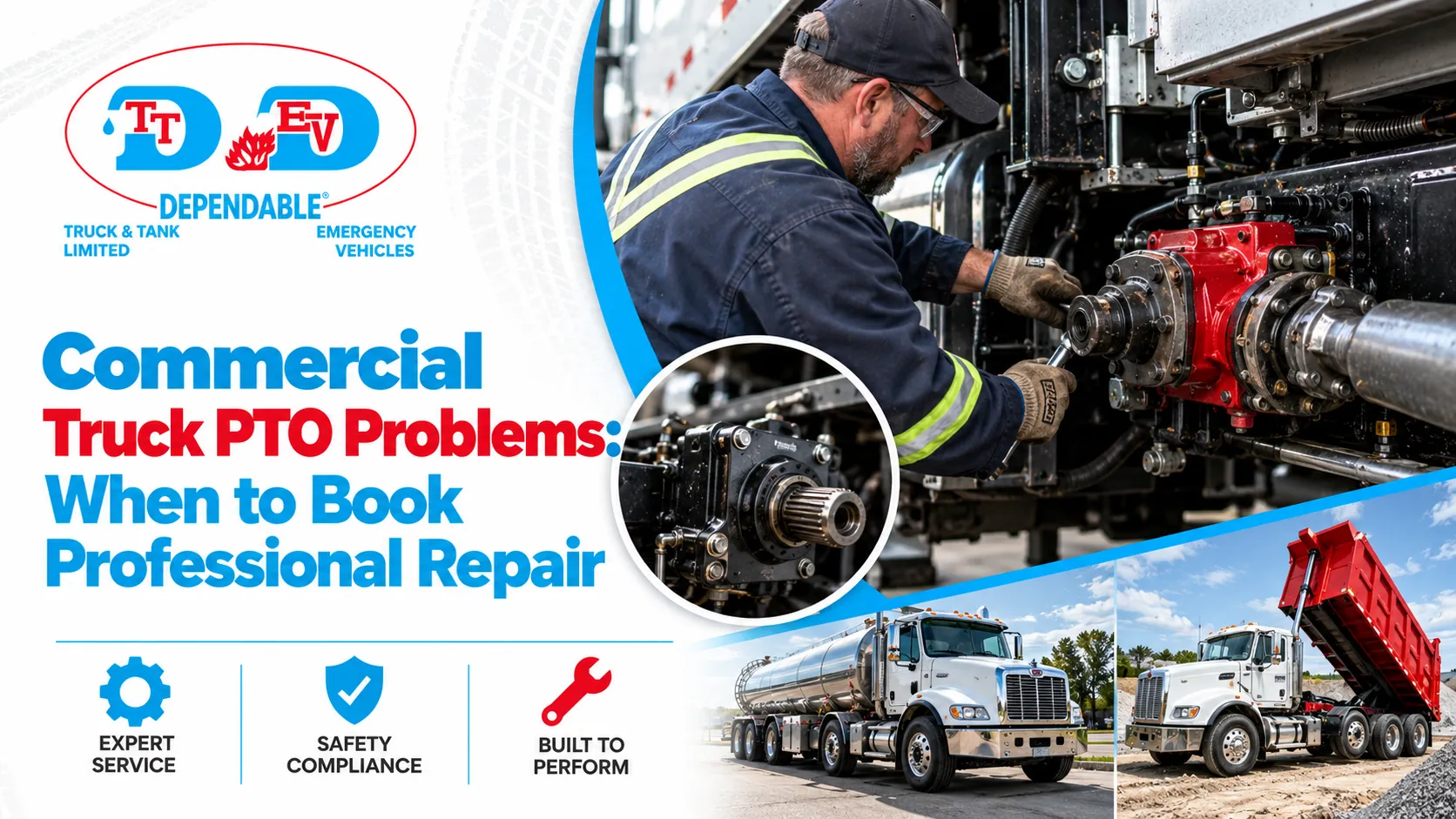
Effective truck PTO troubleshooting starts with identifying where the fault originates. The problem may involve the PTO unit, engagement controls, transmission, or hydraulic circuit. Understanding how these components work together helps fleet owners identify potential issues before they cause costly downtime.
Most PTO problems fall into three categories: the PTO will not engage, it engages but delivers no power, or it fails under load. These symptoms may indicate worn components, hydraulic issues, or transmission-related faults. If the problem involves hydraulic performance, reviewing common heavy-duty truck hydraulic problems can help identify related warning signs.
This guide explains how PTO systems work, what common symptoms indicate, and which preliminary checks drivers can perform safely. It also covers when to book professional diagnostics and how routine heavy-duty truck maintenance can help prevent recurring faults, reduce repair costs, and keep commercial fleets operating reliably.
How a Truck PTO Works
A power take-off transfers engine power to auxiliary equipment such as pumps, hoists, blowers, and winches. On most tankers and dump trucks, the PTO drives a hydraulic pump or a product pump.
Common PTO types include:
- Transmission-mounted PTOs: These bolt to an opening on the side or rear of the transmission. They are the most common type on vocational trucks.
- Clutch-shift PTOs: Often called “hot shift” units, these use an internal clutch pack to engage while the engine runs.
- Engine-mounted rear PTOs: These take power from the engine’s rear gear train, independent of the transmission.
- Split-shaft PTOs: These sit between the transmission and drive axle for high-power stationary work.
Engagement can be mechanical, air-operated, electric, or electric-over-hydraulic. Many trucks also use electronic interlocks. These may require the parking brake set, the transmission in a set range, and engine speed near idle.
Why PTO Problems Are Easy to Misdiagnose
A PTO sits between several systems, so one symptom can have many causes. A PTO that will not engage may have a blown fuse, a failed interlock, or a broken shift fork. Weak output could come from the PTO, the pump, or the hydraulic relief valve.
That is why so many truck PTO problems get chased down the wrong path. Replacing parts by guesswork wastes money and keeps the truck out of service longer. Correct power take-off troubleshooting tests each system in order, from the simplest check to the most complex.
Common PTO Failure Symptoms
Most PTO failure symptoms follow one of these patterns:
- The switch does nothing, with no sound or movement.
- The PTO engages with a clunk or grind, but the equipment does not turn.
- The PTO works at first, then loses power under load.
- The PTO disengages on its own during operation.
- Noise, heat, or fluid leaks appear at the PTO housing.
- A burning smell comes from the PTO area.
Each pattern points to a different part of the system. The table below links each symptom to its likely causes.
Symptom-to-Cause Quick Reference
| Symptom | Likely Causes | Next Step |
|---|---|---|
| No response when switched on | Blown fuse, failed switch or solenoid, interlock not satisfied | Driver check first |
| Indicator lights but no output | Shift mechanism not engaging, low air pressure, broken shift fork | Professional repair |
| Grinding at engagement | Engaging at high rpm, incorrect gear backlash, worn gear teeth | Professional repair |
| Power drops under load | PTO clutch slipping, worn hydraulic pump, low relief valve setting | Professional repair |
| Disengages on its own | Wiring or switch fault, interlock dropping out, low clutch pressure | Professional repair |
| Leaks at the PTO | Worn output seal, failed mounting gasket, loose mounting bolts | Professional repair |
| Heat or burning smell | Clutch slipping, low lubricant, operating above rated speed | Stop use and book urgent repair |
Safe Checks Drivers Can Do First
Some checks are quick and safe for drivers. Never reach near a rotating PTO shaft, driveshaft, or pump. Follow your company’s lockout procedure before anyone touches driveline components.
Driver-level checks include:
- Confirm the parking brake is set and the transmission is in the required position.
- Confirm engine speed is at idle when engaging, unless the manufacturer states otherwise.
- Inspect the PTO fuse and relay in the power distribution centre.
- Confirm the dash indicator light works when the switch is pressed.
- On air-shift units, confirm system air pressure is normal.
- Check the hydraulic reservoir level and look for foamy or dark fluid.
- Look for fresh leaks under the PTO and around pump fittings.
These checks fit naturally into daily routines. Nova Scotia’s daily trip inspection requirements help drivers report defects before a truck is dispatched. If these checks pass and the problem remains, the truck needs a technician.
Why Is My PTO Not Engaging?
A PTO not engaging is often an electrical or control fault rather than a mechanical one. Technicians work through the causes in this order:
- Power supply: Fuses, relays, wiring, and corroded connectors.
- Interlocks: Parking brake switches, neutral switches, engine speed limits, and body controller settings.
- Shift mechanism: Solenoids, air valves, shift cylinders, and cable linkages.
- Internal parts: Shift forks, sliding gears, and clutch packs.
Winter adds extra trouble in Atlantic Canada. Moisture in air lines can freeze and block air-shift valves. A failing air dryer is a common cause.
Road salt also corrodes connectors, switches, and solenoid terminals. Environment and Climate Change Canada publishes a Code of Practice for the Environmental Management of Road Salts, which shows how heavily road salt is used across Canada every winter.
Modern trucks often log PTO interlock faults as diagnostic codes. Our diesel diagnostics and repair service reads these codes and tests each circuit before replacing parts.
How Do You Troubleshoot Hydraulic PTO Problems?
Hydraulic PTO problems usually appear as weak, slow, or inconsistent equipment movement. The PTO engages and turns, but the work gets done poorly.
Common hydraulic causes include:
- Low, contaminated, or overheated hydraulic oil
- A clogged suction strainer or return filter
- A worn pump with internal leakage
- A relief valve set too low or stuck partly open
Check the fluid first because it is the cheapest fix. Low, milky, dark, or foamy oil points to a fluid problem. If the fluid is clean and full, test pressure and flow at the pump. A pump can build pressure and still fall short on flow.
This is the stage of PTO troubleshooting where test gauges and flow meters become essential. Accurate readings need heavy-duty hydraulic system diagnostics, not guesswork. Our hydraulic system repair team tests pumps, valves, and cylinders to find the true fault.
Hydraulic and transmission oil leaks also carry environmental risk. Significant spills onto soil or water should be reported through Canada’s environmental emergency reporting line. In Nova Scotia, that 24-hour number is 1-800-565-1633.
How PTO Faults Affect Tanker Pumps
Tanker pumps depend on steady PTO output. A slipping PTO or worn driveshaft makes a healthy pump look weak. Many commercial tanker pump repair calls actually trace back to the PTO.
Warning signs include:
- Delivery times getting longer on routine drops
- Pump speed dropping when the load increases
- Meter flow rates below normal
- Noise that changes with engine speed
Direct-mount pumps have one extra weak point: the spline connection. Without proper lubrication, the pump shaft and PTO output splines can wear and fret. Worn splines cause noise, vibration, and eventually a total loss of drive.
Pumps and PTOs should be diagnosed together. Our pump repair service keeps tanker pump systems delivering at full flow.
PTO Clutch Failure vs PTO Shaft Problems
PTO clutch failure and PTO shaft problems share some symptoms, but they need different repairs.
Clutch Failure
Clutch-shift PTOs use a pack of friction plates to transfer power. When plates wear or clutch pressure drops, the pack slips under load. Slipping turns power into heat, which often causes a burning smell.
On many automatic transmissions, clutch pressure comes from transmission fluid. Low transmission fluid can therefore cause PTO clutch slip. Check that fluid level before condemning the PTO.
Shaft Problems
Shaft problems are mechanical wear issues. They show up as vibration, grinding, or a clunk at engagement. Common causes include worn U-joints, poor driveshaft angles, worn bearings, and damaged splines.
Loose mounting bolts or incorrect gear backlash can also damage PTO and transmission gears. Both faults get worse with every hour of use. Continued operation can turn a PTO repair into a much larger transmission repair.
When the Transmission Is Part of the Problem
The PTO and transmission are closely linked. A leaking PTO mounting gasket drains transmission fluid, not hydraulic oil. Incorrect backlash between PTO and transmission gears causes noise and gear damage. Engaging a PTO at high engine speed can chip gear teeth on both units.
On automatic transmissions, PTO operation also depends on programmed limits. The transmission control module may block engagement above set engine or output speeds. A PTO that drops out may simply be hitting one of these limits.
Fluid care protects both units. Our Allison transmission service covers the fluid and filter care that trucks running PTOs need.
If transmission symptoms appear alongside PTO faults, book commercial truck transmission repair at the same visit. Fixing one without the other often brings the truck back within weeks.
When Should You Book Professional PTO System Repair?
Book PTO system repair as soon as any of these apply:
- Driver checks are exhausted. Fuses, switches, air pressure, and fluid levels are fine, but the problem remains.
- You notice heat, smell, or leaks. These signal clutch or seal failure and need urgent attention.
- Power fades under load. A PTO that works empty but fails under load needs hydraulic testing.
- You hear grinding, clunking, or vibration. These sounds usually mean mechanical wear that will worsen.
- Faults keep coming back. Recurring commercial truck PTO problems point to a root cause nobody has found.
- Scheduled service is coming up. Adding a PTO inspection to routine work saves a separate shop visit.
A shop with proper diagnostic equipment can usually isolate the fault in one visit. That beats a driver replacing parts one at a time.
Preventing PTO Problems
Most PTO failures are preventable with consistent habits:
- Engage the PTO with the truck stationary and the engine at idle.
- Stay within the PTO’s continuous and intermittent duty ratings.
- Check mounting bolts and look for leaks at every PM service.
- Lubricate driveshafts and pump splines as the manufacturer recommends.
- Check transmission and hydraulic fluid levels on a set schedule.
- Service the air dryer before winter to prevent frozen air lines.
- Wash salt from wiring connectors and switches during winter.
Periodic inspections are another chance to catch problems early. Nova Scotia’s Motor Vehicle Inspection program sets the periodic safety inspection standard for commercial vehicles. Pair PTO checks with these inspections to limit downtime.
Conclusion: Diagnose First, Then Repair
Effective PTO troubleshooting follows a simple rule: diagnose in order and replace parts only when the test proves the fault. Drivers can handle basic checks, but heat, leaks, noise, and load failures need a technician. Acting early keeps a small PTO fault from becoming a pump or transmission failure. Professional PTO installation and repair keeps pumps, hoists, and other equipment working as designed.
50+ Years of Trusted Heavy-Duty Truck Repair Experience in Nova Scotia
For more than 50 years, Dependable has helped fleet operators keep heavy-duty trucks reliable, safe, and ready for work. Family-owned since 1975, we opened our Dartmouth facility in 2024 to serve Nova Scotia fleets. Our Dependable NS team provides engine diagnostics, mechanical repairs, and hydraulic system servicing.
We also handle PTO installation, pump repair, inspections, and specialized equipment maintenance. Decades of hands-on experience guide every job we take on. Our focus is quality workmanship, preventative maintenance, and dependable solutions that reduce downtime. That approach supports the long-term performance of commercial fleets across Atlantic Canada.
Conclusion: Keep Your Truck PTO System Running Reliably
Recognizing PTO problems early can help prevent unexpected breakdowns, costly repairs, and unnecessary fleet downtime. Whether your truck PTO fails to engage, loses power, or struggles under load, identifying the underlying cause is essential for restoring reliable performance. Regular inspections and timely servicing can also help protect connected transmission and hydraulic components.
Dependable NS provides specialized support for commercial truck PTO systems, including troubleshooting, diagnostics, installation, and repair solutions for fleets across Atlantic Canada.
Experiencing PTO problems with your commercial truck? Contact Dependable NS to schedule a professional inspection and discuss your PTO repair needs. Our team can help identify the issue and get your equipment back to work safely and efficiently.
Frequently Asked Questions
What PTO checks can a driver safely do?
Drivers can check fuses, the switch, the indicator light, air pressure, and fluid levels. Anything involving moving parts or opened systems belongs with a technician.
Why does my PTO work until it is under load?
This usually points to a slipping PTO clutch, a worn hydraulic pump, or a low relief valve setting. These faults only show up under real working pressure.
Is a burning smell from the PTO an emergency?
Yes. A burning smell usually means the clutch is slipping and overheating. Stop using the PTO and book a repair right away.
How is PTO clutch failure different from a shaft problem?
Clutch failure causes power loss and heat. Shaft problems cause vibration, grinding, or a clunk at engagement. A technician should confirm the cause before ordering parts.
Can a weak PTO affect my tanker’s pump?
Yes. The pump draws its power from the PTO, so weak PTO output looks like a pump problem. Test both before replacing pump parts.
Why does my PTO drop out in cold weather?
Frozen moisture in air lines can block air-shift valves. Corroded connectors and low fluid pressure in cold temperatures can also cause dropouts.