A tank often outlives the truck it was built on, making a remount a cost-effective option for fleets looking to extend equipment life. Understanding the signs of truck chassis damage, such as visible frame cracks, corrosion, uneven tire wear, or persistent alignment issues, can help fleet owners determine when a chassis replacement may be necessary. A truck body remount transfers a serviceable tank or body onto a newer chassis while retaining compatible components such as the tank, pump, and plumbing. If the existing tank still meets applicable inspection requirements but the chassis is deteriorating, a remount can reduce the cost and lead time associated with a complete new tanker build. This guide explains when to consider a remount, how the process works, which regulations may apply, and what factors influence the final cost. Early assessment of chassis condition can also help prevent unexpected breakdowns, improve vehicle reliability, and support safer fleet operations.
What Is a Tank Body Remount?
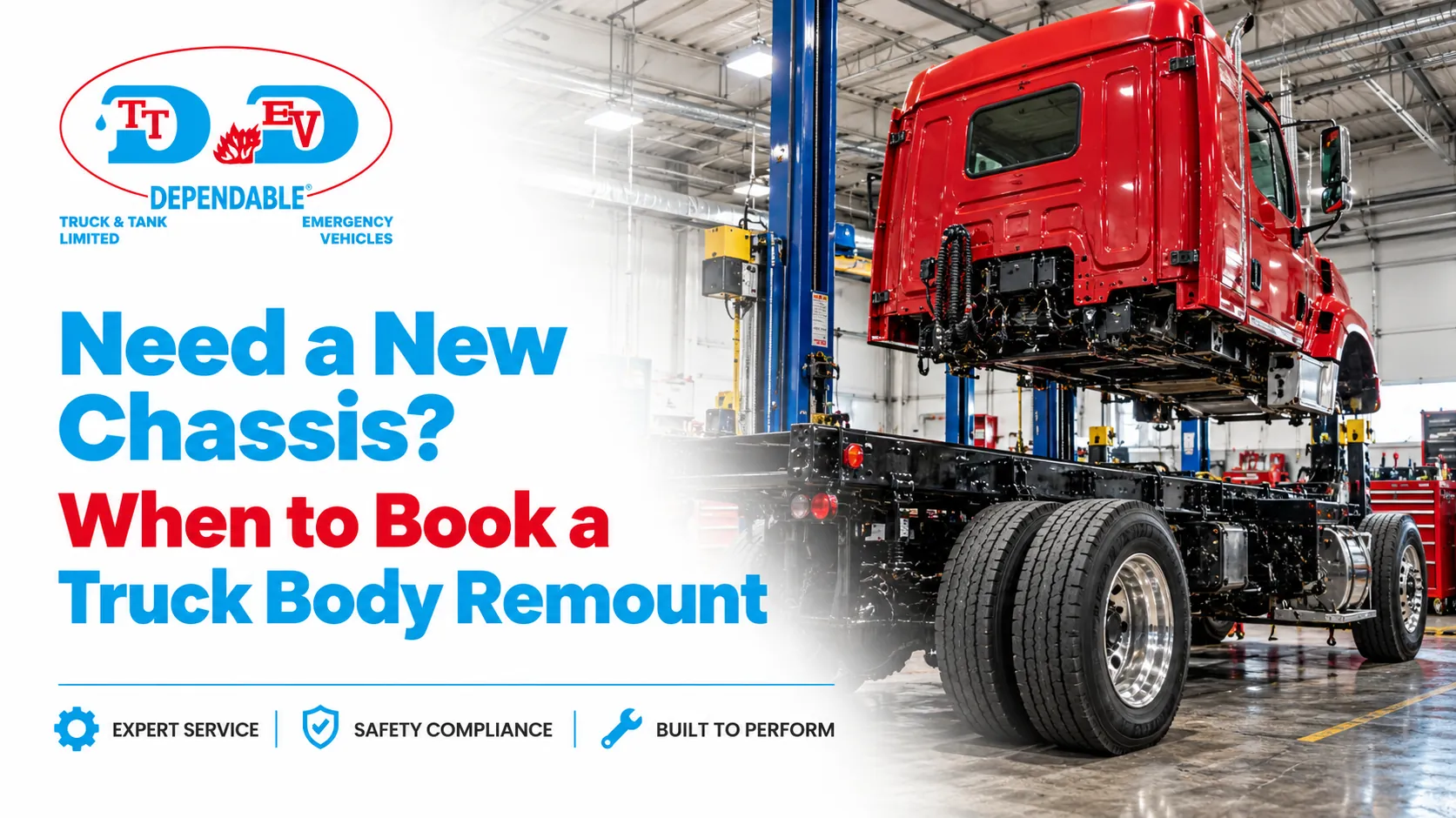
A tank body remount separates a tank from its original chassis and reinstalls it on another. The replacement chassis is usually newer, though reconditioned units are also used. Fleets also call this a chassis swap or a commercial truck body swap.
A remount differs from a tanker truck chassis replacement paired with a new tank build. Here, the existing tank has already proven itself in service. The job is a careful transfer and requalification, not fabrication from scratch.
Tank shells often last longer than the chassis under them. A well-maintained aluminum or stainless steel tank can keep working after its original frame and drivetrain wear out.
Signs It Is Time to Remount Instead of Repair
The deciding question is simple: which part is failing, the chassis or the tank? A remount makes sense when the answer is clearly the chassis.
Common signs include:
- Frame rust, cracking, or rot that fails inspection
- Engine or transmission repairs that exceed the chassis value
- A chassis model with shrinking parts support
- Repeated drivetrain or emission system failures despite regular service
- Rising downtime that disrupts delivery schedules
- A tank that still passes its CSA B620 tests with service life remaining
Your highway tanker maintenance and repair records usually reveal which part is failing. Rising chassis costs beside a clean tank history point strongly toward a remount.
Engine trouble alone does not always justify a remount. Our diesel engine diagnostics guide explains common failures and when repair still makes financial sense.
A remount does not suit every tank. Heavy corrosion, repeated cracking, or a failed pressure test may point to a new build instead. So can a tank specification that is not permitted for the products you plan to haul.
Step One: Confirm the Tank Is Worth Moving
Every remount starts with a full inspection of the tank. The inspector reviews the metal identification plate, test markings, and past test reports. They check the shell, heads, welds, valves, piping, and vents for defects.
Thickness readings confirm whether corrosion has thinned the shell below its minimum. Valves, emergency shutoffs, and relief devices are checked for wear and correct operation.
Our tank inspection and testing service provides this assessment before any remount work begins. If the tank passes, the project moves to chassis selection. If it does not, you find out before spending money on a new chassis.
Choosing the Right Replacement Chassis
The new chassis must match the tank, not just fit under it. Getting this wrong creates overloaded axles, poor handling, and compliance problems.
Check these specifications before buying a chassis:
- GVWR and axle ratings: These must cover the empty tank plus a full load of the heaviest product hauled.
- Wheelbase and cab-to-axle: These must place the tank’s centre of gravity correctly over the axles.
- Frame strength: The rails must be rated for the concentrated weight of a full tank.
- PTO provision: The transmission or engine must support the pump drive the tank needs.
- Frame space: Fuel tanks, battery boxes, and emission equipment must clear the tank mounts.
Product weight adds up quickly. Diesel weighs about 0.84 kg per litre, and gasoline about 0.74 kg per litre. A 15,000 L diesel load therefore weighs roughly 12,600 kg before the tank itself is counted.
Axle loads must also stay within provincial limits. Nova Scotia sets these limits in its Weights and Dimensions of Vehicles Regulations. A chassis that suits one tank may still overload an axle with another.
Modern chassis add another challenge. Emission equipment such as diesel particulate filters and SCR systems takes up frame space. Mounts, piping, and pump drives often need redesigning to work around them.
The Remount Process, Step by Step
A structured process protects the tank and keeps downtime predictable. Here is how a professional truck body remount typically runs:
- Inspection and quote. The tank and its components are assessed, and the scope is confirmed in writing.
- Chassis sourcing. A new or reconditioned chassis is selected to match the required ratings and dimensions.
- De-mount. The tank, subframe, and related equipment are removed from the old chassis.
- Chassis preparation. Mounting rails, crossmembers, wiring, and air lines are prepared to accept the tank.
- Remount and securement. The tank is set, aligned, and secured to meet CSA B620 securement requirements.
- System reconnection. The PTO, pump drive, plumbing, lighting, and emergency shutoffs are connected and checked.
- Testing and inspection. Required CSA B620 tests are completed, and the truck gets a provincial safety inspection.
- Records and markings. Test markings, reports, and vehicle documents are updated before delivery.
The Rules That Apply to Every Remount
Remounting a dangerous goods tank is regulated work. Transport Canada requires facilities that assemble, modify, repair, inspect, or test highway tanks to be registered. You can confirm a shop’s registration in Transport Canada’s registered facilities database.
Tank securement is a key compliance point. The 2020 edition of CSA B620 revised securement loads in the vertical, longitudinal, and transverse directions. Transport Canada’s summary of the CSA B620:20 changes outlines this revision.
The chassis side has its own rules. When a body goes onto a new incomplete chassis, the company completing it takes on manufacturer duties. Those duties fall under the federal Motor Vehicle Safety Regulations, including compliance labelling.
The finished truck must also be roadworthy. Nova Scotia’s Motor Vehicle Inspection program sets the periodic safety inspection standard for commercial vehicles. A remounted truck should pass this inspection before returning to delivery work.
PTO, Pump, and Plumbing: Where Remounts Get Complicated
The pump drive is often the hardest part of a remount. The new transmission may have a different PTO opening, gear ratio, or shift method. Automatic transmissions may need a specific PTO and engagement setup.
PTO installation for tanker trucks must match the PTO’s output ratio to the pump’s required speed. A pump driven too fast wears quickly, and one driven too slowly delivers poorly. Driveshafts between the PTO and pump also need the correct length and angles.
Plumbing needs the same attention. Piping, hoses, and valve actuators must line up with the tank outlets on the new frame. Air lines for internal valves and emergency shutoffs must be rerouted and tested.
Correct pump drive setup prevents early wear and slow deliveries. Our PTO installation service handles pump drive setup on tanker chassis.
Upgrades Worth Adding During a Remount
A remount is the best time to modernize the tank. The truck is already out of service, so extra work adds little downtime.
Popular upgrades include:
- LED lighting and new wiring harnesses
- New internal valves, gaskets, and emergency shutoff controls
- Meter recalibration or replacement
- Hose reels, cabinets, and storage improvements
- Fresh coatings and chassis undercoating for salt protection
- Walkways, handrails, and other access equipment
These custom tanker truck upgrades can extend tank life and improve delivery efficiency. Pairing them with tanker refurbishment services addresses valves, plumbing, and coatings in one visit. Any change to the tank itself must be done by a facility registered for modification.
Remounts often reveal smaller issues that need attention. Bundling commercial tanker repair services into the same project avoids a second trip to the shop. Related heavy-duty truck modifications, such as frame extensions, should also be engineered and documented.
Remount or New Build? A Side-by-Side Comparison
| Factor | Truck Body Remount | Full New Tanker Build |
|---|---|---|
| Tank | Existing tank, must pass inspection | Newly fabricated tank |
| Main cost drivers | Chassis, rework, refurbishment, testing | Tank fabrication, chassis, full outfitting |
| Timeline drivers | Chassis availability and rework scope | Build queue and component lead times |
| Design flexibility | Limited by the existing tank | Fully specified for current needs |
| Best fit | Sound tank on a failing chassis | Worn, damaged, or unsuitable tank |
| Compliance | Retested and documented after the remount | Certified as a new tank |
If your products, volumes, or routes have changed, a new build may be the better investment. A custom truck and tank build can match current capacities and delivery needs from the start.
What Drives Tanker Remount Cost?
Tanker remount cost varies widely, so any quote should follow a physical inspection.
The main cost factors are:
- The price of the new or reconditioned chassis
- Subframe and mounting fabrication
- PTO and pump drive changes
- Plumbing, wiring, and air line rework
- Refurbishment and upgrade work on the tank
- Required testing and inspection
A fair shop will not price a remount without seeing the tank first. Ask for a written quote that separates each of these items.
How Long Does a Remount Take?
Timelines depend mostly on chassis availability. A chassis already in stock shortens the job considerably. Custom subframes, PTO changes, and parts lead times can extend it.
Testing and inspection time must also be built into the schedule. Ask your shop for a timeline that covers every step through final testing.
For Atlantic Canada fuel and propane fleets, timing matters. Plan remounts outside the winter peak season to keep delivery capacity available.
Questions to Ask Before Booking a Remount
Not every provider of tanker remount services in Canada that fleets find online is registered for tank work. When comparing commercial truck remount services, ask these questions:
- Is the facility registered for assembly and testing on your tank specification?
- Who handles chassis compliance and labelling?
- Is PTO and pump drive work done in-house?
- Which CSA B620 tests will be completed after the remount?
- Will you receive a written quote, timeline, and final test report?
Conclusion: Give a Sound Tank a Second Life
A tank in good condition is too valuable to scrap with a failing chassis. A properly planned truck body remount returns that tank to service with a reliable new foundation. The keys are a thorough tank inspection, a correctly specified chassis, and full retesting before delivery. Professional tank modifications and remounts handle each of these steps under one plan.
50+ Years of Trusted Heavy-Duty Truck Repair Experience in Nova Scotia
For more than 50 years, Dependable NS has helped fleet operators keep their trucks and tankers safe and road-ready. Family-owned since 1975, we opened our Dartmouth facility in 2024 to serve Nova Scotia fleets. Our Dependable NS team provides engine diagnostics, mechanical repairs, and hydraulic system servicing.
Conclusion: Choose the Right Truck Remount Solution
Recognizing the signs of truck chassis damage early can help fleet owners avoid unexpected breakdowns, reduce operating costs, and extend the service life of valuable tanker equipment. When the tank remains in good condition, but the chassis needs replacing, a professional remount can be a practical alternative to investing in a completely new tanker build.
Dependable NS provides tank inspections, truck body remounts, PTO installation, and specialized equipment maintenance for commercial fleets across Atlantic Canada. Our focus on quality workmanship, preventive maintenance, and reliable service helps keep your equipment operating safely and efficiently.
Need to determine whether your tanker needs a remount or a new build? Contact Dependable NS to discuss your truck remount requirements and arrange an inspection. Our team can help you identify the right solution for your equipment and operational needs.
Frequently Asked Questions
Is a truck remount cheaper than buying a new tanker?
Usually, yes, when the tank is sound. Reusing the tank avoids fabrication costs, though the chassis and rework still need a proper quote.
How do I know if my tank is a good remount candidate?
A registered inspector checks the shell, welds, valves, and test history. A tank that passes its CSA B620 tests is usually a strong candidate.
Can the PTO be transferred to the new chassis?
Sometimes. It depends on the new transmission’s PTO opening and ratio. Many remounts need a new PTO matched to the pump’s required speed.
Does a remounted tanker need testing?
Yes. The tank needs the required CSA B620 tests after remounting, and the truck needs a provincial safety inspection.
How long does a tanker remount take?
It depends mainly on chassis availability and rework scope. Ask your shop for a written timeline that includes final testing.
Can I add upgrades during a remount?
Yes, and it is the ideal time. Lighting, valves, meters, and coatings can be upgraded while the truck is already out of service.