For commercial fleet operators and heavy-duty truck owners, keeping vehicles safe, efficient, and on the road is the top priority. While major engine repairs and transmission overhauls often take center stage, one essential routine service is frequently overlooked: heavy truck wheel alignment. Proper alignment is one of the single most cost-effective maintenance steps you can take to protect your fleet, improve fuel economy, and extend tire lifespan. In this comprehensive guide, we will break down why commercial truck wheel alignment matters, how much it costs, how to tell when you need it, and key maintenance tips to keep your rig running smoothly.
Understanding the Heavy Truck Wheel Alignment Benefits can help fleet operators make smarter maintenance decisions and avoid unnecessary operating costs. Correct wheel alignment helps maintain even tire wear, improves vehicle handling and stability, and can reduce rolling resistance. For businesses that depend on their trucks every day, these benefits can contribute to better fuel efficiency, fewer tire replacements, and more reliable fleet performance.
What is Heavy-Duty Truck Alignment?
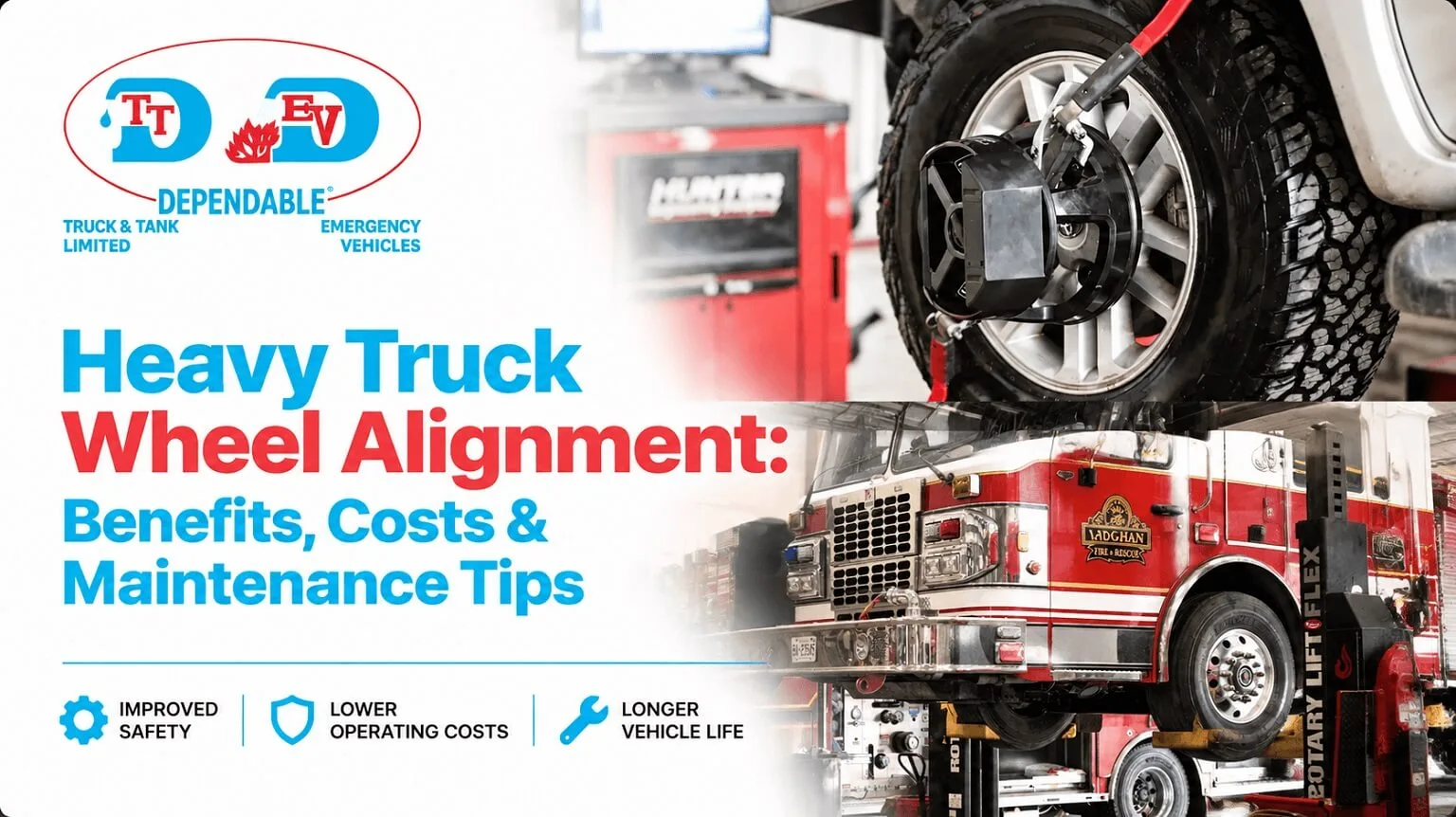
Unlike standard passenger vehicles, a heavy-duty truck alignment involves measuring and adjusting complex multi-axle suspension systems. Proper alignment ensures that all wheels roll parallel to each other and relative to the vehicle’s centerline.
A complete alignment addresses three primary angles:
- Camber: The inward or outward tilt of the tires when viewed from the front.
- Caster: The angle of the steering axis, which affects steering stability and returnability.
- Toe: The direction the tires point relative to the centerline (toe-in or toe-out).
When any of these angles are off, your tires drag rather than roll cleanly across the road, creating unnecessary friction, mechanical wear, and safety hazards.
Key Benefits of Commercial Truck Wheel Alignment
Investing in a regular truck alignment service yields measurable, high-return benefits for independent owner-operators and large fleet managers alike:
1. Drastically Increased Tire Life
Tires are one of the highest operating expenses for commercial fleets. Misalignment causes uneven tire wear, such as feathering, cupping, or shoulder wearforcing premature replacements. Correct alignment ensures even weight distribution and uniform tread wear across every steer, drive, and trailer tire.
2. Improved Fuel Efficiency
When wheels drag or fight each other due to poor alignment, rolling resistance increases dramatically. Your engine has to work harder, burning significantly more fuel. Proper alignment optimizes rolling efficiency, which can improve overall fuel economy by up to 2% to 3%, translating into thousands of dollars in fuel savings annually across a fleet.
3. Driver Safety & Reduced Fatigue
A truck that pulls to one side requires constant steering correction from the driver. Over long hauls, this causes physical strain and fatigue, reducing driver alertness. A proper wheel alignment restores straight tracking, precise handling, and predictable braking behavior.
4. Reduced Strain on Suspension Components
Misalignment subjects your entire chassis to uneven stress. Over time, this leads to premature wear on kingpins, tie rods, bushings, and shocks, resulting in expensive truck suspension repair bills down the line.
Signs Your Truck Needs an Alignment
Catching alignment issues early prevents compounding damage. Keep an eye out for these common warning signs during daily pre-trip inspections:
- Irregular Tread Wear: Noticeable feathering, single-sided shoulder wear, or diagonal scuffing across the tire face.
- Vehicle Pulling: The truck drifts or pulls to the left or right when on a straight, level road.
- Steering Wheel Off-Center: The steering wheel is crooked when driving straight ahead.
- Vibrations: Excessive shaking or vibration felt in the steering wheel or cab floorboards.
- Hard Steering: Increased resistance or erratic response when turning.
If you notice any of these indicators, searching for a qualified wheel alignment near me and scheduling an inspection right away can save you from catastrophic tire blowouts or mechanical failure.
Heavy Truck Wheel Alignment Costs
The cost of heavy truck alignment varies depending on the setup, axle count, and whether additional suspension work is needed. On average:
- Two-Axle / Steer Axle Alignment: $150 – $250
- Three-Axle / Full Tractor Alignment (Steer + Drive Axles): $250 – $450
- Total Rig Alignment (Tractor + Trailer): $400 – $700+
While these upfront costs may seem like an added expense, the return on investment is immediate. A single severely worn steer tire costs significantly more to replace than a routine alignment check.
Maintenance Tips to Preserve Alignment
To maximize tire mileage and keep your suspension tight between scheduled shop visits, follow these practical maintenance tips:
- Schedule Regular Checks: Combine wheel alignments with routine preventive maintenance, ideally every 80,000 to 100,000 kilometers (50,000 to 60,000 miles) or twice a year.
- Inspect Suspension Parts First: Alignment cannot fix worn mechanical parts. Have a technician inspect kingpins, ball joints, and bushings for play before performing an alignment.
- Maintain Correct Inflation: Under-inflated or over-inflated tires mimic alignment wear patterns and unevenly stress suspension components. Check tire pressures weekly.
- Align the Trailer Too: A misaligned trailer (dog-tracking) pushes or drags the tractor, ruining your drive tires even if the tractor itself is aligned. Always align tractors and trailers as a complete unit.
Reliable Heavy-Duty Truck & Fleet Services
When it comes to keeping your heavy equipment performing at its peak, expert service matters. At Dependable NS, we specialize in comprehensive heavy truck repair, certified vehicle inspections, custom fabrication, and complete fleet maintenance services.
Whether you need routine heavy truck wheel alignment, specialized truck suspension repair, or total fleet care, our experienced technicians deliver precise, reliable solutions to minimize downtime and keep your rigs rolling safely.
Contact Dependable NS Today to book your commercial alignment inspection or learn more about our complete fleet maintenance programs!
Frequently Asked Questions (FAQs)
1. How often should heavy trucks get a wheel alignment?
It is recommended to inspect and perform a commercial truck wheel alignment every 80,000 to 100,000 kilometers, during every major tire replacement, or whenever you notice uneven tire wear or vehicle pulling.
2. Can a trailer cause a heavy truck to feel misaligned?
Yes. If a trailer’s axles are out of alignment, it creates a phenomenon known as “dog-tracking,” where the trailer pulls sideways. This forces the driver to steer against the drag, causing accelerated wear on both tractor drive tires and trailer tires.
3. What is the difference between standard automotive alignment and heavy truck wheel alignment?
Commercial heavy-duty truck alignment requires specialized heavy-duty laser or optical equipment capable of measuring multi-axle configurations, tandem drive axles, kingpin inclinations, and long wheelbases under loaded conditions.
4. Can bad alignment cause steering wheel vibration?
While wheel unbalance is the most common cause of high-speed vibration, severe misalignment- especially incorrect caster angles or severely uneven tire tread wear- can also cause noticeable shaking through the steering wheel.
5. What suspension repairs should be completed before an alignment?
Before aligning a heavy truck, technicians must check for worn kingpins, tie rod ends, wheel bearings, torque arms, and bushings. Replacing worn suspension parts is necessary before alignment, as worn components allow wheels to move out of spec while driving