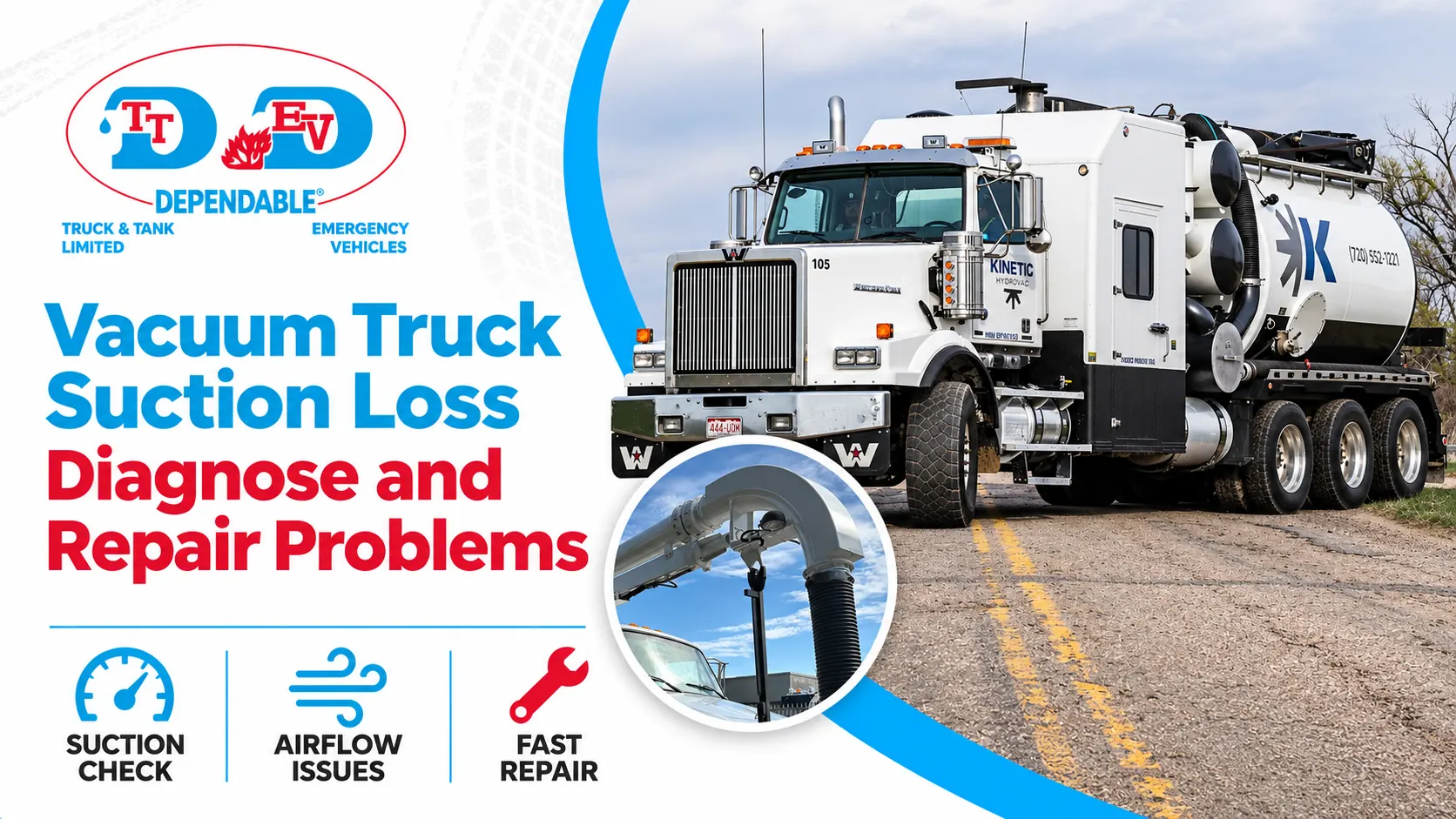
Vacuum trucks play an important role in Canada’s industrial, municipal, construction, environmental, and waste management sectors. From removing liquid waste and sludge to cleaning catch basins and supporting industrial maintenance, these trucks depend on reliable suction to complete jobs safely and efficiently.
When suction weakens or stops, work can come to a standstill. Crews may miss scheduled jobs, equipment may sit idle, and operating costs can rise due to delays, overtime, and emergency repairs. In colder Canadian regions, winter conditions can add another challenge by increasing the risk of frozen lines, thickened materials, and cold-start issues.
Understanding the causes of suction loss helps fleet managers, operators, and maintenance teams identify problems early and reduce unplanned downtime. Common causes include air leaks, blocked hoses, restricted filters, incorrect operating settings, worn pump components, and poor maintenance practices. Manufacturer troubleshooting guidance also identifies damaged seals, faulty valves, and inadequate pump lubrication as possible causes of reduced performance.
This guide explains how to recognise suction loss, identify its likely causes, troubleshoot safely, and build a maintenance plan that supports reliable vacuum truck operation across Canada, including Nova Scotia and Atlantic Canada.
What Is Vacuum Truck Suction Loss?
Vacuum truck suction loss occurs when the vacuum system can no longer generate or maintain the operating conditions required to move material through the suction hose and into the collection tank.
The vacuum pump creates a pressure difference that allows atmospheric pressure to push material into the system. The pump does not simply pull waste into the tank like a mechanical hand. Instead, it creates the conditions needed for material and air to move through the hose.
When the system develops a leak, becomes restricted, or cannot produce the required vacuum, material may move more slowly or stop moving altogether.
Operators may notice several warning signs:
- Slower loading or longer emptying cycles.
- Weak suction at the end of the hose.
- A vacuum gauge reading below the equipment’s normal operating range.
- Unusual pump noise, vibration, or heat.
- Repeated filter blockages or protective shutdowns.
- Changes in pump speed or performance under load.
These symptoms can point to different faults. For example, low vacuum on the gauge may indicate a leak or pump-related problem, while a relatively normal gauge reading with poor material pickup may suggest a restriction, unsuitable hose arrangement, or difficult material conditions.
The important first step is to identify what has changed rather than assume that the pump itself has failed.
1. Common Causes of Vacuum Truck Suction Loss
1.1 Air Leaks in Hoses, Fittings, and Seals
Air leaks are one of the first things technicians should investigate when a vacuum truck loses suction. The vacuum system relies on suitable seals throughout the air path. If outside air enters through an unintended opening, the pump may struggle to maintain the required vacuum.
Leaks can develop at hose couplings, connection gaskets, tank lids, access covers, valves, drain assemblies, and worn sealing surfaces. Vibration, repeated coupling changes, rough handling, and normal wear can gradually damage these components.
For example, a hose connection may appear secure but have a damaged gasket that allows air to enter during operation. Similarly, a tank lid that does not close evenly may prevent the system from reaching its normal vacuum level.
How to prevent it:
- Inspect hoses, couplings, and seals before each shift.
- Check gaskets for cracks, flattening, hardening, and deformation.
- Confirm that lids and access covers are correctly seated.
- Replace damaged seals with suitable manufacturer-approved parts.
- Investigate recurring leaks rather than repeatedly tightening the same connection.
Do not use improvised sealing methods on vacuum equipment. Repairs must be compatible with the system’s design, the material being handled, and the manufacturer’s instructions.
1.2 A Clogged or Restricted Vacuum Hose
A clogged vacuum hose can prevent material from reaching the collection tank even when the pump is operating properly. Common causes include accumulated sludge, hardened deposits, fibrous waste, debris, and materials that settle or thicken inside the line.
Restrictions can also develop at hose bends, reducers, valves, strainers, and inlet plumbing. A hose with a damaged inner lining may partially collapse under vacuum, restricting airflow without showing obvious external damage.
The type of material being collected matters. Thick sludge and solids-heavy waste may require different handling practices from relatively free-flowing liquids. An unsuitable hose diameter, excessive hose length, or sharp bends can also increase resistance to flow.
How to prevent it:
- Select hose diameter and length according to the truck’s design and job requirements.
- Inspect the hose for kinks, internal damage, and visible wear.
- Follow approved procedures for clearing material restrictions.
- Clean hoses and associated fittings after jobs where deposits are likely to accumulate.
- Avoid operating with damaged or collapsing hoses.
Never disconnect or open a blocked hose while the system may contain stored vacuum or pressure. Isolate the equipment and verify that it is safe to work on before attempting to clear the obstruction.
1.3 Dirty Filters and Blocked Strainers
Filters and strainers help prevent debris and contaminants from entering sensitive components. However, these protective devices can become restricted as they collect material.
When a filter becomes heavily loaded, airflow through the system may decrease. This can reduce loading efficiency, increase operating strain, and contribute to overheating or pump damage if the equipment continues to operate outside its intended conditions.
A blocked strainer can create a similar problem by limiting the flow of material into the tank. In some cases, a protective shutoff may be activated to prevent liquid or debris from reaching the pump.
How to prevent it:
- Inspect and clean filters according to the manufacturer’s maintenance schedule.
- Replace filter elements when cleaning is no longer effective or replacement is required.
- Check strainers and separation equipment for accumulated debris.
- Verify that protective shutoff devices operate correctly.
- Investigate unusually frequent blockages to identify the underlying cause.
Filter service intervals should reflect the material being handled, operating hours, working conditions, and equipment specifications. A truck collecting abrasive or solids-heavy material may require more frequent inspections than one working with cleaner liquids.
1.4 Vacuum Pump Wear and Mechanical Problems
The vacuum pump is the heart of the system, but it should not be the first component replaced whenever suction drops.
Over time, internal components can wear because of extended operation, inadequate lubrication, contamination, excessive operating speed, or operation outside the manufacturer’s specified limits. Depending on the pump design, worn vanes, damaged seals, bearing problems, and internal wear may reduce its ability to generate the required vacuum.
These vacuum pump problems may develop gradually. A truck that once loaded material efficiently may begin taking longer to complete the same task. Other warning signs can include unusual noise, vibration, excessive heat, lubricant issues, or repeated performance changes.
How to prevent it:
- Follow the manufacturer’s lubrication requirements.
- Use only the specified lubricant and approved replacement parts.
- Monitor operating temperature, speed, and vacuum readings.
- Investigate unusual noise, vibration, and lubricant loss promptly.
- Arrange qualified inspections when routine checks do not identify the cause.
Professional vacuum pump repair may involve replacing worn components, correcting lubrication faults, inspecting drive systems, or restoring damaged seals. The correct repair depends on the pump type and the findings of a qualified technician.
1.5 Incorrect Valve Settings or Operating Conditions
Sometimes the equipment is mechanically sound, but incorrect operating conditions prevent it from working effectively.
A valve left open, an incorrectly positioned selector, an improperly adjusted vacuum regulator, or a pump that is not operating at the specified speed can affect performance. Some systems also use protective devices that limit vacuum or stop operation under certain conditions.
Operators should not assume that increasing engine speed or adjusting the regulator will solve the problem. Excessive speed or vacuum can damage equipment, increase heat, and create unsafe operating conditions.
How to prevent it:
- Confirm that valves are in the correct positions for the task.
- Follow the manufacturer’s startup and operating procedures.
- Check that gauges and indicators are functioning correctly.
- Keep operators trained on the specific truck and pump configuration.
- Never bypass relief valves, overflow protection, or other safety devices to restore suction.
If settings appear incorrect, have a qualified technician verify them against the equipment specifications.
1.6 Tank Seals, Drain Valves, and Structural Damage
The collection tank must maintain the conditions required for the vacuum system to work. Damaged tank seals, leaking drain valves, poorly seated covers, or defective fittings can allow unwanted air into the system.
Corrosion, impact damage, and deterioration may also affect the tank or its connections. Structural defects do not always cause immediate suction loss, but they can create leaks and compromise safe operation.
Routine visual checks are useful, but they cannot identify every defect. Depending on the tank’s design, material, service history, and applicable requirements, a qualified inspection may need to include thickness measurements or other nondestructive examination.
How to prevent it:
- Inspect the tank exterior, closures, seals, and accessible connections.
- Look for corrosion, cracks, deformation, and signs of leakage.
- Arrange suitable inspections where damage or wall thinning is suspected.
- Use qualified tank repair services when defects require corrective work.
- Follow the inspection and repair requirements applicable to the specific equipment and jurisdiction.
Tank repairs should never be treated as ordinary patching work. The repair method must be appropriate for the tank’s design, service conditions, and operating limits.
1.7 Cold Weather and Seasonal Operating Challenges
Canadian winters create additional maintenance demands for vacuum truck fleets. Low temperatures can affect lubricants, seals, hoses, valves, and the material being collected.
Water or moisture left in exposed lines may freeze and restrict flow. Cold conditions can also make some rubber components less flexible, while certain sludges and liquids become more difficult to move.
These conditions do not affect every truck or material in the same way. The risk depends on the equipment design, exposure time, fluid properties, and operating environment.
How to prevent it:
- Follow the manufacturer’s cold-weather startup procedure.
- Use lubricants suitable for the specified operating temperature.
- Inspect exposed hoses, valves, and fittings for damage.
- Drain or protect lines as directed by the equipment manufacturer.
- Store equipment appropriately when it is not in use.
- Plan additional inspections during prolonged freezing conditions.
Never use an open flame or an unapproved heating method to thaw equipment. Follow approved procedures to prevent fires, material releases, and component damage.
2. How to Troubleshoot Suction Loss Safely
When vacuum truck suction problems occur, a structured troubleshooting process can help technicians find the cause without replacing parts unnecessarily.
Start by recording the symptoms. Note whether suction disappeared suddenly or weakened over time, whether the vacuum gauge reading changed, what material was being collected, and whether unusual sounds, temperatures, or warning indicators appeared.
Next, follow the equipment manufacturer’s diagnostic procedure.
- Check the operating setup. Confirm that the truck is configured correctly for the job and that the required controls are in their specified positions.
- Inspect the accessible hose and fittings. Look for kinks, visible damage, loose connections, and signs of restriction.
- Review filters and protective devices. Check for blockage or an activated shutoff using approved procedures.
- Check accessible seals and valves. Look for visible wear, damage, or incorrect positioning.
- Compare gauge readings with specifications. A faulty gauge can lead to an incorrect diagnosis.
- Escalate pump-related symptoms. If the basic checks do not explain the fault, arrange a qualified technical assessment.
A sudden loss of suction, abnormal pump noise, excessive heat, or suspected contamination inside the pump warrants particular caution. Stop operating when required by the manufacturer’s instructions or site procedures, isolate the equipment, and have the fault assessed.
Do not open a tank, hose, filter housing, or pump until the relevant hazards have been controlled and stored vacuum or pressure has been safely released. Tank entry must follow applicable confined-space procedures, including hazard assessment, atmospheric testing, isolation, and rescue planning where required.
3. How to Prevent Downtime Before It Starts
Fixing a fault after a truck breaks down is usually more disruptive than finding it during a planned inspection. A preventive approach helps maintenance teams identify developing problems before they affect scheduled work.
Build a Routine Inspection Checklist
A practical daily checklist should cover the components most likely to affect suction and safe operation.
| Inspection area | What to check |
|---|---|
| Hoses and couplings | Wear, cracks, loose fittings, kinks, and restrictions |
| Filters and strainers | Blockage, contamination, and required cleaning |
| Tank closures | Seal condition, lid alignment, and visible damage |
| Valves and drains | Correct position, leakage, and visible defects |
| Pump and drive | Unusual noise, vibration, heat, and lubrication issues |
| Gauges and controls | Readings, warning indicators, and proper operation |
| Safety equipment | Protective shutoffs and other required safety devices |
The checklist should match the truck’s design and the manufacturer’s instructions. Operators should report defects rather than attempt repairs beyond their training.
Schedule Preventive Maintenance
A reliable maintenance plan uses operating hours, inspection findings, equipment history, and manufacturer recommendations to determine when components need attention.
Effective fleet maintenance programs can help companies track recurring faults, schedule servicing, manage replacement parts, and reduce unexpected equipment failures.
For example, if a particular truck repeatedly experiences filter restrictions after handling certain types of sludge, the maintenance team can investigate whether cleaning frequency, material preparation, or operating procedures need to change.
A maintenance record should include:
- Inspection dates and operating hours.
- Reported suction or performance concerns.
- Filter cleaning and replacement history.
- Pump servicing and lubrication records.
- Parts replaced and repairs completed.
- Follow-up checks and outstanding defects.
These records help maintenance managers identify patterns across the fleet instead of treating every breakdown as an isolated event.
Use Qualified Inspection and Repair Specialists
Some faults require more than routine maintenance. Repeated suction loss, unexplained gauge changes, pump overheating, and suspected tank deterioration may require specialist assessment.
Professional vacuum truck service can help identify whether a problem originates in the pump, hoses, tank seals, valves, or associated equipment. Accurate diagnosis matters because replacing the wrong component may leave the original problem unresolved.
Where inspection findings indicate possible tank-wall thinning, cracking, or other material defects, suitable NDE testing services can help assess the equipment without relying solely on visual inspection. Nondestructive examination methods may include ultrasonic thickness measurement and other techniques selected for the material and suspected defect.
The appropriate inspection method and interval depend on the equipment’s design, service conditions, applicable standards, and jurisdiction. Not every vacuum truck tank is classified as a regulated pressure vessel, so inspection requirements should be confirmed for the specific unit rather than assumed to be the same across Canada.
Train Operators to Recognise Early Warning Signs
Operators are often the first people to notice changes in equipment performance. Training them to identify unusual symptoms can help prevent small issues from becoming major repairs.
Training should cover the normal operating range, correct control settings, hose inspection, protective devices, shutdown procedures, and defect reporting. Operators should also understand the limits of their responsibilities and know when a problem requires a qualified technician.
Clear communication between drivers, dispatchers, and maintenance teams is equally important. If a truck reports recurring suction problems, that information should be recorded and reviewed before the next assignment.
4. Understanding the Cost of Unplanned Downtime
The cost of vacuum pressure loss extends beyond the immediate repair bill. When a truck cannot load or unload material efficiently, the impact may affect the entire work schedule.
Consider a contractor completing several municipal or industrial jobs in one shift. A truck that takes longer than expected to load may delay the next site visit. If the fault becomes severe enough to stop the truck, the company may need to reschedule work, arrange replacement equipment, or pay for additional labour.
The main cost areas include:
- Lost productivity: Fewer jobs completed during scheduled working hours.
- Labour costs: Crews may remain on site while the fault is investigated.
- Emergency repairs: Urgent service may disrupt planned maintenance and parts procurement.
- Scheduling delays: Customers and downstream contractors may have to adjust their schedules.
- Equipment wear: Continued operation with an unresolved fault can damage additional components.
- Customer confidence: Repeated service interruptions may affect future work opportunities.
The best way to reduce these costs is to combine early fault reporting, preventive maintenance, accurate diagnostics, and timely repairs.
A business should also review recurring failures to determine whether the issue is linked to operating practices, the type of material handled, inadequate maintenance, or an unsuitable equipment configuration.
5. When Should You Call for Professional Service?
Some minor issues may be identified during routine inspections, but persistent or severe faults need professional attention.
Arrange a technical assessment when:
- Suction remains weak after approved basic checks.
- The vacuum gauge behaves erratically or gives inconsistent readings.
- The pump becomes unusually hot or develops abnormal noise or vibration.
- Filters or protective shutoffs activate repeatedly.
- Hoses, seals, or tank connections continue to leak.
- The tank shows corrosion, deformation, cracking, or suspected wall thinning.
- The same fault returns shortly after a repair.
A qualified technician can test the system against the manufacturer’s specifications, identify the source of the fault, and recommend suitable corrective work.
Depending on the findings, the solution may involve hose replacement, filter servicing, valve adjustment, pump overhaul, or tank inspection. Proper diagnosis helps avoid unnecessary parts replacement and repeat downtime.
Remember that vacuum truck performance issues can have several causes at once. A restricted filter may coincide with a leaking seal, for example, so fixing only one fault may not restore the expected performance.
6. A Practical Maintenance Strategy for Canadian Fleets
Canadian fleet operators often work across changing seasons, remote sites, municipal contracts, and industrial environments. A maintenance strategy should reflect these operating conditions instead of relying on a single generic checklist.
A practical approach includes three levels of care.
- Daily checks: Operators inspect accessible components, confirm normal readings, report defects, and complete required pre-use checks.
- Scheduled maintenance: Technicians service filters, hoses, pump components, lubrication systems, valves, and other equipment according to manufacturer guidance and recorded operating conditions.
- Periodic specialist inspections: Qualified personnel assess developing mechanical or structural concerns, including tank integrity where required.
For fleets operating in freezing conditions, seasonal preparation should be included in the maintenance schedule. For trucks handling corrosive, abrasive, or solids-heavy materials, inspections should also consider the additional wear or deterioration associated with that service.
The goal is not simply to prevent every possible fault. It is to detect problems early, correct them safely, and make equipment availability more predictable.
When vacuum truck suction loss occurs, a consistent process helps maintenance teams move from symptoms to a verified cause. Over time, that approach can reduce repeat failures, improve planning, and support better service reliability.
Conclusion
Reliable suction is essential for vacuum trucks working across Canada’s industrial, municipal, and environmental sectors. Leaking seals, restricted hoses, blocked filters, pump wear, incorrect operating settings, and cold-weather conditions can all reduce performance and interrupt operations.
Preventing vacuum truck suction loss starts with recognising early warning signs, following manufacturer-recommended maintenance schedules, and investigating recurring faults before they lead to a breakdown. Operators should complete routine inspections, while qualified technicians handle complex pump faults, structural concerns, and specialist testing.
A proactive maintenance strategy helps businesses protect their equipment, manage operating costs, and keep jobs on schedule. When a fault cannot be resolved through approved routine checks, professional assessment is the safest way to identify the cause and determine the appropriate repair.
Schedule Vacuum Truck Inspection and Repair With Dependable NS
At Dependable Truck & Tank Nova Scotia, our technicians provide vacuum truck diagnostics, pump and suction system repairs, tank maintenance, and preventive fleet servicing for operators across Nova Scotia and Atlantic Canada. Identifying the source of suction loss early helps reduce repeat breakdowns and protect equipment performance.
Keep your vacuum trucks working reliably and reduce avoidable downtime. Contact Dependable NS today to schedule vacuum truck repairs, request an inspection, or discuss a preventive maintenance plan for your fleet.
Frequently Asked Questions
1. What causes a vacuum truck to lose suction?
Common causes include leaking hose connections, damaged tank seals, blocked filters, restricted hoses, incorrectly positioned valves, and worn pump components. The best way to identify the cause is to compare operating symptoms and gauge readings, then follow the manufacturer’s troubleshooting procedure.
2. How can I tell if my vacuum pump is failing?
Warning signs include reduced suction, unusual noise, vibration, excessive heat, abnormal lubricant consumption, or inconsistent performance. These symptoms do not always mean the pump has failed. A qualified technician should inspect the complete system before recommending a repair or replacement.
3. Can a clogged hose cause complete suction loss?
Yes. A severe blockage can prevent material and airflow from moving through the hose. The pump may still run, but pickup can become very weak or stop. The hose must be cleared using approved procedures after the system has been safely isolated and any stored vacuum or pressure has been released.
4. How often should a vacuum truck be maintained?
Maintenance frequency depends on the truck model, pump design, operating hours, material handled, and working environment. Follow the manufacturer’s service schedule and adjust inspection frequency when operating conditions or maintenance records indicate a greater risk of blockage, wear, or contamination.
5. Does cold weather affect vacuum truck suction?
Yes. Freezing moisture, stiffened seals, restricted lines, and changes in the viscosity of some materials can affect performance. Canadian operators should follow approved cold-weather startup and storage procedures and inspect vulnerable components during prolonged freezing conditions.
6. When should I arrange professional vacuum pump repair?
Arrange professional assessment when suction remains below specification, the pump overheats, unusual noises develop, protective devices repeatedly activate, or routine checks do not identify the fault. Continuing to operate a damaged pump can worsen the problem and increase repair costs.
7. What are NDE testing services used for on vacuum truck tanks?
Nondestructive examination (NDE) methods help qualified inspectors assess certain material or structural conditions without damaging the component being examined. Depending on the tank and suspected defect, methods may include ultrasonic thickness measurement or other suitable examinations. The required method and inspection frequency depend on the equipment and applicable requirements.
8. How can fleet maintenance programs reduce downtime?
Well-managed maintenance programs help companies schedule inspections, track operating hours, identify recurring faults, manage spare parts, and arrange repairs before problems cause major interruptions. Consistent records also help fleet managers make better decisions about equipment reliability and maintenance costs.