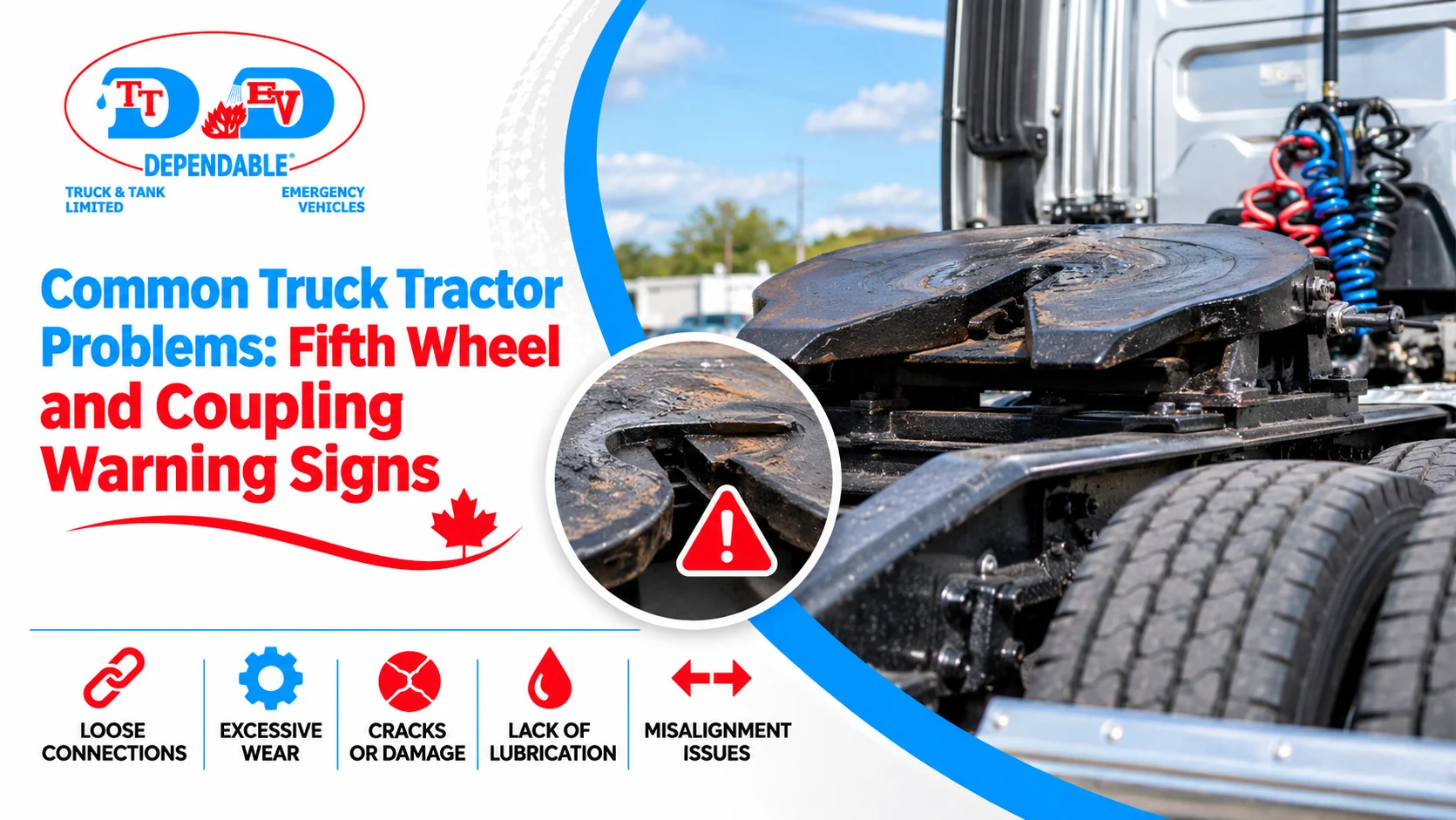
Truck tractor maintenance checklist involves several important safety systems, but the fifth wheel coupling deserves particular attention. It connects the tractor and semi-trailer while supporting part of the trailer’s weight. If the coupling fails, the consequences can be serious, especially at highway speeds.
That makes the fifth wheel one of the most critical components to inspect. A truck tractor maintenance checklist should give the coupling, locking mechanism, kingpin, and mounting hardware appropriate attention alongside other essential safety systems.
What the Coupling Is Actually Doing
The fifth wheel carries a large share of the trailer’s weight, allows the trailer to pivot through turns, and absorbs constant fore and aft movement as the combination accelerates, brakes, and rides over uneven surfaces. It does all three at once, thousands of times a day, through a joint that has to be tight enough to be safe and loose enough to articulate.
In Nova Scotia, applicable commercial vehicle requirements address coupling security, condition, and inspection. A fifth wheel assembly connects the tractor-mounted lower coupling to the trailer’s upper coupler and kingpin, allowing the combination to support and tow the semi-trailer. Supporting and towing are separate duties, and wear can affect them differently.
Signs a Driver Feels First
Drivers usually know something is wrong before anyone looks. The trouble is that these symptoms get normalised, because they arrive gradually.
Movement and Chucking
A rhythmic knock or surge felt through the cab during acceleration or braking can indicate excessive play in the fifth wheel and kingpin connection. Other driveline or suspension problems may produce similar symptoms, so a technician should identify the cause. Uncorrected movement can place added stress on mounting components.
Noise Through Turns
Groaning, squealing, or grinding during turns may point to a dry or contaminated top plate, although other mechanical issues can also cause noise. Proper lubrication helps the trailer articulate smoothly and can reduce wear on the fifth wheel and upper coupler.
Difficulty Coupling or Uncoupling
If coupling becomes difficult, the release handle feels stiff, or the locking mechanism does not engage consistently, the assembly may be worn, dirty, or out of adjustment. Do not operate the combination until the coupling is correctly engaged and any fault has been assessed.
Signs You Only Find on the Ground
These components need a thorough inspection. Some checks require the trailer to be uncoupled and the tractor to be safely secured on level ground.
- Jaw and kingpin wear: Check for a secure lock with no visible gap, and for jaws that are not cracked, broken, or worn past their limits.
- Mounting condition: Look at every bolt, bracket, and weld holding the plate to the frame, and the frame itself around those points.
- Slider function: If fitted, the slider has to lock positively in every position, with no sign of wear at the locking pins.
- Pivot and bushings: The plate should pivot freely without excessive play in the mounting bushings.
- Lubrication: The top plate needs proper grease coverage, and old contaminated grease should be removed rather than covered over.
Applicable Canadian commercial vehicle maintenance and inspection requirements address the condition and security of coupling components. The jaws and locking system must function correctly and be free of damage or excessive wear. A fifth wheel slider, if fitted, must lock securely, and mounting components must meet the applicable requirements and manufacturer specifications.
Where the Inspection Requirement Sits
Coupling devices are included in Nova Scotia’s Schedule 1 commercial vehicle trip inspections. Applicable trucks, truck tractors, and trailers must undergo an inspection at least once every 24 hours while in operation. Coupling condition is also relevant to periodic mechanical inspections under the province’s current vehicle inspection framework.
Booking MVI inspection services before the inspection deadline gives fleet operators time to address any deficiencies. Worn, damaged or insecure coupling components can create inspection problems, and repairs may require specialized parts.
The Rest of the Tractor Is Feeling It Too
Excessive coupling play can contribute to shock loads elsewhere in the tractor and trailer combination. Where symptoms overlap, drivetrain repair and coupling inspections can be coordinated to identify the source of knocking or vibration.
Ride height also matters. If the tractor sits too low or unevenly, the fifth wheel may not operate at its intended angle. Suspension and steering repair can help correct ride-height problems that may contribute to coupling wear or handling concerns.
Driveline components also have their own service requirements. For trucks equipped with Allison transmissions, follow the manufacturer’s recommended fluid and filter intervals and arrange Allison transmission service when needed.
Conditions Here Are Harder Than the Numbers Suggest
Heavy trucks in Nova Scotia operate through road salt, freeze-thaw cycles, hills, and frequent turns. These conditions can accelerate corrosion or contribute to coupling wear. Salt affects mounting hardware and the fifth wheel, while freezing conditions can make poorly maintained mechanisms harder to operate.
Cold weather can also expose intermittent engine faults. Regular diesel engine diagnostics can help address problems before they interrupt a loaded trip.
In practice, this means reviewing lubrication intervals against manufacturer guidance and winter operating conditions, washing road salt from the underbody, and ensuring commonly needed heavy-duty truck parts are available when required.
Common Mistakes Fleet Owners Make
- Treating coupling play as normal. Drivers adapt to it, which is exactly why it goes unreported until it is severe.
- Greasing over old contaminated grease. Grit held in old grease grinds the plate rather than protecting it.
- Only inspecting with the trailer attached. A more thorough scheduled inspection may require uncoupling under safe workshop conditions.
- Ignoring ride height. A tractor sitting wrong loads the fifth wheel wrong on every turn.
- Accepting a lock that needs a knack. A mechanism that only works one particular way is already failing.
- Following summer lubrication intervals without review. Check whether winter conditions require more frequent service under the manufacturer’s guidance.
A Truck Tractor Maintenance Checklist Worth Following
Daily, before the unit moves:
- Confirm a secure lock with no visible gap between the jaws and the kingpin.
- Check the release handle is fully seated in the locked position.
- Look for cracks in the mounting, brackets, and frame around the plate.
- Check the safety catch operates correctly.
- Confirm the slider, if fitted, is locked in position.
Weekly or at scheduled service, with the trailer off:
- Inspect jaws and locking mechanism for cracks, breakage, and excessive wear.
- Check mounting bolts for tightness, and U-bolt stops for security.
- Test the slider through its full travel and confirm it locks positively at each position.
- Check pivot bushings for excessive play.
- Clean contaminated grease from the top plate and lubricate according to the fifth wheel manufacturer’s instructions. Some fifth wheels use low-friction liners and have different lubrication requirements.
- Measure ride height and compare it against the specification for that unit.
How Preventive Maintenance Helps Avoid Fifth Wheel Failures
Regular preventive maintenance plays an important role in keeping fifth wheel couplings secure and reducing unexpected breakdowns. Fleet operators should inspect locking jaws, kingpins, mounting brackets, and lubrication points for signs of wear, corrosion, or damage. In Nova Scotia, exposure to road salt, moisture, and freezing temperatures can accelerate component deterioration, making seasonal inspections especially important. Scheduling routine fleet mechanical services helps identify coupling problems early, maintain safe trailer connections, and reduce costly downtime.
Why Professional Fifth Wheel Inspections Matter for Commercial Fleets
A worn or damaged fifth wheel coupling can affect trailer stability, vehicle handling, and overall road safety. Excessive movement, unusual noises, or difficulty locking the trailer should be investigated by a qualified technician before the vehicle returns to service. Professional inspections can identify worn locking mechanisms, damaged mounting components, and related suspension issues that may not be obvious during a routine walkaround. At Dependable Truck & Tank Nova Scotia, our heavy-duty truck repair services help commercial fleet operators address mechanical concerns and keep their trucks operating reliably across Nova Scotia and Atlantic Canada.
Schedule Truck Tractor Inspections Before Coupling Problems Escalate
Fifth wheel wear can develop gradually, but a failure can have serious consequences. Regular inspections, prompt attention to unusual movement or noise, and proper coupling procedures help protect drivers, vehicles, and other road users.
Dependable Truck & Tank Nova Scotia provides truck tractor repair services, fleet mechanical services, and MVI inspections for commercial fleets across Nova Scotia and Atlantic Canada. If your tractor has unusual coupling movement, difficulty locking, or an upcoming inspection, contact Dependable NS to arrange an assessment before the issue causes downtime.
Frequently Asked Questions
How often should a fifth wheel be greased?
Follow the fifth wheel manufacturer’s instructions and review the recommended lubrication interval for winter operating conditions. Remove contaminated grease where applicable, and check whether the unit has a low-friction liner requiring different maintenance.
What causes that knocking feeling when accelerating and braking?
Excessive play between the jaws and kingpin is one possible cause, but the driveline, suspension and mounting hardware can produce similar symptoms. Have the source of the movement identified promptly.
Does a tractor truck need the coupling checked daily?
Yes. Coupling devices are included in Nova Scotia’s Schedule 1 trip inspection requirements. Applicable vehicles must be inspected at least once every 24 hours while operating; a detailed workshop assessment may involve uncoupling the trailer safely.
Can a worn fifth wheel be repaired or does it need replacing?
It depends on the component and the fifth wheel manufacturer’s repair instructions. Some locking components and bushings can be replaced using approved parts. Cracks, severe wear, or damage to the plate, mounting, or frame require a qualified assessment before the unit returns to service.
Is truck suspension repair connected to coupling problems?
Yes. Incorrect or uneven ride height can change the operating angle of the coupling and contribute to wear. Persistent coupling concerns should be assessed alongside the tractor’s suspension.
What do drivetrain services have to do with the fifth wheel?
Excessive coupling movement may contribute to shock loading and vibration. When these symptoms occur, a technician should inspect the coupling and relevant driveline components to determine the cause.
What usually fails a coupling at inspection?
Common deficiencies include excessive wear, damaged locking components, loose or damaged mounting hardware, and a slider that does not lock securely. A qualified inspection can identify these conditions before the scheduled inspection date.