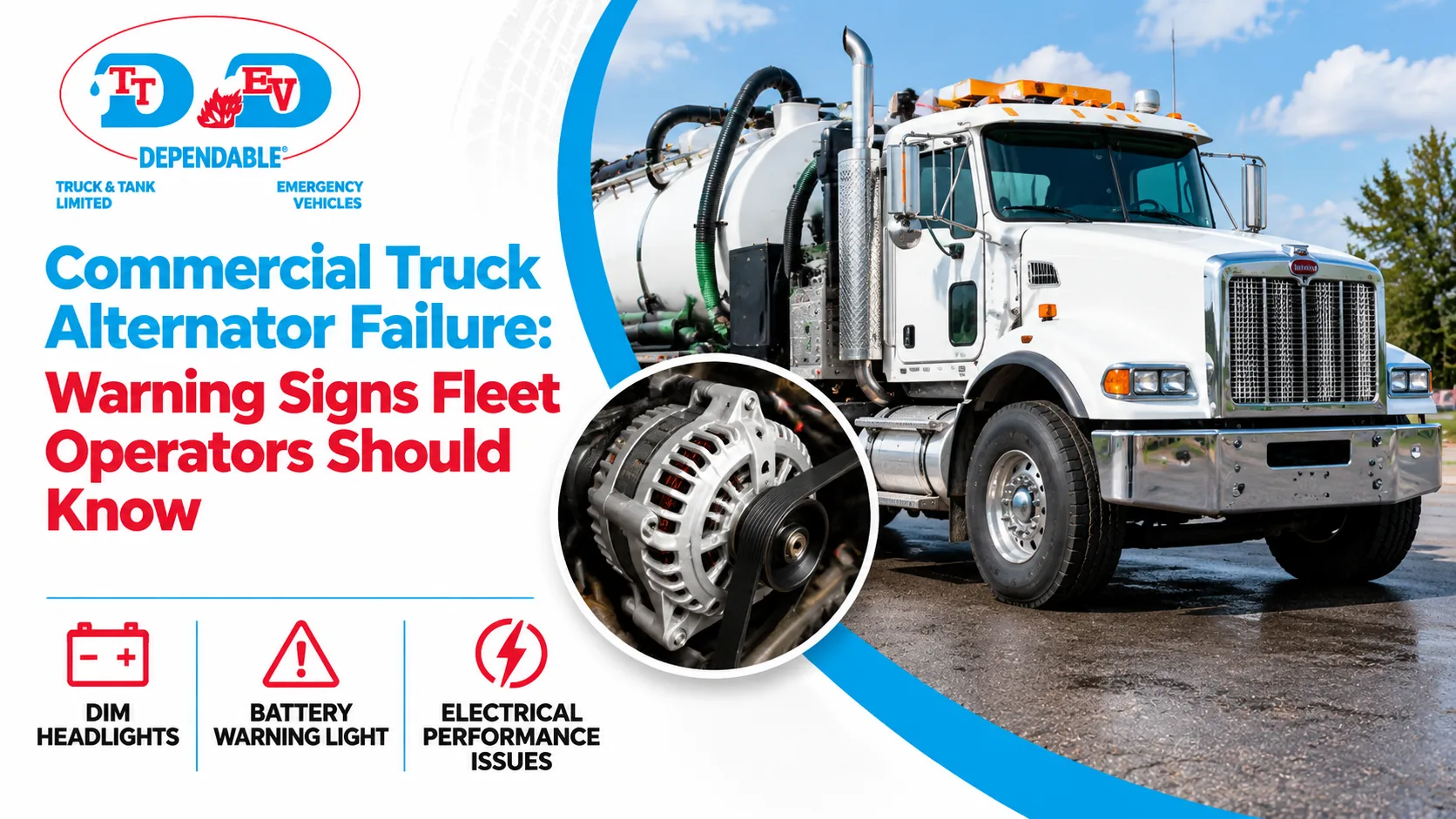
Commercial trucks depend on reliable electrical systems to keep their engines, lighting, instruments, safety features, and electronic controls operating properly. One of the most important components in this system is the alternator. It generates electrical power while the engine is running and helps recharge the batteries after starting.
When an alternator begins to fail, the effects can extend beyond a dead battery. Drivers may experience dim lights, dashboard warnings, starting difficulties, electrical malfunctions, or an unexpected roadside breakdown. For Canadian trucking businesses, these problems can disrupt delivery schedules, increase repair costs, and affect fleet availability.
This guide explains the most common warning signs, why alternators fail, how technicians diagnose charging problems, and what fleet operators can do to maintain reliable electrical performance throughout Canada’s changing seasons.
What Does a Commercial Truck Alternator Do?
A commercial truck alternator converts mechanical energy from the engine into electrical energy. Its output supplies the vehicle’s electrical loads and supports battery charging while the engine is running.
Depending on the truck’s design, the electrical system may support:
- Engine control modules and electronic sensors.
- Headlights, marker lights, and interior lighting.
- Dashboard displays and warning systems.
- Heating, ventilation, and air conditioning controls.
- Communication equipment and fleet tracking devices.
- Auxiliary electrical equipment and safety systems.
Many modern heavy-duty trucks use complex electrical architectures, and some employ multiple batteries, advanced charging controls, or additional power-management components. This means the charging system must be assessed according to the specific vehicle rather than a single universal voltage target.
The alternator works alongside the battery, voltage regulation system, wiring, grounds, and other charging components. The battery supplies substantial power during engine starting and helps stabilise the electrical system. Once the engine is running, the alternator normally supplies the electrical load and replenishes the energy used from the battery.
If the alternator cannot produce enough power, the battery may gradually discharge as it supplies the difference. Eventually, the truck may develop electrical faults or fail to restart.
Importantly, commercial truck alternator failure does not always mean the alternator has stopped working completely. An alternator may still generate some electricity but fail to meet the truck’s electrical demand, particularly when lights, heating equipment, and other accessories are operating together.
1. Warning Signs of a Failing Commercial Truck Alternator
Recognising bad truck alternator symptoms early can help drivers report faults before they lead to a roadside breakdown. Although these warning signs are useful, none of them proves that the alternator is defective. A proper diagnosis must consider the entire charging system.
Dim or Flickering Headlights
Headlights that become dim, brighten unexpectedly, or flicker while driving can indicate an unstable electrical supply. The same issue may affect marker lights, dashboard illumination, and other electrical equipment.
An alternator with reduced output may struggle to supply the truck’s electrical demand. However, loose connections, damaged grounds, poor wiring, and battery faults can produce similar symptoms.
Drivers should report any noticeable change in lighting, especially if it occurs alongside a charging warning light or unusual instrument readings.
Battery or Charging System Warning Light
A battery-shaped warning light on the dashboard often indicates a charging system fault. It does not necessarily mean the battery itself needs replacing.
The warning may appear when alternator output is insufficient, the drive belt slips, the voltage regulator malfunctions, or the charging circuit develops a fault. On some trucks, the warning system also monitors electronically controlled charging functions.
If the warning appears while driving, follow the vehicle manufacturer’s instructions and arrange a safe assessment. Avoid assuming the truck can continue operating normally simply because the engine is still running.
Repeated Dead Batteries or Jump-Starts
A battery that repeatedly goes flat may not be the root cause of the problem. If the alternator cannot restore the energy used during starting and operation, the battery may remain undercharged.
The problem can also arise from an ageing battery, poor cable connections, excessive electrical demand, or a parasitic draw when the truck is parked.
If a truck requires frequent jump-starts, technicians should test the batteries and charging system together. Replacing a battery without finding the underlying cause can lead to another failure.
Unusual Whining, Grinding, or Squealing Noises
Mechanical noises from the alternator area deserve attention. Worn bearings can cause whining or grinding, while a slipping or misaligned drive belt may produce a squealing sound.
A damaged belt tensioner or pulley can also affect alternator rotation. If the alternator is not driven correctly, its electrical output may drop even when the internal components remain functional.
Drivers should report new noises and avoid reaching near moving belts or pulleys. Inspection and repairs should be completed with the engine safely shut down and the required isolation procedures followed.
Electrical Accessories Behaving Unusually
Electrical problems may appear in systems that seem unrelated to charging. Displays may reset, lights may behave inconsistently, or certain accessories may stop working as expected.
Modern commercial trucks rely on electronic modules and sensors that need an appropriate electrical supply. Unstable voltage or poor electrical connections can affect these systems and may generate diagnostic trouble codes.
These symptoms require careful assessment because a charging fault is only one possible cause. Technicians should check the power supply, grounds, wiring, fuses, and relevant electronic systems before replacing components.
Voltage Readings That Are Too High or Too Low
Some trucks display electrical system voltage on the dashboard, while others require diagnostic equipment to access charging data.
Readings outside the manufacturer’s specified range may indicate a charging fault, regulator problem, wiring resistance, or an issue with the battery system. Excessively high voltage can damage batteries and sensitive electronics, while insufficient voltage can leave batteries undercharged.
Charging voltage varies with system design, temperature, engine speed, electrical load, and smart charging strategies. Therefore, a single reading should not be used as a universal pass-or-fail test.
2. What Causes Commercial Truck Alternator Failure?
Alternators operate in demanding conditions. Heat, vibration, electrical loads, moisture, and extended operating hours can gradually affect their performance.
Understanding the underlying causes of commercial truck alternator failure helps fleet operators plan inspections and avoid repeating the same repair.
Worn Internal Components
An alternator contains electrical and mechanical components that can deteriorate over time. Depending on its design, faults may develop in bearings, brushes, slip rings, diodes, windings, or the voltage regulator.
Internal wear can reduce output, create abnormal noise, or cause intermittent charging. Heat and contamination may accelerate deterioration.
The correct repair depends on the alternator design, the extent of the damage, and whether the component can be economically repaired or should be replaced.
Loose, Damaged, or Corroded Connections
The alternator cannot supply electrical power effectively if current cannot travel through the charging circuit properly.
Loose terminals, corroded battery connections, damaged cables, and poor ground connections can create electrical resistance. This may cause voltage drops, heat at connections, inconsistent charging, or symptoms that resemble alternator failure.
Canadian trucks may face additional exposure to road salt, moisture, and winter grime. These conditions make regular inspection of accessible connections particularly important.
Drive Belt and Tensioner Problems
The engine usually drives the alternator through a belt and pulley arrangement. If the belt is worn, loose, damaged, or slipping, the alternator may not rotate at the required speed.
A faulty tensioner, misaligned pulley, or damaged mounting bracket can create similar problems. Continued operation with a belt fault may also affect other engine-driven accessories, depending on the belt arrangement.
During maintenance, technicians should inspect belt condition, tension, alignment, pulleys, and mounting hardware according to the manufacturer’s procedures.
Excessive Electrical Demand
Alternators are designed to provide a specified electrical output. When a truck’s electrical demand exceeds the available output under particular operating conditions, the batteries may have to supply the difference.
Additional lighting, communication equipment, auxiliary devices, or aftermarket electrical accessories can increase demand. Frequent short trips, extensive engine-off accessory use, and prolonged idling may also affect the overall charging balance.
Fleet managers should ensure that electrical additions are compatible with the truck’s charging capacity. If the vehicle repeatedly struggles to maintain battery charge, a technician should evaluate both the system’s output and its electrical loads.
Poor Battery Condition
A weak, damaged, or deeply discharged battery can contribute to charging system complaints. A battery that cannot hold a charge may continue to create problems even after the alternator has been repaired.
Repeatedly attempting to recharge a defective battery can also place additional demands on the charging system. In multi-battery installations, differences in battery condition or unsuitable battery matching can further complicate diagnosis.
The battery and alternator should therefore be evaluated together. A new alternator will not correct every battery-related fault.
Heat, Moisture, and Contamination
Alternators operate near engine heat and may be exposed to moisture, dust, oil, and other contaminants. Excessive heat can shorten component life, while contamination may affect electrical connections, cooling, bearings, or internal components.
Oil leaks near the alternator should be investigated rather than ignored. Similarly, pressure washing or cleaning methods that force water into electrical components can create avoidable problems.
Routine inspections should include visible signs of contamination, damaged wiring insulation, loose mounting, and blocked cooling passages where accessible.
3. How Canadian Weather Affects Truck Charging Systems
Canadian weather creates seasonal challenges for commercial vehicle electrical systems. Cold temperatures increase the difficulty of starting diesel engines, while winter accessories add to the electrical load. Road salt and moisture can also contribute to corrosion in exposed connections.
Winter Starting Demands
In cold weather, engine oil becomes more viscous, and the starter may need to work harder to turn the engine. This places greater demands on the batteries during starting.
Once the engine is running, the alternator must support the electrical load and replenish the energy used by the batteries. Heating fans, headlights, heated equipment, and other accessories may increase demand during winter operations.
A weak battery or marginal charging system may become more noticeable when temperatures drop.
Prevention tips:
- Test battery condition before the winter season.
- Inspect alternator output and charging connections.
- Check drive belts, pulleys, and tensioners.
- Confirm that batteries meet the truck manufacturer’s specifications.
- Report repeated slow cranking or charging warnings promptly.
Road Salt and Corrosion
Road salt and de-icing products are common in many parts of Canada during winter. When moisture and contaminants reach electrical connections, they can contribute to corrosion and increased resistance.
Corroded terminals may interfere with charging even when the alternator itself is working properly. Damaged insulation can also expose wiring to moisture and further deterioration.
Fleet operators should include electrical connections in seasonal inspections and use manufacturer-approved cleaning and corrosion-protection procedures.
Long Idling Periods and Engine-Off Electrical Use
Trucks may spend extended periods idling at depots, loading areas, construction sites, or roadside locations. Depending on engine speed, alternator design, and electrical demand, the available charging output may differ from what is produced at higher engine speeds.
Engine-off heating systems, auxiliary power units, and other equipment can also draw energy from the batteries without the main engine-driven alternator replenishing it.
Fleet managers should consider these operating patterns when assessing recurring low-battery complaints. A charging system that works well during highway driving may still struggle under a different duty cycle.
4. How Technicians Diagnose Alternator Problems
Effective electrical system troubleshooting begins with identifying the actual fault instead of replacing parts based on symptoms alone.
A professional diagnostic process typically evaluates the battery, alternator, drive system, charging cables, grounds, and relevant control circuits. The exact procedure depends on the vehicle manufacturer and electrical architecture.
Step 1: Review the Driver’s Complaint
The technician should establish when the problem occurs, whether warning lights appear, how often the truck needs a jump-start, and whether recent electrical repairs or accessory installations may be relevant.
Diagnostic trouble codes and available vehicle data can provide useful clues, but they must be interpreted alongside physical tests.
Step 2: Inspect the Battery and Connections
Technicians examine battery condition, terminal connections, cables, grounds, and visible wiring damage. Batteries may need to be charged and tested using equipment suitable for their type.
A discharged battery can affect the accuracy of some charging tests, so the correct test sequence matters.
Step 3: Check the Belt and Alternator Mounting
The drive belt, tensioner, pulleys, and alternator mounting should be inspected for wear, misalignment, looseness, or damage.
A mechanical fault may prevent the alternator from delivering the expected output, even if its electrical components are otherwise serviceable.
Step 4: Measure Charging Voltage and Output
Professional alternator testing for trucks may include voltage measurements, current-output testing, voltage-drop testing, and electronic diagnostic checks.
Technicians compare results with the vehicle’s specifications and assess performance under suitable operating conditions and electrical loads. Some modern systems adjust charging voltage electronically, so conventional fixed-voltage assumptions may not apply.
A bench test may also help determine whether an alternator meets its rated performance. If the alternator passes testing, the technician should continue investigating the vehicle’s wiring and charging circuit rather than replacing a serviceable unit.
Step 5: Check for Related Electrical Faults
The diagnostic process may include checking fuses, fusible links, wiring resistance, grounds, control circuits, and other charging components.
If the alternator’s output is acceptable but the batteries are not receiving the expected charge, excessive resistance in the circuit may be responsible. A battery drain when the truck is parked can also produce recurring low-battery complaints.
A complete assessment helps ensure that the repair addresses the root cause rather than temporarily masking the symptoms.
5. What to Do When the Truck Battery Is Not Charging
A truck battery not charging is a symptom, not a complete diagnosis. The fault may involve the alternator, battery, wiring, drive belt, voltage regulation, or another part of the electrical system.
If the charging warning light appears or electrical equipment begins behaving abnormally, the driver should follow the truck manufacturer’s instructions and the company’s breakdown procedures.
A practical response includes the following:
- Find a safe place to stop if necessary. Do not continue driving if the truck develops serious electrical faults, loses essential lighting, overheats, or shows other signs of unsafe operation.
- Report the symptoms. Tell dispatch or fleet maintenance when the warning appeared, what electrical equipment was affected, and whether the engine or other systems behaved unusually.
- Avoid unnecessary electrical loads. Only reduce non-essential loads when it is safe and consistent with vehicle requirements. Essential lighting, visibility equipment, and safety systems must remain functional.
- Arrange professional assessment. A technician should inspect the charging system and determine whether the truck can safely continue operating.
- Confirm the repair. After corrective work, the charging system should be tested to verify that the original problem has been resolved.
Do not disconnect the battery while the engine is running to test the alternator. This outdated practice can create voltage spikes and damage electronic components.
If the truck’s electrical system is unstable, continuing to operate it may eventually cause the engine or essential vehicle systems to shut down, depending on the vehicle design and the severity of the fault.
6. How Fleet Operators Can Prevent Alternator-Related Downtime
Preventive maintenance is one of the most effective ways to identify developing charging system problems before they interrupt operations. A consistent approach also helps fleet managers track recurring faults and make informed repair decisions.
Include Charging Checks in Routine Inspections
Regular commercial truck inspections should include the electrical system as well as the engine, brakes, tyres, and other critical components.
Depending on the inspection scope, technicians should check for damaged cables, loose terminals, corrosion, worn belts, alternator mounting problems, and warning indicators. Charging output should be tested when required by the maintenance schedule or when symptoms indicate a possible fault.
Daily driver checks should follow the vehicle manufacturer’s instructions and the company’s inspection procedures. More detailed electrical testing should be completed by qualified personnel.
Keep Accurate Maintenance Records
Record recurring charging warnings, battery replacements, jump-starts, alternator repairs, and electrical complaints. This information can help identify patterns that may otherwise be missed.
For example, if several batteries fail prematurely in one truck, maintenance staff should investigate whether the charging system, cable connections, electrical loads, or parked-vehicle power consumption is contributing to the problem.
Schedule Seasonal Electrical Maintenance
Before winter, inspect the battery bank, charging system, cables, grounds, and belt drive. Check that the electrical system is ready for the demands of cold starts, extended darkness, and increased use of heating equipment.
After periods of heavy exposure to road salt and moisture, inspect accessible connections and wiring for signs of corrosion or damage. Addressing these issues early can reduce the risk of charging faults developing later.
Use Qualified Repair and Maintenance Providers
Professional fleet mechanical services can help identify charging system faults, perform the necessary tests, and determine whether repair or replacement is appropriate.
A suitable service provider should diagnose the complete system, explain the findings, and verify the results after the work is completed. This is especially important for trucks with complex electronic controls or recurring electrical problems.
Well-planned preventative maintenance services also help fleet operators coordinate inspections, manage component replacement, and reduce unexpected repair interruptions.
Investigate Repeated Alternator Failures
If an alternator fails repeatedly, replacing it again may not solve the underlying issue. Technicians should investigate possible contributing factors such as poor mounting, belt misalignment, excessive electrical demand, wiring faults, battery condition, and heat or contamination.
The aim is to correct the cause, confirm that the charging system operates within specifications, and reduce the likelihood of another failure.
7. The Business Cost of Ignoring Alternator Warning Signs
Ignoring early charging problems can turn a relatively manageable repair into a larger operational issue.
A truck that starts each morning but has a weak charging system may eventually fail to restart after a delivery. A vehicle that develops electrical faults on the road may require roadside assistance, towing, or an unplanned workshop visit.
These disruptions can lead to missed delivery windows, driver delays, rescheduling costs, and reduced fleet availability. If a charging fault contributes to damage elsewhere in the electrical system, repair costs may increase further.
For fleet managers, the practical goal is to reduce both the likelihood of failure and the time needed to diagnose it.
This means giving drivers a clear process for reporting symptoms, ensuring technicians have suitable diagnostic equipment, and scheduling maintenance based on vehicle requirements and operating conditions.
A proactive approach to commercial truck alternator failure can help protect battery life, maintain reliable electrical performance, and reduce preventable downtime.
Conclusion
The alternator is a critical part of every commercial truck’s electrical system. When it begins to fail, warning signs such as dim headlights, charging system alerts, repeated battery problems, unusual noises, and unstable electrical performance can appear before the truck becomes undriveable.
For Canadian fleets, seasonal weather, road salt, heavy electrical demand, and long operating hours make regular charging system inspections particularly important. Identifying commercial truck alternator failure early allows maintenance teams to investigate the cause, arrange the necessary repairs, and avoid unnecessary component replacements.
The most reliable approach combines driver awareness, scheduled inspections, battery testing, charging system diagnostics, and accurate maintenance records. Fleet operators should also remember that truck charging system problems do not always originate in the alternator. Batteries, wiring, ground connections, drive belts, and control circuits must all be assessed as part of a complete diagnosis.
At Dependable Truck & Tank Nova Scotia, we provide fleet mechanical services to help commercial fleet operators identify electrical and mechanical problems, arrange necessary repairs, and reduce unexpected downtime. Our team supports heavy-duty trucks and commercial fleets across Nova Scotia and Atlantic Canada.
Don’t let alternator problems keep your commercial trucks off the road. Contact US today to discuss your truck’s electrical issues, schedule a maintenance inspection, or request professional repair support.
Frequently Asked Questions
1. What are the most common signs of commercial truck alternator failure?
Common warning signs include dim or flickering headlights, a battery warning light, repeated dead batteries, unusual whining or grinding noises, and inconsistent electrical performance. These symptoms can also indicate battery, wiring, or other charging system faults, so professional testing is recommended.
2. Can a commercial truck run with a failing alternator?
A truck may continue running for a limited time if the alternator stops charging, because the batteries can temporarily supply electrical power. However, the available operating time varies with battery condition, electrical demand, and vehicle design. The engine or essential electrical systems may eventually stop functioning. Follow the manufacturer’s guidance and arrange a safe assessment rather than relying on the truck to continue operating.
3. How can I tell if the problem is the alternator or the battery?
A battery test and a charging system test help distinguish between the two. A weak battery may fail to hold a charge even when the alternator works properly. Conversely, a defective alternator may leave a healthy battery undercharged. Technicians should also check cables, grounds, and connections before recommending replacement.
4. What causes commercial truck voltage issues?
Commercial truck voltage issues can result from alternator faults, defective voltage regulation, weak batteries, corroded connections, damaged wiring, poor grounds, or electrical demand that exceeds the available output. Modern trucks may use electronically controlled charging systems, so readings must be assessed against the manufacturer’s specifications.
5. How often should a truck alternator be tested?
Testing frequency depends on the vehicle manufacturer’s maintenance recommendations, operating conditions, mileage or engine hours, and the truck’s service history. Charging system testing is particularly useful during scheduled electrical maintenance, before winter, and whenever warning signs or repeated battery problems appear.
6. Can cold Canadian weather cause alternator problems?
Cold weather increases battery and starting demands, while winter accessories can add electrical load. Road salt and moisture can also contribute to corrosion in charging connections. These conditions may expose an existing weakness in the electrical system, making pre-winter battery, cable, belt, and alternator checks important.
7. When should I seek diesel diagnostics and repair?
Arrange diesel diagnostics and repair when charging warnings persist, electrical systems behave abnormally, the engine develops related faults, or repeated battery and alternator problems cannot be explained through routine checks. Qualified technicians can use diagnostic equipment and electrical tests to identify the source of the fault.
8. How can fleet operators prevent alternator failure?
Fleet operators can reduce risk by inspecting belts and connections, testing batteries, monitoring charging performance, addressing corrosion, and following the manufacturer’s maintenance schedule. Regular inspections and accurate repair records also help identify recurring faults before they cause significant downtime.
9. Is alternator replacement always necessary when the battery warning light comes on?
No. The warning light indicates a possible charging system fault, not necessarily a failed alternator. A loose belt, defective connection, blown fuse, wiring fault, or control circuit problem may produce similar symptoms. Proper diagnosis helps prevent unnecessary replacement.
10. What should I do if my truck repeatedly needs a jump-start?
Repeated jump-starts indicate that the battery is not maintaining sufficient charge or that another starting or electrical fault may be present. Have the batteries, alternator output, wiring, grounds, and possible parked-vehicle electrical drains checked. Replacing the battery without investigating the cause may not resolve the issue.