Tanker trucks are essential to Canada’s transportation, petroleum, chemical, food-processing, waste-management, and industrial sectors. Whether a tanker carries fuel, liquid chemicals, water, or other bulk materials, its access openings must remain properly sealed to support safe and reliable operation.
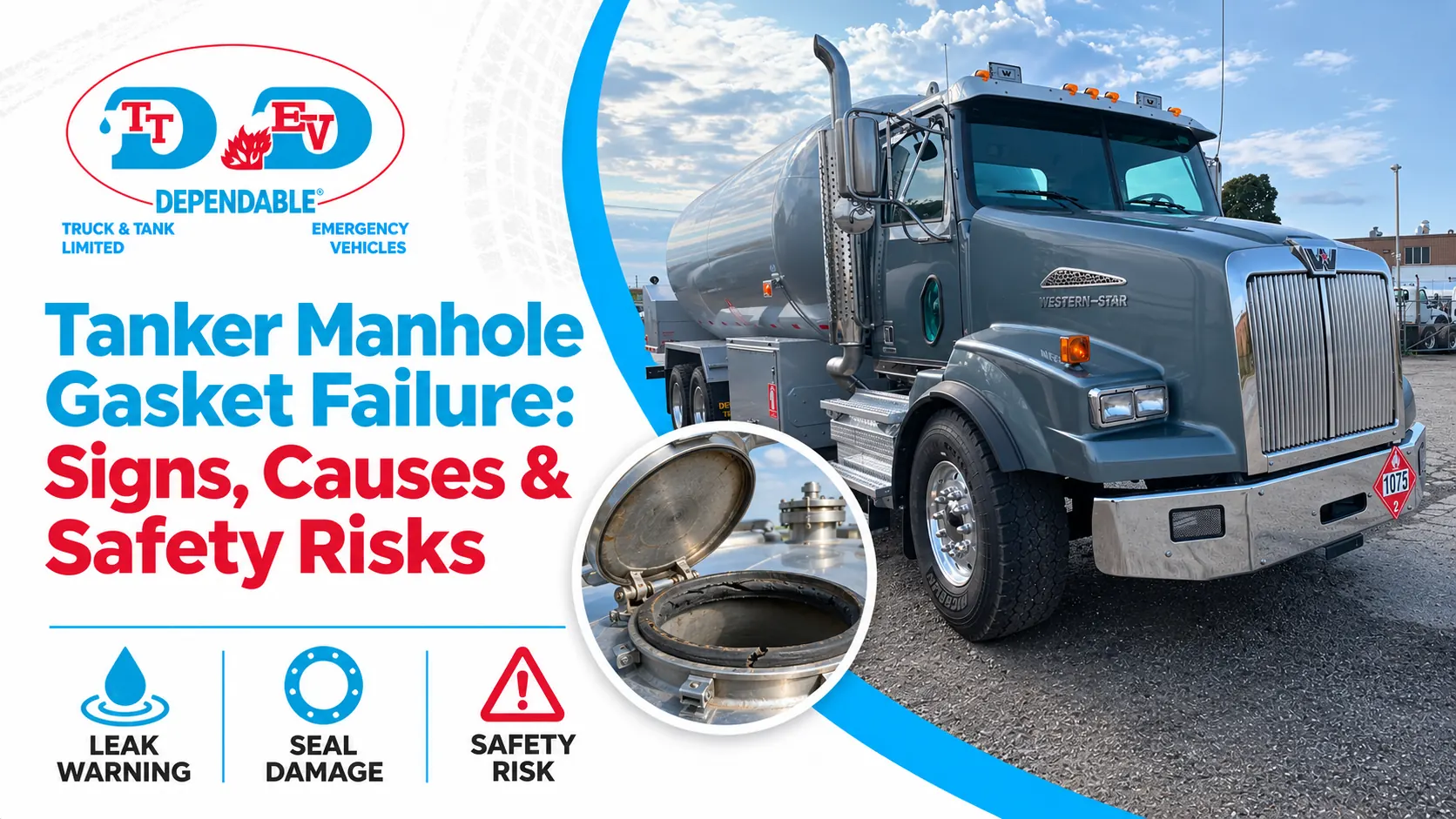
One small but critical component is the manhole gasket. Installed between the manhole cover and its sealing surface, the gasket helps create a seal that prevents liquid or vapour from escaping under the conditions for which the tanker is designed. When the gasket becomes worn, damaged, incorrectly installed, or incompatible with the transported product, the seal may no longer perform as intended.
Tanker manhole gasket failure can lead to leaks, product contamination, exposure to hazardous substances, environmental damage, and costly operational delays. On tankers carrying dangerous goods, a failed seal can create additional risks for drivers, maintenance personnel, emergency responders, and the public.
For Canadian fleet operators, understanding the warning signs and causes of gasket failure is an important part of tanker maintenance. Regular inspections, appropriate gasket selection, proper installation, and timely repairs can help prevent avoidable incidents.
This guide explains how to recognise gasket problems, understand the associated safety risks, choose suitable replacement components, and determine when professional inspection or repair is required. It also covers the role of Canadian tanker inspection requirements, including CSA B620, where applicable.
1. What Is a Tanker Manhole Gasket?
A tanker manhole gasket is a sealing component fitted between a manhole cover and its mating surface. The manhole provides access to the tank for authorised inspection, maintenance, cleaning, or other activities permitted by the tank’s design and operating procedures.
The gasket helps maintain a seal when the cover is properly secured. Depending on the tanker, its cargo, and its design, the gasket may need to withstand chemical exposure, temperature changes, vibration, compression, and specified pressure or vacuum conditions.
Gaskets are manufactured from different materials, including various elastomers and other engineered sealing materials. The correct choice depends on factors such as:
- The chemical properties of the transported product.
- Operating and cleaning temperatures.
- The tank’s pressure and vacuum limits.
- The gasket’s required dimensions and compression characteristics.
- Applicable equipment specifications and regulatory requirements.
There is no single gasket material suitable for every tanker. A gasket that performs well with one product may swell, harden, crack, or deteriorate when exposed to another.
It is also important to understand that a gasket is only one part of the sealing assembly. The cover, clamps or fasteners, hinges, sealing surface, and associated hardware must all be in suitable condition for the assembly to seal properly.
2. Common Signs of Tanker Manhole Gasket Failure
Early detection can help prevent a minor sealing defect from becoming a more serious safety or operational problem. Operators should report any suspected leak or change in the condition of the manhole assembly rather than waiting for the next scheduled service.
Visible Liquid Leaks or Wet Marks
One of the clearest warning signs is liquid around the manhole cover, gasket edge, or surrounding tank surface. Depending on the cargo, the evidence may appear as dampness, staining, residue, discolouration, or crystallised deposits.
However, not every mark confirms a gasket fault. The material may have come from a previous spill, another leaking fitting, or cleaning residue. Any unexplained wetness should be assessed safely, particularly when the tanker carries a hazardous or flammable product.
Recurring moisture or residue near the same sealing point may indicate tanker manhole leaks that require further investigation.
Product Odours or Vapour Release
A strong or unusual smell near a tanker opening may indicate escaping vapour, although odour alone cannot confirm the source or establish whether an atmosphere is safe.
Some hazardous substances have limited or unreliable warning properties, so the absence of an odour does not mean that a leak is absent. Drivers and workers should follow site procedures, keep clear of suspected releases, and report the issue immediately.
Never deliberately smell suspected vapours as a leak-detection method. Appropriate detection equipment and trained personnel may be required, depending on the cargo.
Cracked, Hardened, or Swollen Gasket Material
A visual inspection may reveal cracks, tears, flattened sections, brittleness, swelling, or other changes in the gasket.
These defects can develop through normal ageing, repeated compression, chemical incompatibility, temperature exposure, or improper storage. A gasket may also become permanently deformed and fail to recover its intended shape when the cover is opened.
Visible damage is a reason to assess the gasket against the manufacturer’s replacement criteria. Cleaning or repositioning a damaged gasket is not a reliable substitute for replacement.
Uneven Cover Seating
A manhole cover that does not sit evenly against its sealing surface may fail to compress the gasket uniformly.
Possible causes include a damaged hinge, distorted cover, uneven sealing surface, incorrect fastener adjustment, or a gasket that is the wrong size. Debris trapped between the gasket and cover can also interfere with sealing.
The cover should not be forced closed or secured by excessive tightening to compensate for a poor fit. The cause must be identified and corrected according to the equipment manufacturer’s instructions.
Repeated Leaks After Gasket Replacement
If leakage returns soon after a new gasket has been installed, the gasket itself may not be the only problem.
The sealing surface may be damaged, the replacement gasket material may be unsuitable, or the cover may not apply even compression. Incorrect installation, contaminated mating surfaces, and damaged hardware can also contribute.
Repeated leakage should prompt a broader assessment of the complete sealing assembly rather than another replacement without diagnosis.
3. What Causes Tank Gasket Problems?
Understanding the underlying cause of tank gasket problems helps fleet operators choose the right repair and reduce the risk of repeat failures.
Chemical Incompatibility
The transported product is one of the most important factors in gasket selection. Certain chemicals can attack sealing materials, causing them to swell, soften, shrink, crack, or lose their mechanical strength.
Cleaning agents can also affect gasket materials. A seal that is compatible with the normal cargo may not tolerate every chemical used during tank washing.
To prevent this problem, select replacement gaskets according to the tank manufacturer’s specifications and verified compatibility with the cargo and cleaning products. Do not assume that a gasket is suitable simply because it fits the opening.
Ageing and Compression Set
Gaskets are subject to repeated compression whenever a manhole cover is secured. Over time, some materials lose their ability to recover their original shape after the compressive force is removed. This is known as compression set.
Heat, oxidation, environmental exposure, and prolonged service can accelerate deterioration. An aged gasket may look reasonably intact but no longer provide sufficient sealing performance.
Replacement intervals should follow the manufacturer’s recommendations, applicable requirements, and the condition of the component. A gasket should also be replaced whenever inspection reveals damage or other defects that make it unsuitable for continued service.
Incorrect Installation
Even a new gasket can leak if it is installed incorrectly.
Common installation problems include:
- Using the wrong gasket dimensions or profile.
- Failing to clean the mating surfaces.
- Twisting, stretching, or pinching the gasket.
- Installing the gasket unevenly.
- Applying an unapproved sealant or lubricant.
- Securing the cover incorrectly.
Installation procedures vary by tanker design. Technicians should follow the specified sequence, tightening method, and hardware requirements rather than relying on guesswork.
Damaged Sealing Surfaces
The gasket cannot compensate reliably for a damaged manhole rim or cover. Corrosion, scratches, dents, distortion, and previous repair damage may prevent the surfaces from making consistent contact.
Debris or hardened product residue can also create gaps between the sealing surfaces.
If the gasket repeatedly fails in the same area, the cover and mating flange should be inspected for defects. Corrective work may involve cleaning, component replacement, or an approved repair procedure.
Loose, Worn, or Damaged Hardware
Clamps, bolts, hinges, and other securing components help hold the cover in its intended position. Worn or damaged hardware may prevent uniform gasket compression or allow the cover to move during transport.
Vibration and repeated opening and closing can contribute to wear. Hardware may also deteriorate through corrosion or improper handling.
Inspect the complete assembly, not just the gasket. Replace defective components with suitable parts and use the manufacturer’s specified tightening procedure.
Temperature Changes and Improper Storage
Temperature can affect gasket flexibility, strength, and dimensions. Some materials become less flexible in cold conditions, while excessive heat may accelerate ageing or change their mechanical properties.
Storage conditions also matter. Prolonged exposure to direct sunlight, ozone sources, excessive heat, incompatible chemicals, or deformation under heavy loads can shorten the useful life of an unused gasket.
Store replacement gaskets according to the manufacturer’s recommendations and check their condition before installation.
4. Safety Risks Associated With Tanker Seal Failure
A gasket defect may appear minor, but the consequences depend on the cargo, the tank design, and the circumstances of the failure. Tanker seal failure can affect worker safety, environmental protection, product quality, and regulatory compliance.
Exposure to Hazardous Materials
If a tanker carries dangerous goods, a failed seal may allow hazardous liquids or vapours to escape. Depending on the substance, exposure may cause skin or eye injury, respiratory irritation, chemical burns, poisoning, or other serious health effects.
Flammable vapours can also create a fire or explosion hazard when they encounter an ignition source under suitable conditions.
Workers should never approach a suspected release to inspect it closely without following the applicable emergency procedures. The area may require isolation, appropriate detection equipment, and a response by trained personnel.
Environmental Contamination
Leaks can allow transported material to reach road surfaces, storm drains, soil, or waterways. The severity depends on the product, the quantity released, and the surrounding environment.
Even a relatively small spill may require containment, clean-up, reporting, and investigation. A release during loading, unloading, or transport can also affect other vehicles and people in the surrounding area.
Regular inspections and prompt reporting help reduce the chance that a minor defect develops into an environmental incident.
Product Contamination
For tankers transporting food-grade liquids or other products with strict purity requirements, a damaged seal may create a contamination risk.
Contaminants may enter through a compromised opening when the conditions allow ingress, or product may become contaminated through an unsuitable gasket material, degraded particles, or incompatible cleaning products.
Using approved gasket materials and maintaining the sealing assembly are therefore important for both leak prevention and product integrity.
Pressure and Vacuum Hazards
Some tanker designs operate under specified pressure or vacuum conditions. A defective gasket may affect the system’s ability to maintain those conditions, while a cover or securing assembly that is not designed for the operating conditions can create a serious hazard.
A tanker must never be operated outside its approved pressure and vacuum limits. Workers must not loosen or open a manhole cover while the tank may contain pressure or vacuum.
Before maintenance, the equipment must be isolated and brought to a verified safe condition using the manufacturer’s procedures. Tank entry, where required, involves additional hazards and must follow applicable confined-space requirements.
Roadside Incidents and Operational Disruption
A suspected leak may require a driver to stop, secure the area, notify dispatch, and arrange technical assistance. Depending on the cargo and circumstances, emergency services or environmental response teams may also be required.
The resulting delay can affect delivery schedules, customer commitments, and fleet availability. More importantly, attempting to continue operating with a suspected hazardous leak can expose people and the environment to avoidable risk.
The correct response is to prioritise safety, report the defect, and obtain a suitable assessment before the tanker returns to service.
5. How to Inspect a Tanker Manhole Gasket
Routine inspections help identify visible defects before they develop into a more serious problem. The inspection process must be appropriate for the tanker, cargo, operating conditions, and applicable requirements.
Step 1: Review the Tanker’s Service History
Check previous inspection findings, gasket replacements, leak reports, cargo history, and any known problems with the manhole assembly.
Recurring defects can indicate an underlying issue with the cover, sealing surface, hardware, or gasket material.
Step 2: Make the Equipment Safe
Follow the required shutdown, isolation, and decontamination procedures before inspecting or servicing the assembly. Confirm that the tank is in a safe condition and that the cargo hazards have been assessed.
Do not loosen fasteners or open the manhole until you have safely relieved any pressure or vacuum and verified the safe condition.
Step 3: Examine the Gasket and Mating Surfaces
When the assembly is safe to access, inspect the gasket for cuts, cracks, swelling, hardening, flattening, and uneven compression.
Check the cover and sealing surface for corrosion, damage, residue, or distortion. Examine accessible hinges and securing hardware for wear or defects.
A visual inspection has limitations. Some material degradation and structural defects may require additional testing by qualified personnel.
Step 4: Confirm the Correct Replacement Part
If replacement is necessary, verify the gasket’s material, size, profile, and service suitability against the manufacturer’s specifications.
Compatibility should be confirmed for the transported product, cleaning chemicals, temperature range, and intended operating conditions. An apparently similar gasket is not automatically an acceptable substitute.
Step 5: Verify the Completed Work
After installation, the assembly should be secured according to the specified procedure. Any required leak or functional test must be carried out using an approved method suitable for the tanker design.
Never improvise a pressure test or use compressed air to test a tank unless a qualified procedure explicitly permits the method for that equipment. Testing must remain within the tank’s approved limits.
A completed maintenance record should document the defect, corrective action, replacement parts, and any required inspection or test results.
6. When Is Professional Tank Inspection or Repair Required?
Not every manhole leak requires structural repair. However, a damaged sealing surface, recurring leak, corroded flange, or suspected tank defect should be assessed by a qualified professional.
Tank Inspection and Testing
Professional tank inspection and testing can help determine whether the problem is limited to the gasket or involves the surrounding tank structure and fittings.
Depending on the equipment and the defect, an inspection may include a detailed visual examination, dimensional checks, thickness measurements, or other suitable non-destructive examination methods. The required scope depends on the tank’s design, service history, condition, and applicable inspection requirements.
Inspection findings should guide the repair decision. Replacing a gasket without addressing a damaged sealing surface, for example, may only provide a temporary solution.
Tank Repair Services
Professional tank repair services may be necessary when inspection identifies damage to the manhole cover, flange, tank shell, or associated fittings.
Repairs must be suitable for the tank’s construction, cargo service, and design requirements. A qualified repair provider should assess the defect, determine the appropriate repair method, and establish whether additional inspection or testing is required before the equipment returns to service.
Do not attempt to correct structural damage by simply tightening the cover or applying an unapproved sealant.
Tanker Welding Services
Where a defect requires welding, tanker welding services should be provided by appropriately qualified personnel using a repair procedure suitable for the specific tank and its materials.
Welding on a tank that has contained flammable, toxic, or otherwise hazardous substances can introduce serious fire, explosion, and exposure risks. Emptying a tank does not automatically make it safe for hot work. Appropriate cleaning, isolation, hazard assessment, atmospheric testing, and other controls may be necessary.
Welding should not be used as a routine solution for a worn gasket. The need for structural repair must first be established through a suitable technical assessment.
Pressure Vessel Repair
Some tanker equipment is designed and regulated as a pressure vessel, while other tanks operate under different design and regulatory requirements.
Where the equipment is subject to pressure-vessel requirements, pressure vessel repair must follow the applicable code, authorisation, inspection, and documentation requirements. The correct approach depends on the equipment classification and jurisdiction.
A manhole gasket problem alone does not automatically mean that a pressure-vessel repair is required. The objective is to identify the actual defect and carry out only the corrective work justified by the findings.
7. Understanding CSA B620 Inspection Requirements in Canada
Canadian operators transporting dangerous goods should understand the requirements that apply to their specific tank and service.
CSA B620 inspection refers to inspection requirements associated with the Canadian standard CSA B620, Highway Tanks and Portable Tanks for the Transportation of Dangerous Goods. The standard addresses relevant design, construction, certification, inspection, testing, and repair requirements for equipment within its scope.
However, not every tanker falls under the same requirements. Applicability depends on factors such as the tank type, the dangerous goods being transported, and the relevant regulatory provisions.
Fleet operators should therefore:
- Confirm the tank’s classification and applicable regulatory requirements.
- Maintain inspection, testing, and repair documentation.
- Use appropriately qualified or authorised inspection and repair providers where required.
- Address defects according to the applicable procedures and acceptance criteria.
- Confirm that required inspections and tests are completed before returning affected equipment to service.
A damaged manhole gasket should be assessed in the context of the complete tank assembly and its applicable requirements. Routine gasket replacement does not, by itself, establish that all required tank inspections have been completed.
For accurate compliance decisions, consult the current Canadian Transportation of Dangerous Goods Regulations, applicable tank standards, and the relevant provincial or federal authority.
8. How Fleet Operators Can Prevent Repeat Gasket Failures
Preventive maintenance helps reduce recurring leaks, unplanned repairs, and unnecessary downtime. The most effective approach combines correct parts, proper installation, operator awareness, and a documented inspection program.
Establish a Routine Inspection Schedule
Include manhole covers, gaskets, sealing surfaces, and securing hardware in the maintenance schedule. Inspection frequency should reflect manufacturer guidance, applicable requirements, cargo characteristics, and previous findings.
Do not rely on a single universal replacement interval for every gasket.
Match Gaskets to the Cargo
Maintain accurate information about the gasket materials approved for each tank and product. Where a tanker carries different products, verify compatibility for each intended service, including cleaning agents.
Keep replacement components properly identified and stored according to manufacturer recommendations.
Train Drivers and Maintenance Personnel
Drivers should know how to recognise visible leakage, damaged seals, unusual odours, and other warning signs. They should also understand how to report suspected defects and when to stop operating.
Maintenance personnel should be trained to follow the correct isolation, inspection, installation, and testing procedures for the equipment they service.
Track Recurring Defects
Record leak reports, inspection findings, gasket replacements, and repairs. If a particular tanker repeatedly develops leaks, investigate the cover alignment, hardware, sealing surface, gasket compatibility, and installation practices.
This information helps fleet managers identify patterns and address the cause rather than repeatedly treating the symptom.
Work With Qualified Service Providers
Reliable tank repair services and appropriate inspection support can help operators resolve defects safely and verify the condition of the equipment.
Choosing a provider with relevant tanker experience is particularly important when repairs involve hazardous cargo service, structural damage, pressure-vessel requirements, or regulated tank inspections.
A consistent maintenance process helps protect workers, cargo, the environment, and the long-term reliability of the fleet.
Conclusion
A tanker manhole gasket may be a relatively small component, but it plays an essential role in maintaining a reliable seal. Chemical incompatibility, ageing, incorrect installation, damaged sealing surfaces, and defective hardware can all contribute to leaks and operational problems.
Recognising tanker manhole gasket failure early helps Canadian fleet operators reduce the risk of hazardous releases, product contamination, environmental damage, and unexpected downtime. Routine inspections, correct gasket selection, proper installation, and documented maintenance are key to preventing repeat failures.
When a leak persists, or structural damage is suspected, professional assessment is important. The appropriate response may involve gasket replacement, inspection of the sealing assembly, specialist testing, or structural repair, depending on the findings.
Canadian operators should also confirm whether CSA B620 and other applicable requirements apply to their equipment and service. Following the correct inspection and repair procedures helps ensure that tankers are maintained according to their design and regulatory obligations.
Schedule Tanker Gasket Inspection and Repair Services
A leaking manhole seal should never be ignored, particularly when a tanker carries hazardous or sensitive materials. Identifying the cause early can help protect your drivers, cargo, equipment, and operating schedule.
Dependable Truck & Tank Nova Scotia provides tanker maintenance, inspection, and repair support for commercial fleets across Nova Scotia and Atlantic Canada. If you notice a manhole seal leak, recurring gasket failure, or damaged sealing hardware, arrange a professional assessment before returning the tanker to service. Contact Dependable NS today to request tanker repair services, schedule an applicable tank inspection, or discuss the required repairs with our team.
Frequently Asked Questions
What are the common signs of tanker manhole gasket failure?
Common signs include visible liquid or residue around the cover, damaged or hardened gasket material, unusual vapour release, uneven cover seating, and recurring leaks after replacement. Suspected leaks should be assessed safely, especially when hazardous materials are involved.
What causes tanker manhole leaks?
Leaks may result from worn or chemically incompatible gaskets, incorrect installation, damaged sealing surfaces, loose or defective hardware, and uneven gasket compression. The entire manhole assembly should be examined to identify the underlying cause.
How often should a tanker manhole gasket be replaced?
There is no single replacement interval that applies to every tanker gasket. Replacement depends on the manufacturer’s recommendations, gasket material, cargo compatibility, operating conditions, inspection findings, and applicable requirements. Replace a gasket when it no longer meets the required service condition.
Can a damaged manhole gasket be repaired instead of replaced?
A damaged gasket should generally be replaced with a suitable, approved component rather than patched. If the cover or sealing surface is also damaged, additional assessment and repair may be necessary.
What should a driver do if a tanker manhole cover is leaking?
The driver should follow company emergency procedures, stop in a safe location when appropriate, report the suspected leak, and keep people away from the affected area. If a hazardous release is suspected, the applicable emergency response procedure should be followed. The cover must not be loosened or opened while the tank may contain pressure or vacuum.
Does CSA B620 apply to every tanker in Canada?
No. CSA B620 applies within its defined scope and is relevant to certain highway tanks and portable tanks used to transport dangerous goods. Applicability depends on the tank, the material being transported, and the applicable regulatory requirements. Operators should confirm the requirements for their specific equipment.
When are professional tank inspection and testing services needed?
Professional inspection may be needed when leaks persist, sealing surfaces are damaged, corrosion is suspected, or the tank’s structural integrity is uncertain. The appropriate inspection and testing methods depend on the equipment design, the suspected defect, and applicable requirements.
Is welding necessary to fix a tanker manhole gasket leak?
Usually, no. A gasket leak may only require replacement of the gasket or correction of a sealing problem. Welding is appropriate only when a qualified assessment identifies a structural or component defect that requires it. Tank hot work must follow suitable safety and technical procedures.
Can a tanker return to service immediately after gasket replacement?
Not automatically. The assembly must be installed correctly, and any required inspection or leak testing must be completed using an approved procedure. The equipment should return to service only when it meets the applicable safety, technical, and regulatory requirements.
How can fleet operators prevent recurring tanker gasket problems?
Fleet operators can reduce repeat failures through routine inspections, correct gasket selection, proper storage, manufacturer-approved installation procedures, operator training, and maintenance records. Repeated leaks should trigger an investigation of the complete sealing assembly rather than repeated gasket replacement alone.