Heavy-duty trucks operate under demanding conditions, carrying substantial loads across highways, industrial routes, and busy transportation corridors. Maintaining these vehicles involves more than keeping engines running and deliveries on schedule. Every commercial truck must meet applicable safety standards, and regular inspections play an important role in identifying defects that could compromise roadworthiness.
Understanding the common reasons trucks fail MVI inspection helps fleet owners recognise developing problems before they interrupt operations. Defective brakes, worn suspension components, damaged tires, malfunctioning lights, and structural deterioration are among the issues that can create inspection concerns.
In Nova Scotia, commercial vehicle operators must also understand the provincial inspection framework and the requirements applying to their particular vehicles. An unexpected inspection failure can create repair expenses, scheduling complications, and lost operating time.
This guide explains why heavy-duty trucks may fail an inspection, what inspectors evaluate, how fleet managers can prepare, and which preventive maintenance practices help reduce avoidable problems. It also addresses current Nova Scotia MVI requirements and provides a practical checklist for commercial truck and tanker operators.
Quick Answer: What Are the Most Common Reasons Trucks Fail MVI Inspection?
The common reasons trucks fail MVI inspection include defective brakes, worn steering or suspension components, unsafe tires, damaged wheels, malfunctioning lights, structural corrosion, and problems with trailer coupling equipment. Other mechanical or safety-related defects can also result in rejection. The outcome depends on the applicable inspection standard, vehicle classification, and condition of the components being examined.
What Is an MVI Inspection in Nova Scotia?
If you are wondering what MVI is, the abbreviation stands for Motor Vehicle Inspection.
A motor vehicle inspection is a regulated assessment of a vehicle’s condition against applicable road safety and equipment requirements. It helps identify mechanical defects and equipment deficiencies that could affect safe operation.
For heavy-duty commercial vehicles, inspections can involve systems such as brakes, steering, suspension, tires, lighting, structural components, and coupling equipment.
An authorised inspection technician examines the vehicle using the requirements applicable to its classification. If a component does not meet the relevant standard, the deficiency must be addressed according to the applicable inspection process.
A periodic MVI inspection is different from routine servicing. An inspection determines whether the vehicle meets defined safety criteria at the time of examination, while maintenance focuses on keeping equipment in reliable operating condition throughout its service life.
For commercial fleets, both are essential.
The Nova Scotia motor vehicle inspection framework applies to several vehicle categories, but the exact inspection procedures and frequency depend on the vehicle’s classification and applicable regulations.
Understanding Nova Scotia MVI Requirements for Heavy-Duty Trucks
Commercial truck operators should understand the regulatory framework before scheduling an inspection.
Nova Scotia’s Traffic Safety Act came into effect on October 19, 2026, replacing the former Motor Vehicle Act. The province also introduced Vehicle Equipment, Safety and Inspections Regulations addressing equipment and inspection-related requirements.
The Government of Nova Scotia’s official MVI guidance provides information about the updated framework and its effect on inspection stations.
How Often Do Heavy-Duty Trucks Need an MVI Inspection?
An annual truck inspection is part of the periodic inspection framework for many commercial vehicles. However, operators should not assume that every truck, trailer, or specialized vehicle follows the same schedule.
Inspection intervals depend on factors such as vehicle classification, registration, and applicable provincial requirements.
Fleet managers should verify the current inspection interval for each vehicle rather than relying on general advice intended for passenger vehicles.
What Are Inspection Stickers and Certificates?
An inspection sticker provides a visible indication associated with the vehicle’s inspection status under the applicable provincial system.
An MVI certificate or inspection record documents relevant inspection information and may be required as part of the provincial inspection process.
The documentation and identification requirements can differ depending on vehicle category and the inspection system in use.
An inspection approval also does not guarantee that a vehicle will remain safe throughout the entire validity period. Operators must continue maintaining the vehicle and correcting defects as they arise.
Where Can Operators Find the Current MVI Manual?
The NS MVI manual and applicable commercial vehicle inspection standards provide the detailed criteria used to evaluate components.
Fleet managers can consult the Government of Nova Scotia’s Motor Vehicle Inspection Division for inspection documents, technical resources, and applicable standards.
Using current inspection criteria is especially important when interpreting brake wear, suspension deterioration, lighting defects, and other safety-related conditions.
Common Reasons Heavy-Duty Trucks Fail MVI Inspections
Many inspection deficiencies develop gradually. A minor mechanical concern can become a significant safety problem when maintenance is delayed.
The following areas deserve particular attention when preparing a heavy-duty vehicle for inspection.
1. Brake System Defects
Braking systems are among the most important safety systems on a commercial truck.
Heavy-duty vehicles frequently use air brakes, which include compressors, reservoirs, valves, air lines, brake chambers, and foundation brake components.
These components must operate together to provide reliable braking performance.
Potential inspection concerns include worn friction materials, damaged brake components, air leaks, defective chambers, damaged hoses, and improperly functioning warning devices.
Brake-related warning signs may include:
- Unusual braking noises or changes in braking response.
- Air pressure taking longer than expected to build.
- Audible air leaks.
- Brake warning indicators.
- Uneven braking or pulling during deceleration.
- Excessive heat around a wheel end.
Not every symptom identifies the exact defect. A complete inspection may be necessary to determine whether the problem involves the foundation brakes, air supply system, controls, or associated components.
Because heavy-duty braking systems are safety-critical, repairs and adjustments should be completed by qualified technicians using appropriate procedures.
2. ABS System Faults
An anti-lock braking system (ABS) helps manage wheel lockup during braking, supporting directional control in certain conditions.
Modern commercial truck ABS systems use wheel-speed sensors, electronic control units, modulators, wiring, and related components.
Electrical faults or damaged sensors can interfere with normal ABS operation.
Common symptoms include an illuminated ABS warning lamp, stored diagnostic trouble codes, intermittent warnings or unexpected system behaviour.
However, an ABS warning light does not automatically establish that a vehicle will fail every inspection. The result depends on the applicable inspection criteria, required equipment and the specific fault.
Professional ABS system repair can involve electronic diagnostics, circuit testing, sensor inspection, and identification of defective control components.
Fleet operators should investigate ABS warnings promptly rather than waiting until the scheduled inspection.
3. Worn Suspension and Steering Components
Steering and suspension systems control how a heavy-duty truck handles, tracks, and responds to changing road conditions.
These systems experience substantial stress from heavy loads, repeated braking, uneven roads, and continuous operation.
Potential inspection deficiencies include:
- Excessive movement in kingpins or steering joints.
- Loose or damaged tie rods and drag links.
- Cracked or broken leaf springs.
- Worn suspension bushings.
- Damaged spring hangers or mounting hardware.
- Air suspension leaks.
- Excessive steering free play.
A driver may notice steering wandering, unusual vibration, uneven tire wear, or knocking sounds before a serious problem develops.
These symptoms should not be ignored. Worn components can affect vehicle handling and accelerate damage to nearby systems.
Dependable NS’s guide to heavy truck suspension and steering maintenance explains how component wear develops and why early inspection matters.
Scheduled suspension and steering repair helps address problems before they affect vehicle safety or inspection readiness.
4. Unsafe Tires and Wheel Assemblies
Commercial truck tires support substantial vehicle weight and must withstand demanding operating conditions.
Inspectors evaluate relevant tire and wheel conditions against the standards applicable to the vehicle.
Potential issues include inadequate tread depth, exposed tire cords, sidewall damage, improper tire condition, and damaged wheel components.
Wheel-related concerns can also involve cracked rims, missing or loose fasteners, damaged hubs, or evidence of wheel-end problems.
One important distinction is that tire requirements can vary by axle position and vehicle classification. Fleet operators should not apply one universal tread-depth figure to every tire.
Warning signs include uneven tread wear, vibration, visible tire damage, and unexplained pressure loss.
A consistent tire maintenance program should include proper inflation checks, visual inspections, and investigation of unusual wear patterns.
Tire wear can also indicate problems elsewhere, including steering misalignment, suspension deterioration or wheel-end defects.
Correcting the underlying cause is often necessary to prevent repeated tire damage.
5. Faulty Trailer Lights and Electrical Systems
Commercial vehicles rely on functional lighting to communicate braking, turning, and vehicle dimensions to other road users.
Lighting issues can result from damaged bulbs, failed LED assemblies, corroded connectors, broken wiring, and poor ground connections.
Potential deficiencies include:
- Inoperative brake lights.
- Failed turn signals.
- Damaged tail lamps.
- Missing or malfunctioning clearance lights.
- Defective trailer marker lights.
- Loose or damaged electrical connections.
A light that works intermittently can be particularly difficult to diagnose because the problem may disappear when the vehicle is stationary.
Moisture, vibration, and corrosion can also affect trailer wiring over time.
Professional trailer light repair may involve circuit testing, connector replacement, damaged wire repairs, and verification of lighting functions.
For fleets operating during winter, regular electrical inspections are especially valuable because road salt and moisture can accelerate connector deterioration.
6. Frame, Chassis and Structural Deficiencies
A commercial truck’s frame provides structural support for major components, including the cab, engine, axles, suspension, and mounted equipment.
Tanker trucks may also include specialized mounting structures supporting tanks, pumps, and auxiliary components.
Potential inspection concerns include cracked frame members, severe corrosion, damaged crossmembers, loose mounting hardware, and unsafe structural modifications.
Surface rust does not automatically mean a frame is unsafe. The concern increases when corrosion reduces structural integrity or damages load-bearing components.
Inspectors consider the condition and severity of defects using the applicable standards.
Fleet managers should pay attention to cracking around mounting points, unusual frame movement, and deterioration near suspension attachments.
Unapproved repairs or structural modifications can also create safety concerns.
Any structural repair should be evaluated and performed using appropriate engineering, manufacturer, and inspection requirements.
7. Trailer and Coupling Equipment Defects
A truck tractor may be mechanically sound while its attached trailer contains deficiencies.
A proper trailer inspection considers the systems and components applicable to the trailer’s construction and operation.
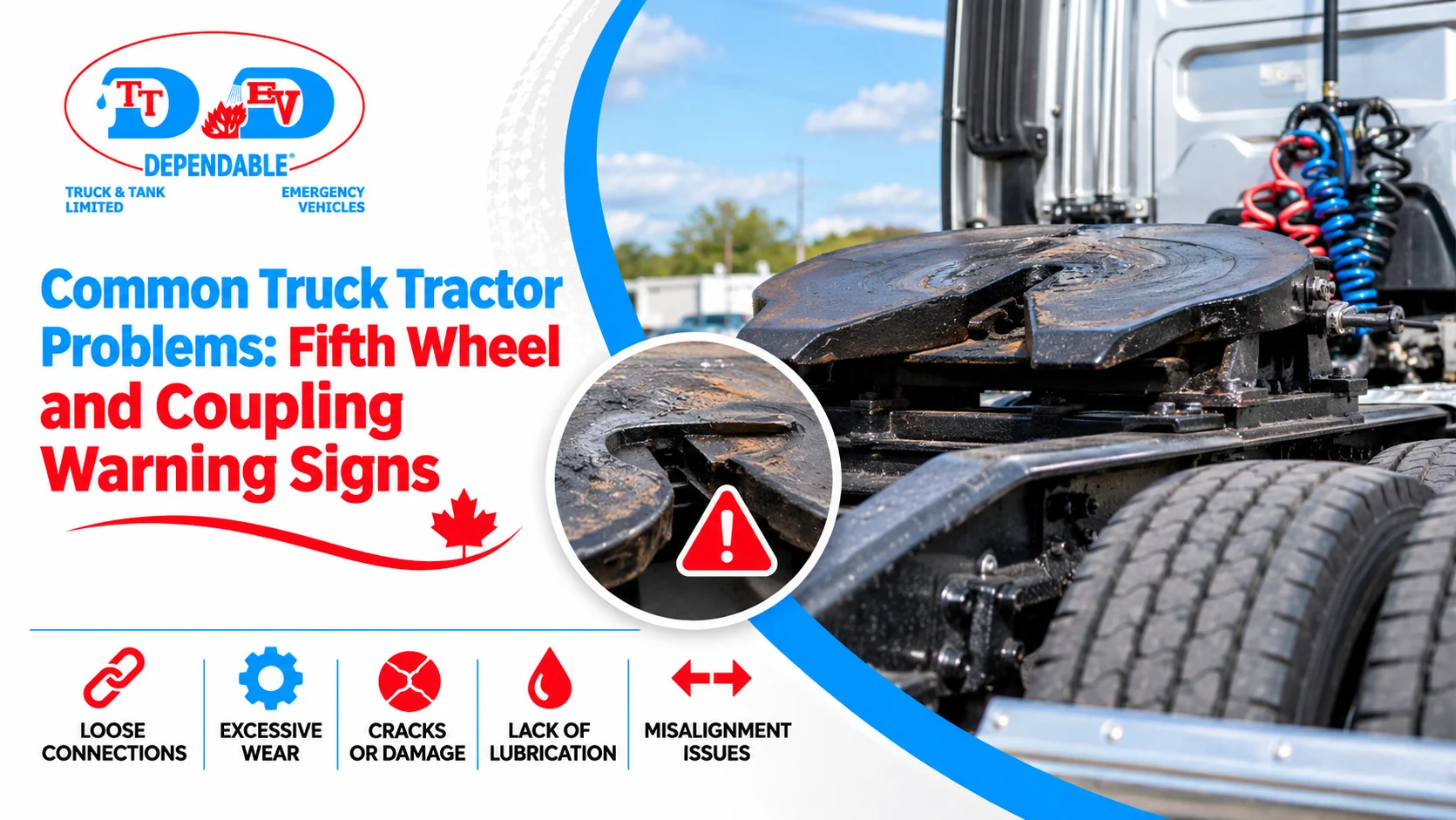
Important areas include fifth-wheel assemblies, kingpins, coupling mechanisms, mounting hardware, landing gear, and trailer connections.
Possible deficiencies include excessive wear, cracked components, damaged locking mechanisms, or loose mounting hardware.
Trailer brake lines, electrical connections, and required lighting must also be maintained.
For tanker operators, coupling equipment is particularly important because the vehicle may carry substantial liquid loads that influence braking and handling.
A defective coupling system creates risks beyond an inspection failure.
Routine examination of connections, locking components, and mounting points should be part of preventive fleet maintenance.
8. Additional Mechanical and Safety Equipment Problems
Other deficiencies can affect a commercial vehicle’s inspection outcome.
These may include damaged windshields, defective wipers, loose mirrors, unsafe cab components, exhaust defects, and certain fluid leaks.
A fluid leak requires assessment because its significance depends on the affected system, severity, and potential safety consequences.
For example, a leak associated with a braking or steering system may present a different risk from minor seepage elsewhere.
Likewise, damage affecting driver visibility or exhaust integrity may require corrective work.
Fleet operators should also pay attention to driveline vibration, unusual noises, and leaking transmission or differential components.
Dependable NS’s article on common drivetrain problems in heavy-duty trucks provides additional information about diagnosing developing drivetrain problems.
These conditions are not all automatic inspection failures. The applicable standard determines which defects require rejection or other corrective action.
Heavy-Duty Truck MVI Failure Reasons: Comparison Table
The following table summarises common areas of concern and practical actions that can help fleets prepare for inspection.
| Inspection Area | Potential Defect | Warning Sign | Preventive Action |
|---|---|---|---|
| Brakes | Air leaks or damaged brake components | Air pressure concerns, abnormal braking | Schedule professional brake inspections |
| ABS | Sensor, wiring, or control faults | ABS warning indicator | Diagnose stored faults promptly |
| Steering | Worn joints or excessive play | Wandering or loose steering | Inspect steering linkages |
| Suspension | Cracked springs or worn bushings | Uneven ride height, unusual noises | Maintain suspension components |
| Tires | Excessive wear or damage | Low tread, visible cracking | Check condition and inflation |
| Wheels | Damaged rims or insecure fasteners | Vibration, visible damage | Inspect wheel assemblies |
| Lighting | Failed lamps or wiring faults | Inoperative or flickering lights | Test electrical systems |
| Frame | Structural corrosion or cracking | Cracks, damaged mounting points | Inspect structural components |
| Coupling | Worn or damaged connection components | Abnormal movement or visible wear | Inspect coupling assemblies |
| Visibility | Defective mirrors or wipers | Reduced visibility | Maintain glass and visibility equipment |
These are examples of potential deficiencies, not a statistical ranking of inspection failures. Whether a particular condition results in rejection depends on the applicable inspection criteria.
Heavy-Duty Truck MVI Inspection Checklist Before Your Appointment
A practical truck inspection checklist helps fleet managers organise maintenance before a scheduled appointment.
The following MVI inspection checklist can be used as an internal preparation guide.
Brakes and Air Systems
- Check for reported braking problems.
- Identify unusual air system noises or leaks.
- Review brake maintenance records.
- Arrange examination of worn or damaged components.
- Confirm that reported warning-system faults have been addressed.
ABS and Electronic Systems
- Investigate active ABS warnings.
- Review outstanding diagnostic trouble codes.
- Confirm previous electrical repairs were completed.
- Check for visible wiring or connector damage.
Suspension and Steering
- Look for visible spring damage.
- Check for signs of loose mounting hardware.
- Investigate unusual steering movement.
- Review complaints about vibration or handling.
- Address abnormal tire wear potentially related to alignment.
Tires and Wheels
- Examine tires for visible damage.
- Check tire pressure using appropriate equipment.
- Investigate uneven tread wear.
- Identify visibly damaged wheel components.
- Arrange professional assessment of wheel-end concerns.
Lighting and Electrical Components
- Verify brake lights and turn signals.
- Test tail lamps and required marker lights.
- Check clearance lights.
- Inspect exposed wiring and connectors.
- Address intermittent electrical failures.
Frame and Chassis
- Look for visible cracks or structural damage.
- Examine areas showing significant corrosion.
- Check for loose equipment mounting points.
- Investigate damaged crossmembers or brackets.
Trailer and Coupling Equipment
- Check the general condition of coupling components.
- Inspect trailer electrical connections.
- Identify visible damage to air lines.
- Examine landing gear and associated components.
- Review trailer maintenance history.
Cab, Visibility and Documentation
- Verify that mirrors and wipers function correctly.
- Check windshield condition.
- Review outstanding defect reports.
- Confirm inspection scheduling and applicable documentation.
- Ensure previously identified safety concerns have been resolved.
This checklist supports inspection preparation but does not replace an authorised inspection or the detailed technical requirements in the relevant manual.
The Government of Nova Scotia’s Motor Vehicle Inspection Division provides access to technical inspection resources, including the NS MVI manual and commercial inspection documents.
How to Avoid MVI Inspection Failures
The most effective way to reduce avoidable inspection failures is to maintain the vehicle continuously rather than preparing only when an inspection is due.
1. Establish a Preventive Maintenance Schedule
Maintenance intervals should reflect manufacturer recommendations, vehicle age, distance travelled, operating conditions and fleet experience.
Vehicles used on demanding routes may require more frequent attention than units operating under lighter conditions.
2. Investigate Warning Lights Immediately
Brake, ABS, engine, and other warning indicators should be investigated based on their meaning and potential safety consequences.
Ignoring a warning can allow a manageable defect to become more serious.
3. Maintain Brakes and Air Systems
Include air system components, brake hardware, and related controls in scheduled maintenance.
Qualified technicians should perform inspections and repairs requiring specialised tools or procedures.
4. Monitor Steering and Suspension Wear
Steering looseness, unusual handling, and irregular tire wear can indicate developing mechanical problems.
Early diagnosis may prevent additional component damage.
5. Keep Lighting Systems Functional
Inspect required lighting regularly and investigate repeated failures instead of replacing individual lamps without identifying the cause.
6. Review Tire and Wheel Condition
Maintain suitable tire inflation, investigate damage, and correct abnormal wear patterns.
7. Act on Driver Defect Reports
Drivers often identify changes in vehicle behaviour before a workshop inspection reveals the underlying issue.
Reported defects should be documented, assessed, and corrected according to their safety significance.
8. Maintain Accurate Service Records
Keep records of inspections, repairs, recurring faults and maintenance work.
These records help fleet managers identify patterns and plan future maintenance.
9. Schedule a Pre-Inspection Maintenance Review
A workshop assessment before the formal inspection can identify maintenance needs.
However, a pre-inspection review cannot guarantee approval.
10. Use an Appropriate Inspection Facility
Choose an authorised station equipped and licensed to inspect the relevant vehicle class.
Dependable NS provides fleet mechanical and truck maintenance services that can help operators address mechanical concerns as part of their broader maintenance planning.
What Happens If a Heavy-Duty Truck Fails an MVI Inspection?
When a commercial vehicle does not meet applicable inspection criteria, the inspector documents the deficiencies according to the relevant procedures.
The vehicle owner or operator must then address the issues in accordance with the applicable rules.
Depending on the defect, corrective action may involve replacing damaged components, repairing electrical systems, addressing mechanical wear or completing additional testing.
Can a Truck Be Driven After Failing Inspection?
A failed inspection does not automatically mean every vehicle can legally continue operating.
Whether movement is permitted depends on the nature of the defects, the vehicle’s condition and the applicable legal requirements.
A vehicle with serious safety defects may require immediate removal from operation or transportation to a repair facility.
Fleet operators should obtain clear instructions from the inspection station rather than assuming that a rejected vehicle can be driven normally.
What Happens to the Inspection Sticker?
The handling of an existing inspection sticker, inspection approval, or rejection documentation follows the current provincial process.
The same applies to issuing or updating an MVI certificate or related inspection record.
Operators should confirm any applicable correction period, reinspection procedure, and documentation requirements directly with the authorised station.
Once repairs are completed, the vehicle must satisfy the required inspection procedures before approval can be issued.
MVI Inspection vs. Daily Commercial Vehicle Inspection
A periodic MVI inspection and a daily commercial vehicle inspection serve different purposes.
A periodic inspection is a formal examination against prescribed standards. A daily trip inspection helps identify operational defects before and during vehicle use.
| Feature | Periodic MVI | Daily Trip Inspection |
|---|---|---|
| Main purpose | Assess compliance with prescribed safety standards | Identify operational defects |
| Frequency | According to applicable vehicle requirements | Daily or as otherwise required by applicable rules |
| Performed by | Authorized inspection personnel | Driver or other authorised person, as permitted |
| Main focus | Detailed safety and equipment criteria | Operational condition and reportable defects |
| Documentation | Formal inspection records and applicable approval | Trip inspection reports |
| Result | Inspection approval or documented deficiencies | Defect reporting and required corrective action |
The Government of Nova Scotia’s Commercial Vehicle Trip Inspection guidance explains the purpose of daily inspections and refers to National Safety Code Standard 13.
Daily inspections help identify defects before they contribute to collisions or breakdowns.
However, completing a daily trip inspection does not replace a required periodic MVI.
Likewise, a vehicle that recently passed its periodic inspection may develop a defect that must be addressed before further operation.
Both processes form part of a responsible commercial vehicle maintenance program.
Why Preventive Maintenance Matters for Nova Scotia Trucking Fleets
Nova Scotia’s operating conditions can place additional demands on commercial vehicles.
During winter, road salt and moisture contribute to corrosion around electrical connectors, brake components, suspension hardware, and exposed structural surfaces.
Repeated freeze–thaw cycles can also affect components exposed to accumulated moisture.
Heavy loads, rural roads and industrial operating conditions may increase wear on suspension systems, tires and steering components.
Long-distance fleet operations add another challenge: vehicles may accumulate substantial kilometres between workshop visits.
A consistent maintenance strategy helps identify problems before they interrupt scheduled operations.
The Canadian Council of Motor Transport Administrators’ National Safety Code includes Standard 11, which addresses commercial vehicle maintenance and periodic inspection, and Standard 13, which addresses trip inspections.
These standards provide an important foundation for commercial vehicle safety programs, subject to their adoption and application by the relevant jurisdiction.
For fleet managers, an effective maintenance program should combine regular servicing, driver reporting, scheduled mechanical assessments, and accurate records.
The goal is not simply to pass an inspection once. It is to maintain a safe, reliable vehicle throughout its operating life.
Where to Get Heavy-Duty Truck MVI Inspections in Dartmouth, Nova Scotia
Dependable Truck & Tank Nova Scotia provides commercial vehicle inspection and maintenance services from its Dartmouth location.
The company’s MVI inspection station supports heavy-duty trucks, commercial fleets, tank trailers and specialised transport equipment.
Its inspection services cover relevant vehicle safety systems, including braking components, suspension, lighting, tires and structural equipment.
Dependable NS also offers related mechanical services that can help operators address inspection concerns.
These include ABS diagnostics, steering and suspension repairs, truck and trailer lighting work and other fleet maintenance services.
For operators managing specialised tankers, coordinated maintenance can be particularly useful because mechanical, structural and electrical systems all contribute to vehicle reliability.
Tanker operators should also remember that a general MVI is not the same as tank-specific inspection and testing required under applicable CSA B620 requirements.
A vehicle may require both types of inspection or testing depending on its configuration, cargo, and regulatory obligations.
Whether preparing for a scheduled inspection or investigating a mechanical problem, professional heavy-duty truck repair helps operators address the underlying defects rather than relying on temporary solutions.
Conclusion: Reduce MVI Inspection Problems Through Preventive Maintenance
Understanding the common reasons trucks fail MVI inspection gives fleet operators a practical starting point for improving vehicle maintenance.
Brake defects, worn steering and suspension components, unsafe tires, damaged lights, structural problems, and trailer coupling deficiencies can all create inspection concerns.
Although not every mechanical warning sign results in immediate rejection, ignoring developing defects increases the risk of safety problems and unplanned repairs.
A strong maintenance program combines driver inspections, professional servicing, timely repairs, and preparation for formal inspections.
For fleets operating across Nova Scotia and Atlantic Canada, this approach can help reduce avoidable downtime while supporting safer commercial vehicle operations.
Book Your Heavy-Duty Truck MVI Inspection in Nova Scotia
Dependable Truck & Tank Nova Scotia provides commercial truck and tank trailer inspections alongside mechanical repair and maintenance services for fleets across Nova Scotia and Atlantic Canada. Our technicians can help identify inspection-related defects and recommend the appropriate corrective work.
Avoid preventable inspection delays and costly fleet downtime. Contact Dependable NS today to book an MVI inspection, schedule a pre-inspection maintenance review, or request heavy-duty truck repairs.
Frequently Asked Questions
What is MVI, and why is it important for heavy-duty trucks?
MVI stands for Motor Vehicle Inspection. It is a regulated examination of a vehicle’s condition against applicable safety and equipment standards. For heavy-duty trucks, an MVI inspection helps identify deficiencies involving braking, steering, suspension, tires, lighting, and other required components. Periodic inspections support road safety but do not replace ongoing maintenance.
What are the most common reasons trucks fail MVI inspection?
The common reasons trucks fail MVI inspection include brake system deficiencies, worn steering components, damaged suspension parts, unsafe tires, faulty lighting, structural deterioration and coupling equipment problems. The exact outcome depends on the defect and the standards applying to the vehicle. Not every visible sign of wear automatically results in rejection.
How often do heavy-duty trucks need an MVI inspection in Nova Scotia?
Many commercial vehicles are subject to an annual truck inspection or another prescribed periodic schedule. However, frequency depends on vehicle classification and applicable provincial requirements. Fleet operators should confirm the current schedule for each truck, trailer, or specialized vehicle with an authorised inspection station or the provincial inspection authority.
What does a commercial vehicle inspection cover?
A periodic commercial vehicle inspection may evaluate brakes, steering, suspension, tires, wheels, lighting, structural components, coupling systems, and other required equipment. The scope depends on the vehicle classification and applicable standard. Daily trip inspections and roadside enforcement inspections serve different purposes and may use different procedures.
Can a truck fail MVI because of an ABS warning light?
An illuminated ABS warning light indicates that a system fault may be present and should be investigated. However, it does not automatically result in rejection under every inspection standard. The outcome depends on the vehicle configuration, required equipment, and applicable rejection criteria. Professional diagnostics can identify whether sensor, wiring, control or other braking-related repairs are needed.
Can worn suspension components cause an MVI failure?
Yes. Severely worn or damaged suspension and steering components can result in rejection when they do not meet applicable safety criteria. Examples include cracked springs, loose mounting hardware, and excessive movement in critical steering joints. Timely suspension and steering repair helps address developing defects before they affect vehicle handling or inspection readiness.
What happens if my heavy-duty truck fails an MVI inspection?
The inspection station documents the deficiencies and explains the relevant corrective requirements. Repairs and any necessary reinspection must follow the applicable provincial procedures. Vehicle operation may be restricted depending on the seriousness of the defects. Operators should not assume they can continue using a rejected truck until the issues are resolved.
How do I obtain an inspection sticker or MVI certificate?
An authorised inspection station conducts the applicable examination and follows the provincial process for issuing approval documentation. A vehicle must meet the relevant inspection requirements before approval is granted. The exact inspection sticker and MVI certificate arrangements depend on the current provincial system and vehicle category.
Where can I find the latest NS MVI manual?
The Government of Nova Scotia’s Motor Vehicle Inspection Division provides access to inspection manuals and technical resources. Fleet managers should use the current material applicable to their vehicle classification. The NS MVI manual and commercial vehicle inspection standards help clarify which component conditions require repairs or rejection.
How can I prepare my truck using an MVI inspection checklist?
A practical MVI inspection checklist should cover brakes, air systems, ABS warnings, steering, suspension, tires, wheels, lights, structural components, coupling equipment, and relevant documentation. Drivers and maintenance personnel can identify visible problems before the appointment. However, checklist preparation cannot replace a formal inspection or professional evaluation of safety-critical components.
Is a trailer inspection different from a truck inspection?
Yes. Trucks and trailers have different equipment configurations and may require different inspection procedures. A trailer inspection commonly includes applicable braking systems, wheels, tires, lighting, structural components, landing gear and coupling equipment. Specialized tank trailers may also require separate tank inspection and testing under applicable regulations.
Where can I find an authorised MVI inspection station in Dartmouth?
Dependable Truck & Tank Nova Scotia operates an MVI inspection station at 435 Higney Ave, Dartmouth, NS B3B 0L5. The company provides inspections for heavy-duty commercial vehicles, tank trailers, and fleet equipment. Operators can contact Dependable NS to discuss inspection scheduling and related mechanical maintenance needs.